
Best Time to Visit Sri Lanka (2027): Weather, Monsoons & Travel Guide
When Is the Best Time to Visit Sri Lanka?
The best time to visit Sri Lanka depends on your route: start with December–March for the south and west coasts, and May–September for an east-coast-focused holiday. Neither window guarantees dry days. The Cultural Triangle and central hill country need their own decisions, especially if walking, mountain views or ancient sites matter more than beaches.
For a first trip with a southern beach finish, January or February is a sensible starting shortlist. For Trincomalee or Pasikudah, look first at the middle of the year. Do not choose an island-wide “best month” and assume it works equally well for Mirissa, Arugam Bay and Nuwara Eliya.
Sri Lanka’s terrain and changing monsoon winds explain much of that difference. The Ministry of Foreign Affairs’ geography and climate profile describes coastal lowlands rising into cooler central highlands and recognises four rainfall seasons. Build the route around those broad patterns, then check conditions for your actual dates.
| Main priority | Useful starting window | What to keep flexible |
|---|---|---|
| South/west beach holiday with sightseeing | December–March | Swimming conditions and wet days |
| East/northeast coastal base | May–September | Sea conditions, transition months and individual bays |
| Hill-country walks and views | Start by comparing January–March | Rain, cloud, trail access and transport |
| Cultural Triangle plus a coast | Match the coast first, then add inland days | Heat, showers and exposed site visits |
| Fixed October/November travel | A slower, flexible cultural trip | Beach expectations and weather-sensitive transfers |
These windows are planning recommendations based on regional climate evidence, not forecasts for 2027. A beach season is not a swimming-safety certificate, and a monsoon month does not mean every hour is wet.
Sri Lanka’s Four Climate Seasons
The formal seasons are consistent across the Department of Census and Statistics climate overview, the ministry profile and Northern Province tourism guidance. They describe prevailing patterns rather than exact arrival dates for rain.
| Season | Months | Meaning for a travel plan |
|---|---|---|
| Northeast monsoon | December–February | Greater rain exposure in eastern/northeastern areas; south/west usually the stronger coastal shortlist |
| First inter-monsoon | March–April | Transitional conditions; afternoon or evening thunderstorms can affect different regions |
| Southwest monsoon | May–September | Southwest and exposed hill-country areas receive monsoon rain; compare eastern bases |
| Second inter-monsoon | October–November | Widespread rain potential; build greater flexibility across the island |
The Census and Statistics account distinguishes monsoon rain from convectional and depressional rain. That matters because travelling away from a monsoon-facing coast does not eliminate thunderstorms. Its account also identifies October–November as the rainiest period for the island considered as a whole; this does not mean every town has the same rainfall pattern.
Some travel pages use “Maha” or a broader October–January wet-season label for northern and eastern travel. That is useful visitor shorthand, but it is not the same thing as the official December–February northeast-monsoon definition. Keep those two ideas separate when comparing guides.
This article uses qualitative regional guidance rather than a composite national weather table. No station temperature or rainfall normal has been invented or presented as a 2027 prediction. Historic observations, even where available, cannot tell you whether your particular beach afternoon or mountain walk will be dry.
Compare Sri Lanka’s Regions Before Choosing Dates
Use this table to choose a manageable route, not to treat every town in a group as interchangeable. The official tourism weather guide supports the broad coastal contrast, while Northern Province Tourism explains how topography affects local conditions.
| Region and examples | Starting seasonal guidance | Practical consequence |
|---|---|---|
| South/west: Colombo, Bentota, Galle, Mirissa | Prioritise December–March; April can be a warmer transition | Pick a coastal base and retain non-beach activities; exposed sea conditions vary |
| East/northeast: Trincomalee, Pasikudah, Arugam Bay | Prioritise May–September; the ends of the season need closer checking | Choose a bay or surf destination deliberately; they offer different holidays |
| Central hills: Kandy, Ella, Nuwara Eliya | Compare January–March first; rain and cloud remain possible, especially on exposed slopes | Higher places are cooler; avoid treating all three as identical walking bases |
| Cultural Triangle: Sigiriya, Dambulla, Anuradhapura | Can complement different seasonal routes; account for northern/eastern wet spells and inter-monsoon rain | Plan exposed sites for a comfortable part of the day and leave recovery time |

Official tourism material is not perfectly uniform. Northern Province Tourism gives the east a broad April–November visitor window, while the four-season sources flag October–November’s widespread rain. For a beach-dependent booking, this guide recommends the narrower May–September starting window and treats April and later autumn individually. It does not silently convert that broader claim into a dry-weather promise.
Kandy is a different proposition from the higher tea-country bases. Choose whether you want a cultural city stay, a rail journey or sustained hiking. Trying to get all three from one overnight stop usually creates a transport-heavy trip, whatever the month.
Sri Lanka Month by Month
January: build around the south and west
Sri Lanka weather in January is most useful to consider regionally: the northeast monsoon is active, so the south and west are the stronger first choices for a beach-led visit. Start with Bentota, Galle or Mirissa, with Kandy as a possible inland addition. Northern/eastern stops and the Cultural Triangle can still encounter wet spells. Choose one coastal base rather than changing hotels along the same coast every day, and retain a cultural outing for unsuitable beach conditions.
February: allow time for an inland stay
February remains within the northeast-monsoon season, even though it is a useful south/west travel window. If the hills are important, add a deliberate stay rather than a rushed excursion between beaches. Compare Kandy with higher Nuwara Eliya according to your interests and appetite for cooler conditions. Schedule a walk flexibly around local advice and the forecast; a promising season does not guarantee mountain visibility. Do not squeeze an east-coast resort into the route just to sample both sides.
March: balance sightseeing with changing afternoons
March begins the first inter-monsoon period. A southern or western coast can still make sense, but leave scope for thunderstorms rather than assuming winter conditions continue unchanged. For Sigiriya, Dambulla or Anuradhapura, give the main site its own morning and use later hours for a slower activity. If combining hill country and a beach, reduce the number of intermediate stops. Your concrete booking decision should be a route with spare time, not a promise to complete every outdoor sight.
April: plan around New Year as well as weather
April is another inter-monsoon month, with changeable conditions and potential afternoon storms. Consider cultural sightseeing with a coastal stay, checking the specific resort rather than declaring the whole island equally suitable. The official 2027 holiday listing includes Sinhala and Tamil New Year-related holidays in mid-April; confirm transport and accommodation arrangements before committing. Avoid placing your longest transfer immediately beside an essential celebration booking. A holiday calendar can affect availability without establishing that all businesses close or all destinations become crowded.
May: shift a beach-led trip east
May marks the southwest-monsoon season in the formal calendar. For a beach-focused holiday, investigate Trincomalee or Pasikudah rather than treating Mirissa as the automatic default. The start of a season is variable, so ask about current sea conditions and actual services. Add a compact Cultural Triangle stay if it fits the route, with indoor rest around outdoor visits. Do not add Ella solely because it appears on a standard island circuit; it creates a different journey and different weather exposure.
June: give the east coast a proper stay
June is a useful starting choice for an eastern coastal base, while southwest-facing areas remain in their monsoon season. Combine Trincomalee with selected inland sites instead of touring every coast. For families, reserve several nights in one place so a wet or windy day does not consume the entire beach portion. Check any June holiday against your actual travel dates. Swimming still depends on the particular beach and conditions; the alternative coast is not automatically calm at every bay.
July: choose between surf and a relaxed beach base
July suits investigating the east, but Arugam Bay’s surfing focus is different from a quiet coastal stay near Trincomalee or Pasikudah. Choose according to the activity you want, then ask local providers about suitable breaks or bathing areas. The southwest monsoon remains relevant to hill-country detours. A short trip benefits from staying on one side of the island. If an event is important, wait for its specific programme rather than inferring dates from a general July festival reference.
August: keep wildlife expectations realistic
An east-coast stay with an inland extension remains a sensible August plan. Minneriya may interest travellers considering elephants, but a seasonal wildlife pattern is not a scheduled performance. Ask a responsible guide about current conditions before choosing a park, and avoid building the day around a promised animal count. If the main aim is beach time, retain enough nights on the coast rather than spending every spare day in a vehicle. Hill-country weather still needs a separate assessment.
September: retain a transition buffer
September is still part of the formal southwest-monsoon season and can suit an eastern itinerary, but do not assume conditions remain identical until the final day of the month. Check the coast, operator availability and weather outlook before booking a marine activity. A useful plan is an inland cultural stay followed by one coastal base, with the return journey protected. If you want both a safari and surfing, choose which matters most rather than letting optional excursions crowd out rest.
October: loosen the itinerary
October begins the second inter-monsoon season. Widespread rain and thunderstorms make a rigid, beach-dependent trip a weaker choice than a slower cultural route with alternatives. Kandy or a carefully chosen coastal town can provide a base, but hill roads and outdoor sites still need current checks. Keep cancellation terms and transfer flexibility visible in your budget. An east-coast surf listing that extends into October is not evidence of safe swimming or consistently dry sightseeing across the country.
November: avoid assuming the south has already settled
November remains in the second inter-monsoon period. You can consider Galle and nearby coastal areas for cultural interest, but do not sell yourself a guaranteed winter beach holiday before checking conditions. Select accommodation you would enjoy during a wet afternoon and avoid a sequence of non-refundable boat trips. If walking in the hills is central to the trip, think carefully about forecast uncertainty and access. “Start of the travel season” is a marketing label, not a daily weather switch.
December: return to a south/west emphasis
December starts the northeast-monsoon period in the formal calendar. A south/west-oriented itinerary is a sound starting point, while eastern and northern plans need their own rain expectations. Choose a comfortable mix of heritage sightseeing, a coastal stay and optional outdoor activities. Around holiday travel, compare real accommodation and transport availability early. Do not assume that every day is beach weather or that the Cultural Triangle is insulated from monsoon rain. Leave enough time to get back for your flight.
Which Coast Is Best for Beaches?
The simple starting rule is south/west in December–March and east in May–September. Then narrow the choice to the actual bay and purpose. Surfing, swimming, beach walks and a resort pool holiday place different demands on conditions. The official beach overview is useful for understanding that variety, not for certifying a particular day’s sea state.
For Colombo, Bentota, Galle and Mirissa, think about what you will do away from the sand. A heritage walk or relaxed meal makes a better weather alternative than another exposed sea activity. On the east, Trincomalee, Pasikudah and Arugam Bay should not be treated as interchangeable labels for the same beach holiday.
Follow current flags and instructions, ask where supervised swimming is appropriate, and avoid entering water when conditions are unsuitable. A sheltered-looking photograph or a hotel’s seasonal description cannot establish the absence of currents. Choose a pool as an alternative if swimming is essential, and check the property’s actual facilities before paying.
If your dates fall in April or September, ask about conditions for the specific coast rather than forcing a nationwide shoulder-season answer. In October and November, keep the beach as a possibility within a broader trip instead of making every day depend on it.
Hill Country and the Cultural Triangle
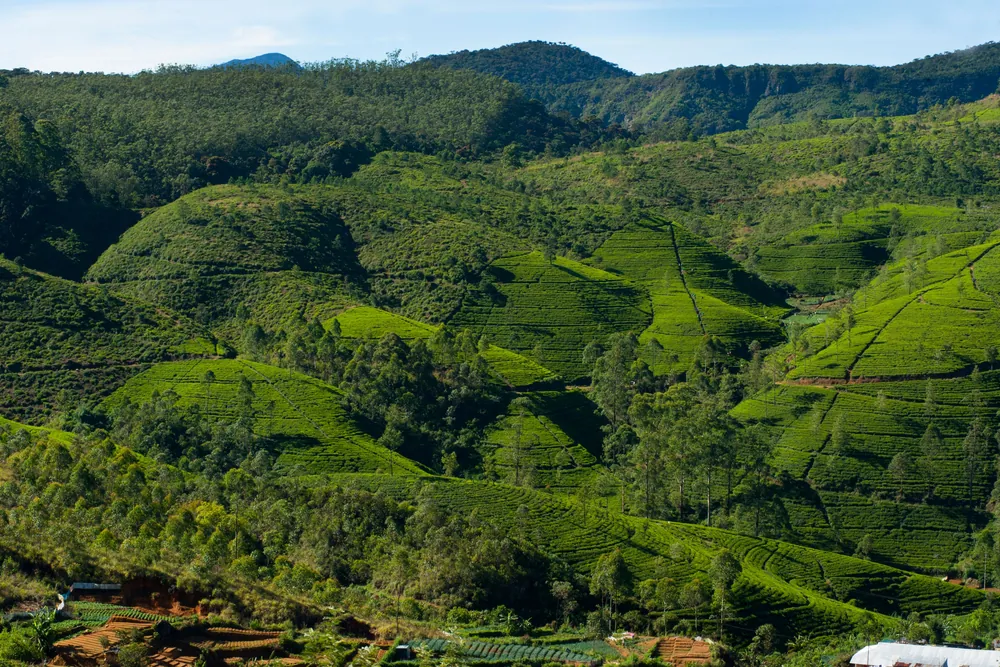
Kandy, Ella and Nuwara Eliya
The highlands are cooler than the coastal lowlands, but the region contains different elevations and exposures. The Census and Statistics climate account explains that relief affects rain distribution; an attractive coast forecast cannot be substituted for a hill-country forecast.
Choose a base according to the walking or cultural experience you want. Bring layers, rain protection and footwear with suitable grip. Wet surfaces, cloud and access conditions can matter more than a monthly weather label. Ask about the specific trail and transport before setting out, and be willing to replace a walk if conditions deteriorate.
For a brief first visit, Kandy plus one coast is easier to organise than Kandy, Ella, Nuwara Eliya and a beach finish. If the scenic train journey is a priority, give it its own time in the route. Do not treat it as an incidental transfer between other ambitious bookings.
Sigiriya, Dambulla and Anuradhapura
The Cultural Triangle provides an inland alternative, but “dry zone” does not mean rain-free. Northern/eastern wet-season influence and inter-monsoon showers can affect visits, while exposed sites require sensible pacing even in promising weather.
Put a major climb or extensive archaeological area first in the day’s plan, then leave room for rest. Consider mobility, stairs, shade and suitable clothing for religious sites before choosing which places to combine. A full day at one destination can be more rewarding than visiting several briefly between long drives.
Match inland stops to the coast you have selected. Sigiriya/Dambulla and Trincomalee form a practical combination for a northern/eastern route; adding a southern beach or the full hill-country circuit changes the journey considerably. Anuradhapura can replace another cultural stop rather than automatically becoming an additional transfer.
Wildlife, Surfing and Outdoor Activities
| Activity | Seasonal research starting point | Before committing |
|---|---|---|
| Safari | Choose a park that fits the route; local water and access conditions influence wildlife viewing | Confirm permits, current openings and a responsible guide; no sightings promised |
| Arugam Bay surfing | Official attraction information describes an April–October surf season, with differing broader visitor wording | Confirm the actual break, conditions and instruction appropriate to your ability |
| Hill-country hiking | Compare drier regional windows, then check the specific trail | Check weather, access and road warnings; allow a replacement activity |
| Southern whale watching | Official tourism information identifies November–April as the broad southern season | Confirm sea conditions, safety arrangements and responsible operation; wildlife remains unpredictable |
Sri Lanka Tourism’s Arugam Bay page contains both a broad May–November visitor recommendation and April–October surfing wording. Use the latter only as a general activity season, not a guarantee of suitable waves every day or an invitation to inexperienced swimmers.
The official Minneriya Gathering listing associates the phenomenon with August–September, but it is an older promotional page, not a 2027 wildlife forecast. This guide makes no promise about the number or location of elephants. Ask how a provider avoids crowding wildlife and follows park instructions.
For southern whale watching, distinguish a seasonal opportunity from an assured encounter. Do not accept guaranteed sightings or chase-based sales claims as evidence of a responsible trip. The source contains older operational details; verify departures and safety equipment directly rather than relying on copied times or prices.
The Department of Wildlife Conservation explains that national-park entry is subject to permits and conditions. No specific park’s 2027 closure calendar has been established here. Check current notices before buying a safari tied to a particular day.
Families and Budget Planning
Families should match dates to the coast and choose fewer overnight bases. December–March offers a useful south/west shortlist; May–September shifts the coastal emphasis east. A trip with one inland stay and one beach base usually leaves more recovery time than trying to see every famous location.
Check pool arrangements, room configuration, meal availability and the transport needed for your chosen activities. Discuss age, mobility and participation requirements directly with guides. A route that adults could complete quickly may still be an uncomfortable holiday with children or older relatives.
There is no universally cheapest month established by this research. A lower room quote on one coast may come with unsuitable beach conditions, limited services or more paid transfers. Compare the full party’s flights, accommodation, meals, transport and activities on the same dates and terms.
Before buying a discounted package, check what happens if a marine excursion or hike cannot operate. Keep suitable cancellation terms in the comparison. Avoid describing May–September as a single island-wide low season: an eastern resort and a southwestern beach property can have different demand patterns, and neither has guaranteed prices or empty beaches.
Two Realistic Seven-Day Itineraries
Both examples cover seven calendar days and six nights, beginning and ending around the main international-airport area. They are suggested routes, not reserved transport packages. A late arrival, early departure or preference for public transport may require an extra night or fewer stops. Transfer days are not spare sightseeing days.

A. December–March: Kandy and the south/west
| Day | Plan | Overnight |
|---|---|---|
| 1 | Arrive; rest near the airport/Negombo rather than starting a long inland drive | Airport area/Negombo |
| 2 | Transfer to Kandy; keep later plans light | Kandy |
| 3 | Kandy cultural sightseeing, with an optional walk if conditions suit | Kandy |
| 4 | Transfer towards Galle via the western transport corridor; no extra hill-country detour | Galle area |
| 5 | Galle heritage time and a relaxed coastal afternoon | Galle area |
| 6 | One nearby beach or a flexible rest day; check swimming conditions | Galle area |
| 7 | Transfer for departure, allowing a substantial airport buffer | None — departure |
This keeps Kandy as the inland stop and the Galle area as one coastal base. Bentota can replace the southern base if its location and accommodation suit you better; it is not an extra hotel change. A Mirissa-focused trip needs its own transfer planning rather than an assumed quick add-on.
Day four is a substantial relocation. Confirm the actual route and door-to-door arrangements before booking, especially if using connecting public transport. For an early flight, move the final overnight closer to the airport on day six and shorten the coastal stay. Do not add Ella and a safari to this version without adding days or removing something else.
B. May–September: Cultural Triangle and east coast
| Day | Plan | Overnight |
|---|---|---|
| 1 | Arrive and rest near the airport/Negombo | Airport area/Negombo |
| 2 | Transfer to a Sigiriya/Dambulla base; optional light sightseeing | Sigiriya/Dambulla area |
| 3 | One main cultural visit, with rest and flexibility around rain or heat | Sigiriya/Dambulla area |
| 4 | Transfer to Trincomalee and settle into the coastal base | Trincomalee area |
| 5 | A beach-led day, subject to local sea conditions; retain a non-marine alternative | Trincomalee area |
| 6 | Dedicated return towards the airport area; no additional long excursion | Airport area/Negombo |
| 7 | Depart with a local transfer buffer | None — departure |
The east-coast version deliberately protects the return day. It gives only a short coastal stay; if the beach is your main priority, remove an inland night or extend the trip. A tourism-hosted Dambulla/Sigiriya–Trincomalee itinerary corroborates the regional connection, but its older operator timings are not adopted here.
Arugam Bay is a different, more southeastern route, not a substitute name for Trincomalee in this table. Pasikudah also requires a revised transfer plan. Do not add both simply because they share an east-coast seasonal recommendation.
For either plan, use the official Sri Lanka Railways reservation service and its timetable links if choosing trains. Check the actual service, availability and onward connection; no journey duration, fare or guaranteed train operation is assumed. Road itineraries likewise require current route advice.
What Needs Checking Specifically for 2027?
An official 2027 holiday listing is available from the Central Bank of Sri Lanka. Selected entries relevant to planning are below. They are official listed holiday dates, not a complete festival programme or proof of attraction closures.
| Holiday entry | Listed 2027 date | Practical check |
|---|---|---|
| Day before Sinhala and Tamil New Year; New Year Day | 13–14 April | Confirm transfers, accommodation and meals for your actual booking |
| Vesak Full Moon Poya; following day | 19–20 May | Check local arrangements and the effect on planned visits |
| Poson Full Moon Poya | 18 June | Recheck transport and site-specific arrangements |
The official listing distinguishes bank, public and mercantile categories; services do not all follow identical arrangements. Recheck the current official listing before non-refundable bookings, including any later changes. The tourism site’s public-holiday link still points to a 2026 page, so it should not be used to establish these 2027 dates.
No verified 2027 Kandy Esala Perahera procession programme or park-closure schedule is supplied here. Do not infer one from a full-moon holiday or a previous year’s poster. Likewise, the climate guidance is not a forecast of 2027 monsoon onset, cyclone activity or daily conditions.
Packing and Final Practical Checks
Pack rain protection, comfortable footwear and clothing appropriate for cultural sites, with warmer layers for the hills. Keep important booking records accessible offline. Ask about luggage storage and the walking involved between stations, hotels and attractions if that affects your plans.
Before a hill transfer, boat trip or exposed walk, check the Disaster Management Centre’s current warnings. These include weather, sea, flood and landslide notices. A broad seasonal recommendation should never override a current warning or local access instruction.
Sri Lanka Travel FAQs
What are the best overall months to visit Sri Lanka?
For a first south/west-focused trip, start with December–March, particularly January or February. For an east-coast holiday, compare May–September. There is no single best month for every coast, hill-country walk and inland site; choose the main region before fixing the route.
When is monsoon season in Sri Lanka?
The official northeast monsoon is December–February and the southwest monsoon May–September. March–April and October–November are inter-monsoon periods. Rain affects regions differently, and transitional thunderstorms can be widespread. Broader tourist wet-season labels should not replace these definitions.
Is January a good time to visit Sri Lanka?
January is a useful choice for the south and west coasts, potentially with an inland stay. It is still northeast-monsoon season, so northern and eastern plans need separate expectations. Rain, cloud and sea conditions remain variable; January is not an island-wide dry-weather guarantee.
Which coast is best in May to September?
The east and northeast are the stronger starting shortlist during the southwest-monsoon season. Compare Trincomalee, Pasikudah and Arugam Bay according to the holiday you want. A surfing destination is not automatically the best swimming choice, and current sea conditions still decide activities.
Should I avoid Sri Lanka in October and November?
Not necessarily, but choose a flexible trip rather than a beach-dependent or tightly scheduled hiking holiday. These are second inter-monsoon months with widespread rain potential. Check current warnings, allow alternatives and avoid assuming either coast is reliably dry throughout the period.
When is the best time for a family holiday?
Match the coast first: December–March for a south/west emphasis or May–September for an eastern base. Choose fewer hotel changes, age-appropriate activities and a wet-day alternative. Check your school dates and actual quotes; no month guarantees low prices, empty beaches or safe swimming.