Best Time to Visit Japan: A Month-by-Month Guide
Japan doesn’t have a single “best” season so much as two competing headline acts — cherry blossoms in spring and fiery foliage in autumn — with everything else in the calendar built around dodging the crowds and prices those two events bring. Stretched across 25 degrees of latitude, from subarctic Hokkaido to subtropical Okinawa, Japan behaves less like one country and more like three or four climates stacked on top of each other.
Quick answer: The best time to visit Japan overall is late March to early April for cherry blossoms, or mid-November to early December for autumn foliage — both offer the country’s most iconic scenery, at the cost of the highest prices and biggest crowds of the year. For comfortable weather without the premium, October is the strongest all-around pick: humidity has dropped, typhoon risk is fading, and prices haven’t yet spiked for foliage season.
When Is the Best Time to Visit Japan?
The single best window to visit Japan is late March through early April, when cherry blossoms (sakura) reach full bloom across Tokyo, Kyoto, and Osaka — but this is also the single most expensive and crowded stretch of the year, with hotels booking out 6–12 months ahead. If you want comparable scenery without matching the crowds, late November through early December delivers Japan’s autumn foliage (koyo) with slightly more breathing room and a longer viewing window, since peak color can last two to four weeks rather than the five-to-seven-day peak of a cherry blossom bloom.
For travelers prioritizing comfort and value over either headline season, October is the quiet standout: humidity drops sharply from August’s peak, typhoon risk fades after mid-month, and prices haven’t yet climbed for foliage season. February is the strongest budget pick nationwide, especially in the weeks right after New Year, when demand — and prices — bottom out.
Understanding Japan’s Climate: Four Seasons, Four Very Different Countries
Japan’s biggest planning mistake is treating it as one weather system. Stretching from Hokkaido in the subarctic north to Okinawa in the subtropical south, the country spans climate zones different enough that a single month can mean snow in one region and beach weather in another. It’s a similar lesson to the one India teaches at an even larger scale, where a single week can mean Himalayan snow and Kerala’s tropical humidity happening at once.
Example: In January, Hokkaido’s Asahikawa can drop to around -12°C with some of the best powder snow in the world, while Okinawa’s Naha stays around 15–17°C — genuinely mild, T-shirt-friendly weather at the exact same moment on the calendar.
For the “Golden Route” most first-time visitors follow — Tokyo, Kyoto, and Osaka — the pattern is more consistent: cool winters (roughly 0–10°C), a distinct rainy season (tsuyu) from early June to mid-July, hot and humid summers pushing past 30°C through July and August, and a comfortable, drier autumn from October into November. Typhoon season runs roughly August through October and can disrupt travel with little notice, though Kyoto and Osaka sit somewhat sheltered by surrounding mountains compared to coastal Tokyo.
Worth knowing: Hokkaido is the one major exception to Japan’s rainy season entirely — it has no true tsuyu, which is part of why it’s a popular early-summer escape when the rest of the country is sticky and wet.
Best Time to See Cherry Blossoms in Japan
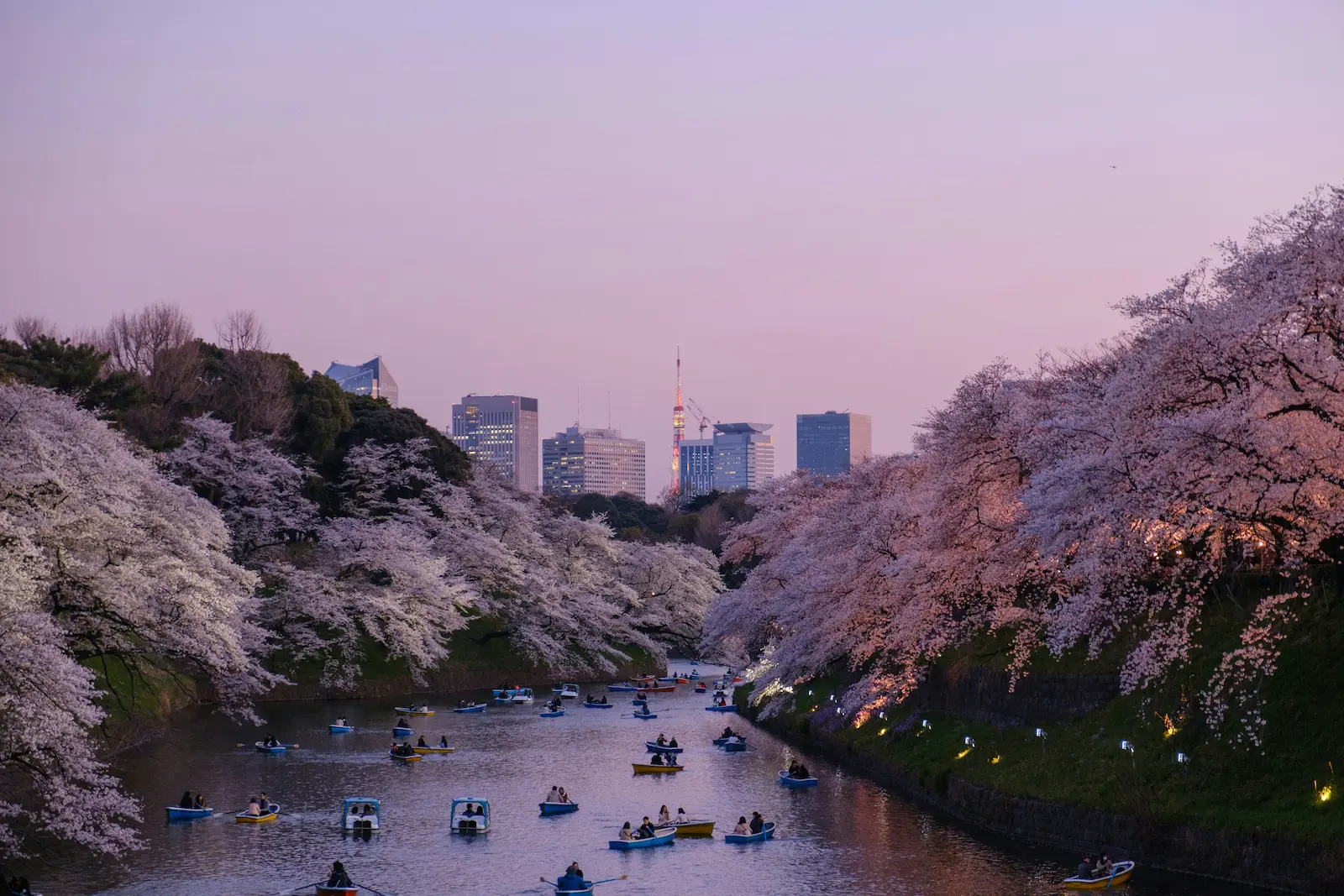
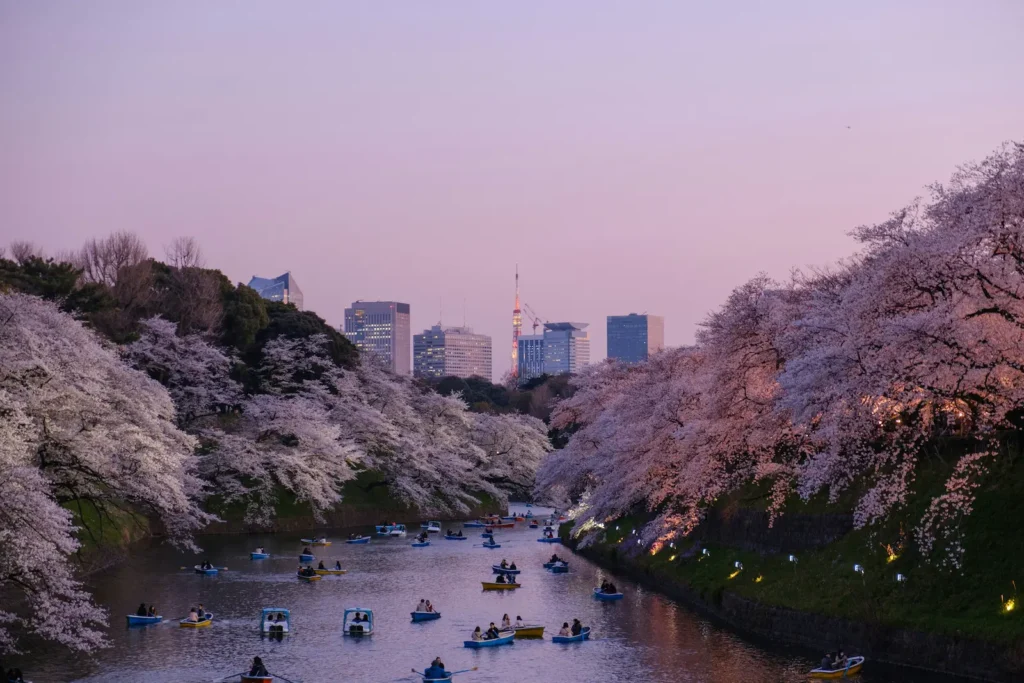
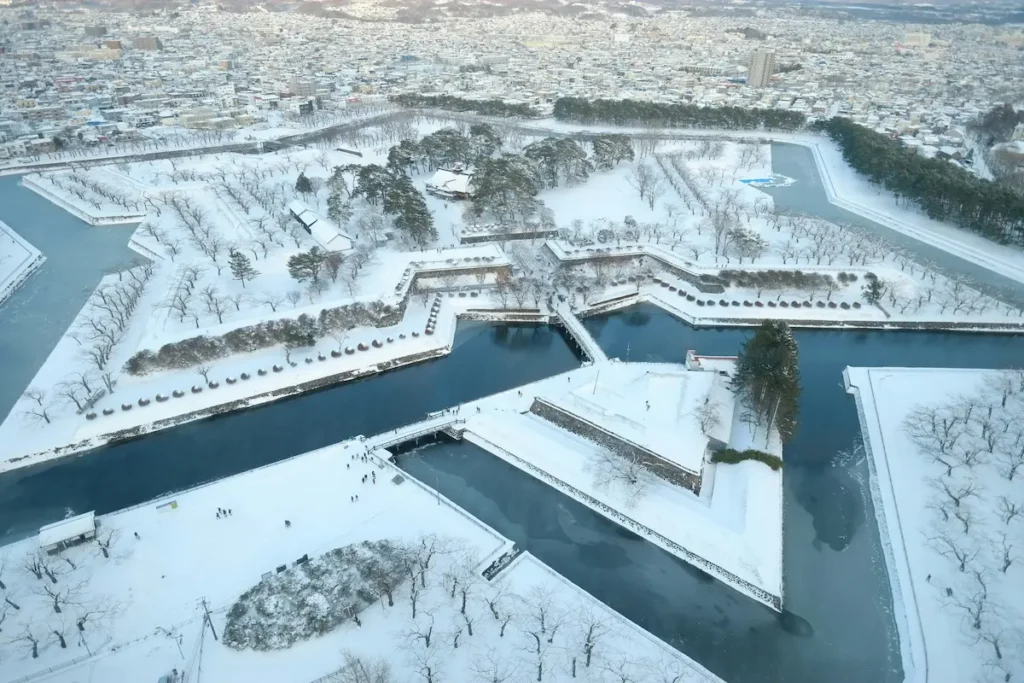
The best time to see cherry blossoms in central Japan — Tokyo, Kyoto, and Osaka — is late March to early April, with full bloom (mankai) for 2027 currently projected around March 28 to April 5, based on typical bloom patterns. Full bloom at any single location only lasts about five to seven days, which is exactly why this narrow window drives Japan’s highest hotel prices and earliest booking deadlines of the year.
Sakura season isn’t actually one short window — it’s a slow-moving wave. Okinawa and the Izu Peninsula see the earliest blossoms, sometimes as early as January or February with varieties like Kawazu-zakura. The wave then reaches Kyushu and Chugoku (Fukuoka, Hiroshima) in late March, hits the Kanto and Kansai heartland (Tokyo, Kyoto, Osaka) right around the March 28–April 5 peak, and finally reaches Tohoku and Hokkaido in mid-to-late April, with Sapporo often not peaking until late April into early May.
Question: If I can’t make the late-March/early-April window, is there still a way to see cherry blossoms?
Yes — chase the wave instead of fighting it. Traveling to Okinawa in February or Hokkaido in late April both put you in prime bloom windows outside the crowded central-Japan peak, often at meaningfully lower prices.
Best Time to See Autumn Foliage (Koyo) in Japan
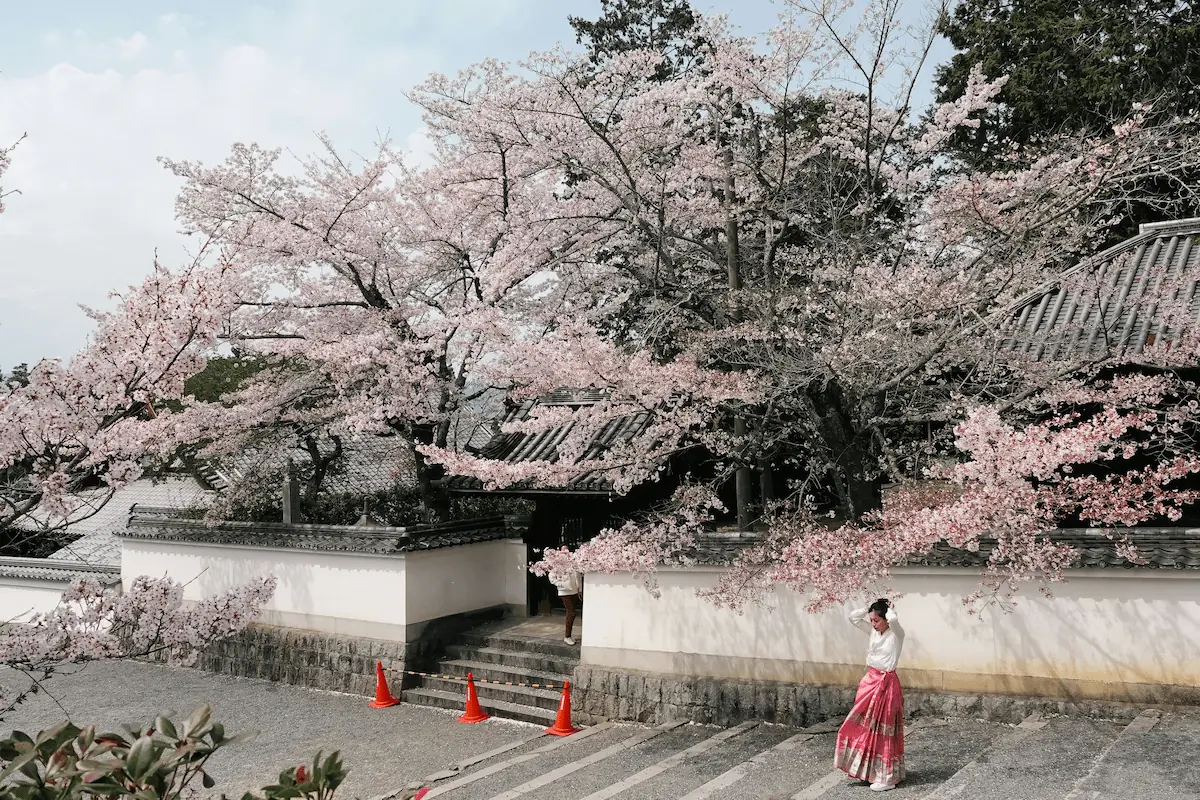
The best time to see autumn foliage in Tokyo, Kyoto, and Osaka is mid-to-late November through early December, with the safest planning window for 2026 sitting around November 18 through early December. Unlike cherry blossoms, koyo moves in the opposite direction — starting in Hokkaido’s high country as early as mid-September and sweeping south, so the season stretches over roughly two and a half months rather than five to seven days at any one spot.
For travelers chasing the earliest color, Hokkaido’s Daisetsuzan National Park typically peaks mid-to-late September, with lower-elevation Sapporo following in late October. For the classic postcard combination of red maples against ancient temples, Kyoto’s Arashiyama and Tofuku-ji areas typically peak in the second half of November, occasionally sliding into early December in warmer years.
Example: A traveler who can’t decide between spring and autumn should weigh crowd tolerance over scenery quality — both seasons deliver spectacular color, but autumn’s multi-week peak window gives meaningfully more flexibility for weekday visits and off-peak garden entries than spring’s five-day sprint.
Worst Time to Visit Japan: Typhoon and Rainy Seasons, Honestly
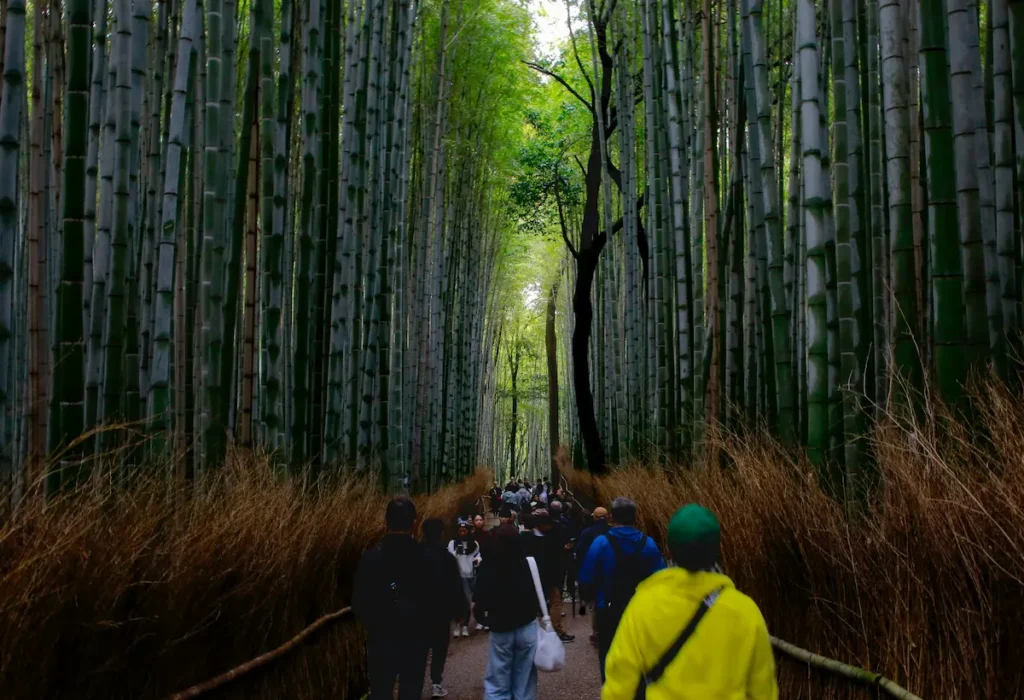
The honest worst-time answer is a two-part one: early June to mid-July (tsuyu, the rainy season) and August through October (typhoon season, peaking in September). Neither is a hard no, but both come with real trade-offs worth planning around rather than discovering mid-trip.
Rainy season means humid, overcast days with regular rain across most of Honshu, Shikoku, and Kyushu — though Hokkaido skips it almost entirely, making it a smart early-summer alternative. Typhoon season is the more disruptive of the two: storms can ground domestic flights and delay shinkansen service with little warning, and September is typically the single rainiest month in both Tokyo and Sapporo. Many of these same Pacific storm systems pass through the Philippines first, earlier in the season, before curving north toward Japan. Kyoto and Osaka are somewhat sheltered by surrounding mountains, which softens — but doesn’t eliminate — typhoon impact in the Kansai region.
August deserves its own mention on the “worst” list for a different reason entirely: heat. Daytime highs regularly clear 30°C with heavy humidity nationwide, and this is also when Obon (Japan’s mid-August ancestral holiday) drives heavy domestic travel and higher prices — a rare case of bad weather and high demand overlapping.
Japan Weather and Travel Costs by Season
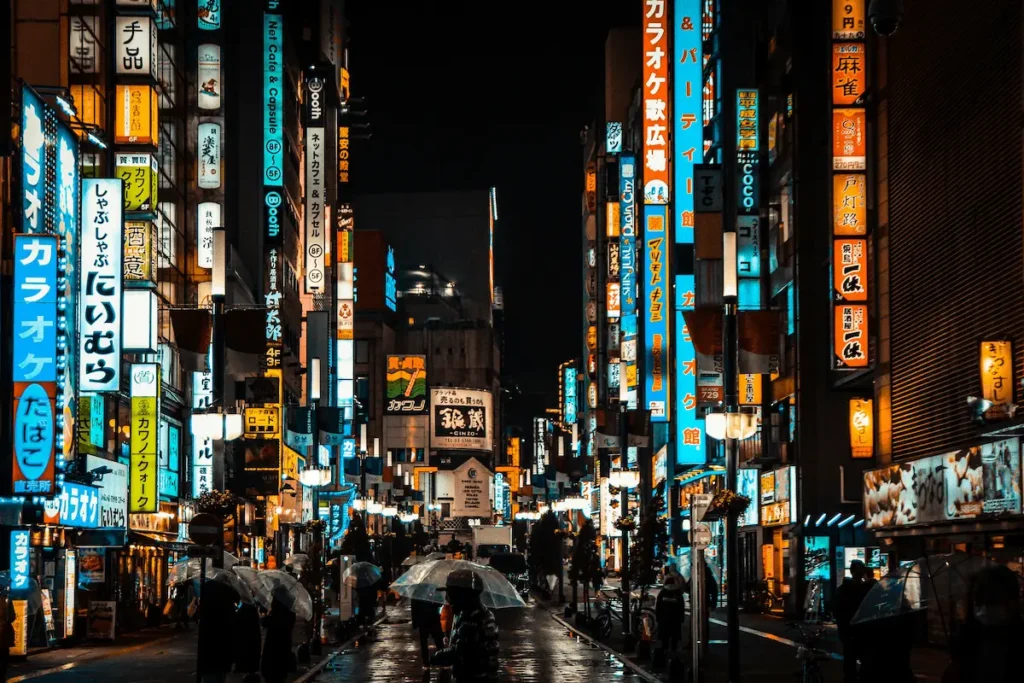
Japan’s pricing swings are driven almost entirely by four windows: cherry blossom season, Golden Week, Obon, and New Year — all of which can push flight and hotel prices up 30–50% compared to off-peak rates.
- Peak periods (late March–early April, late April–early May, mid-August, late December–early January): round-trip flights that run $800–1,100 off-peak can climb past $1,600 during these windows; cherry blossom and autumn foliage season specifically can add $600–1,200 per person to a typical trip budget.
- Off-peak value windows (mid-January to early March, June, early September, late November to early December): the same off-peak flights often run $800–1,100, and hotel rates — including in youth hostels, which can jump 50–80% in high season — settle back to normal.
- Cheapest overall: January and February, right after the New Year holiday rush ends, typically offer the lowest flight and hotel prices nationwide, outside of ski resort regions.
| Month | Tokyo Temp | Rain / Typhoon Risk | Sakura / Koyo | Best For |
|---|---|---|---|---|
| January | 0–10°C | Low, dry and sunny | — | Lowest prices, clear skies |
| February | 1–10°C | Low | Earliest sakura (Okinawa/Izu only) | Cheapest month overall |
| March | 5–14°C | Low-moderate | Sakura begins central Japan (late Mar) | Early sakura chasers |
| April | 10–19°C | Moderate | Peak sakura, Tokyo/Kyoto/Osaka | Sakura peak — book 6-12mo ahead |
| May | 15–23°C | Moderate | Sakura reaches Hokkaido | Golden Week (crowded, pricey) |
| June | 19–25°C | High (tsuyu begins) | — | Off-peak value, Hokkaido (no rainy season) |
| July | 23–29°C | High, tsuyu ends mid-month | — | Late month once rains clear |
| August | 24–31°C | Typhoon risk begins | — | Not recommended — heat + Obon crowds |
| September | 20–27°C | Very high, typhoon peak | Hokkaido koyo begins (high elevation) | Value month, watch forecasts |
| October | 15–21°C | Moderate, easing after mid-month | Hokkaido/Tohoku koyo | Best all-around comfort month |
| November | 10–17°C | Low | Peak koyo, Tokyo/Kyoto (late Nov) | Koyo peak — book 6-9mo ahead |
| December | 3–12°C | Low, driest month | Late koyo lingers (southern regions) | Early Dec value, late Dec pricier (New Year) |
Temperatures shown as approximate monthly low–high range for Tokyo. Cherry blossom and foliage timing vary year to year and by region — treat dates as planning guides, not guarantees, and check official forecasts closer to your travel dates.
Frequently Asked Questions
What is the cheapest month to visit Japan?
January and February, right after the New Year holiday rush, typically offer the lowest flight and hotel prices nationwide — outside of ski resort regions, which see the opposite pattern.
Should I visit Japan for cherry blossoms or autumn foliage?
Both deliver spectacular scenery, but autumn foliage gives you a longer peak window (two to four weeks versus five to seven days for sakura), which makes it more forgiving to plan around and often slightly less frantic to book.
Is Japan’s rainy season worth avoiding entirely?
Not necessarily — early June to mid-July brings regular rain to most of the country, but Hokkaido skips the rainy season almost entirely, making it a smart destination if your travel dates are fixed within that window.
How far in advance should I book a trip during cherry blossom or autumn foliage season?
Six to twelve months ahead for cherry blossom season, and roughly six to nine months ahead for autumn foliage — premium hotels in Kyoto and Tokyo for both windows routinely reach 90%+ occupancy well before the season even begins.
Weather patterns, prices, and event dates can change. Always verify current conditions and details with official sources before booking your trip. See our Disclaimer for more information.