Best Time to Visit Alaska (2027): Cruises, Weather, Wildlife & Northern Lights
When Is the Best Time to Visit Alaska?
June and July are the best starting points for a first Alaska trip combining sightseeing, a cruise and inland travel. Choose July if warmer historical temperatures matter most; consider June for long days and generally lower precipitation totals than late summer in Anchorage and Juneau. For northern lights, plan a different trip: Fairbanks during the darker months, with March a useful compromise between daytime activities and nighttime viewing.
A summer cruise cannot promise auroras, and a winter visit cannot reproduce Denali’s summer bus access. Choose dates around the experience you would most regret missing.
| Your main goal | Planning window | What should decide the booking |
|---|---|---|
| First visit combining coast and Interior | June–July | Confirm transport, accommodation and park operations |
| Cruise and glacier sightseeing | Mainly May–September | Compare actual routes and glacier stops, not just month |
| Denali bus trip and accessible summer trails | Summer bus season | Verify the specific 2027 route and operating dates |
| Northern lights around Fairbanks | Roughly late August–late April | Darkness, cloud cover and auroral activity all matter |
| Brooks Falls bears feeding near the falls | July | Salmon timing and access arrangements vary |
| Brooks River bears later in the season | September | Viewing often shifts toward the lower river |
| Snow activities plus aurora evenings | March as a starting choice | Check snow conditions, operator availability and cold tolerance |
These are planning recommendations, not forecasts or guaranteed wildlife windows. Historical climate and 2027 operating updates are identified separately.
Alaska Weather by Month
How to read these climate tables
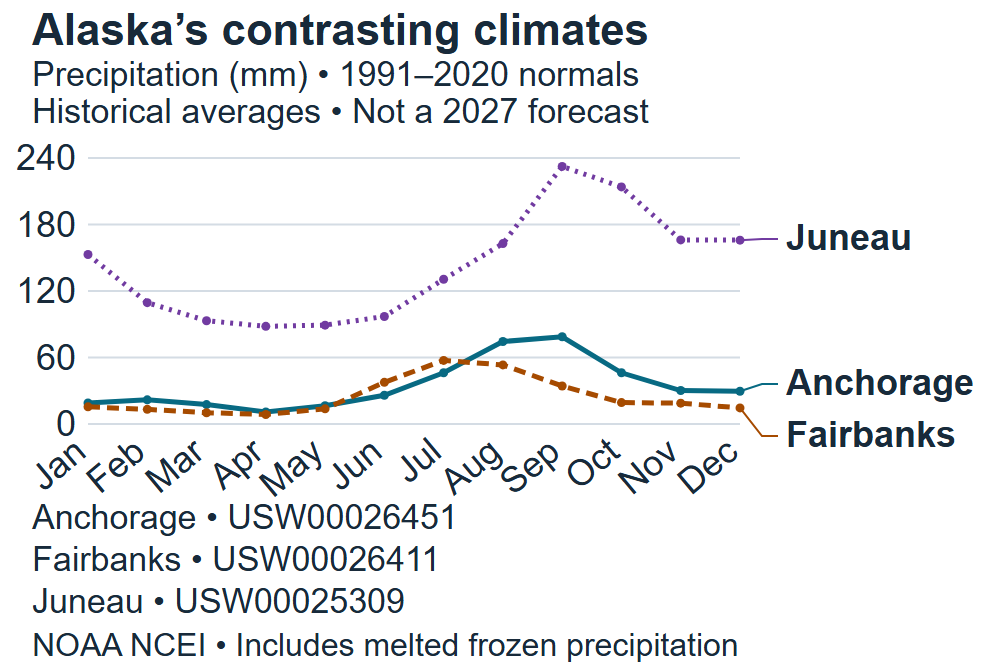
The tables use NOAA 1991–2020 monthly normals for Anchorage International Airport, Fairbanks International Airport and Juneau International Airport. High and low mean the normal monthly averages of daily maximum and minimum temperatures, not the month’s extremes. They are not 2027 forecasts.
Precipitation is the liquid-water equivalent of rain and melted frozen precipitation, not rainfall alone and not snow depth. A winter total cannot tell you how deep the snow will be. Neither can a monthly precipitation total tell you whether your particular sightseeing day will be wet.
Fahrenheit and inches are NOAA’s standard-unit values. Celsius and millimetres are calculated conversions rounded to one decimal place. These airport stations provide consistent comparisons, not measurements for every neighbourhood, mountain trail or glacier. See the NOAA normals methodology and access tools.
Anchorage: Southcentral Alaska
| Month | Average high °F (°C) | Average low °F (°C) | Precipitation in (mm) |
|---|---|---|---|
| January | 22.7 (-5.2) | 11.0 (-11.7) | 0.75 (19.0) |
| February | 27.3 (-2.6) | 15.2 (-9.3) | 0.86 (21.8) |
| March | 33.0 (0.6) | 18.6 (-7.4) | 0.69 (17.5) |
| April | 45.1 (7.3) | 29.9 (-1.2) | 0.43 (10.9) |
| May | 56.3 (13.5) | 40.0 (4.4) | 0.65 (16.5) |
| June | 63.4 (17.4) | 48.4 (9.1) | 1.02 (25.9) |
| July | 66.2 (19.0) | 52.9 (11.6) | 1.82 (46.2) |
| August | 64.0 (17.8) | 50.9 (10.5) | 2.93 (74.4) |
| September | 55.7 (13.2) | 42.9 (6.1) | 3.10 (78.7) |
| October | 42.0 (5.6) | 30.7 (-0.7) | 1.82 (46.2) |
| November | 28.9 (-1.7) | 18.3 (-7.6) | 1.19 (30.2) |
| December | 25.0 (-3.9) | 13.8 (-10.1) | 1.16 (29.5) |
Source: NOAA Anchorage station monthly data, USW00026451.
Anchorage’s airport normal becomes wetter through late summer, with September the wettest month in this series. That does not make June reliably dry or mean Seward has Anchorage’s climate. Use Anchorage to plan the city portion of your trip; check destination forecasts for coastal excursions and higher terrain.
Fairbanks: Interior Alaska
| Month | Average high °F (°C) | Average low °F (°C) | Precipitation in (mm) |
|---|---|---|---|
| January | 0.6 (-17.4) | -17.2 (-27.3) | 0.61 (15.5) |
| February | 11.6 (-11.3) | -11.2 (-24.0) | 0.52 (13.2) |
| March | 24.9 (-3.9) | -3.4 (-19.7) | 0.40 (10.2) |
| April | 45.6 (7.6) | 21.7 (-5.7) | 0.34 (8.6) |
| May | 62.1 (16.7) | 38.6 (3.7) | 0.54 (13.7) |
| June | 71.8 (22.1) | 50.2 (10.1) | 1.48 (37.6) |
| July | 72.7 (22.6) | 53.1 (11.7) | 2.26 (57.4) |
| August | 66.4 (19.1) | 47.6 (8.7) | 2.10 (53.3) |
| September | 55.3 (12.9) | 36.2 (2.3) | 1.35 (34.3) |
| October | 34.1 (1.2) | 18.4 (-7.6) | 0.76 (19.3) |
| November | 12.3 (-10.9) | -4.1 (-20.1) | 0.74 (18.8) |
| December | 4.3 (-15.4) | -13.0 (-25.0) | 0.57 (14.5) |
Source: NOAA Fairbanks station monthly data, USW00026411.
Fairbanks has the strongest temperature contrast of these three stations: warmer normal summer afternoons and much colder winter conditions. A July packing list is inadequate for a January aurora trip. Equally, an Interior forecast should not be substituted for conditions on a Southeast cruise.
Juneau: Southeast Alaska
| Month | Average high °F (°C) | Average low °F (°C) | Precipitation in (mm) |
|---|---|---|---|
| January | 33.1 (0.6) | 23.8 (-4.6) | 6.02 (152.9) |
| February | 35.7 (2.1) | 24.6 (-4.1) | 4.31 (109.5) |
| March | 39.2 (4.0) | 26.6 (-3.0) | 3.67 (93.2) |
| April | 48.7 (9.3) | 32.9 (0.5) | 3.47 (88.1) |
| May | 57.6 (14.2) | 40.3 (4.6) | 3.51 (89.2) |
| June | 62.4 (16.9) | 46.8 (8.2) | 3.82 (97.0) |
| July | 64.0 (17.8) | 50.1 (10.1) | 5.14 (130.6) |
| August | 62.9 (17.2) | 49.1 (9.5) | 6.41 (162.8) |
| September | 56.1 (13.4) | 44.1 (6.7) | 9.15 (232.4) |
| October | 47.3 (8.5) | 37.1 (2.8) | 8.42 (213.9) |
| November | 38.3 (3.5) | 29.2 (-1.6) | 6.54 (166.1) |
| December | 34.7 (1.5) | 25.9 (-3.4) | 6.53 (165.9) |
Source: NOAA Juneau station monthly data, USW00025309.
Juneau is markedly wetter than the other two stations. Even its relatively less-wet spring months need rain-ready plans. Its September precipitation normal is higher than October’s, a reminder to check a named station rather than repeat a statewide claim about the wettest month. Bring waterproof layers for coastal travel in any season.
Daylight also varies by latitude. The State of Alaska’s daylight explanation describes the increasing seasonal contrast farther north. Long daylight is not the same as continuous sunshine: cloud cover remains possible. Nor does every Alaska destination experience a sun that stays above the horizon all night.
Alaska Month-by-Month Travel Guide
January
Choose January for a winter-focused trip rather than a shortened summer circuit. Fairbanks offers dark evenings, but its airport normals show why warm clothing and sheltered breaks matter. Keep daytime plans compact and arrange transport before late-night viewing. A cloudy night can still prevent an aurora sighting.
February
February is worth considering if winter landscapes and aurora evenings both appeal. Daylight is returning, while Interior temperatures remain cold. Choose activities appropriate to your experience and the day’s conditions. Do not build a short holiday around a long highway drive immediately after an overnight viewing tour.
March
March is our starting recommendation for a winter itinerary because it combines darker evenings with more daytime than midwinter. It is still winter, not a mild-weather shoulder season. The University of Alaska Fairbanks aurora guidance identifies spring and autumn as useful viewing periods, subject to darkness and clear skies; it does not predict your 2027 viewing nights.
April
April is a transition month. Snow-based activities and accessible trails depend on local thaw and remaining snow, so ask operators what will actually run. Early April can still support aurora plans around Fairbanks, but that window narrows as nights brighten. Do not assume Denali’s summer buses have started.
May
May can suit a coastal cruise or an early-season land trip, provided the chosen excursions and lodgings are operating. The NOAA airport records show lower precipitation totals than later summer in Anchorage and Juneau, but this is not a statewide dry-weather guarantee. Check trail snow and transport dates before finalising the route.
June
Choose June for a trip organised around long sightseeing days. It suits the summer road-and-rail itinerary below, but leave room for weather changes and rest: daylight does not remove travel fatigue. Do not book a June Fairbanks stay with northern lights as its main purpose; bright nights obstruct viewing.
July
July has the highest normal average high at all three airport stations in these tables. It is a strong choice for a first summer trip and for Brooks Falls bear viewing, with separate access planning for Katmai. Book the activities central to your holiday rather than assuming every departure will have space.
August
August remains useful for summer travel, though Anchorage and Juneau’s precipitation normals are higher than June’s. Returning darkness later in the month can support a Fairbanks aurora extension. It does not turn a coastal cruise into a reliable northern-lights holiday, and it does not make August the best month at every bear-viewing site.
September
September can combine autumn scenery with darker evenings, but service dates become decisive. Check the last train, bus and excursion departures for your particular route. Juneau’s wet September normal deserves attention. A later flight or hotel booking cannot compensate for a sightseeing service that has already finished its season.
October
October is a poor month to assume summer infrastructure will still be available. Treat it as a separate city, culture or aurora-oriented trip and confirm each operator. Snow cover and trail conditions may be unsettled. A cheap room is only useful if the experiences you want are accessible.
November
November brings a winter planning framework: dark evenings, cold-weather equipment and transport that matches local conditions. Use a stable base and flexible daytime activities. Check holiday opening hours individually rather than assuming a museum, shuttle or restaurant follows its usual pattern throughout the month.
December
December suits travellers who actively want a dark-season holiday. Keep outdoor activities manageable and build in warm indoor stops. Northern lights remain conditional on the sky and auroral activity. Compare the whole holiday booking, including limited-date transfers and accommodation, rather than assuming winter automatically means lower total costs.
Best Time for an Alaska Cruise
For most travellers, May through September is the main cruise-planning window. Some operators sail outside it; that is not evidence that every ship, port excursion or land extension operates for the same season. Princess’s seasonal guide describes the core window, but your actual sailing contract and itinerary determine what you have booked.
An Inside Passage route concentrates on Southeast coastal ports. A Gulf-crossing itinerary can connect a coastal cruise with Southcentral land travel, while a small-ship itinerary may emphasise shore access and a different pace. Compare embarkation and disembarkation ports, port hours, transfer arrangements and named glacier destinations before choosing a month.
Glacier Bay, Hubbard Glacier and other scenic cruising areas are not interchangeable itinerary labels. The NPS guide to Glacier Bay by boat explains the different vessel experiences; large-ship visitors generally see the park from aboard. If Glacier Bay is essential, select an itinerary that explicitly includes it. Conditions can still change the day’s route.
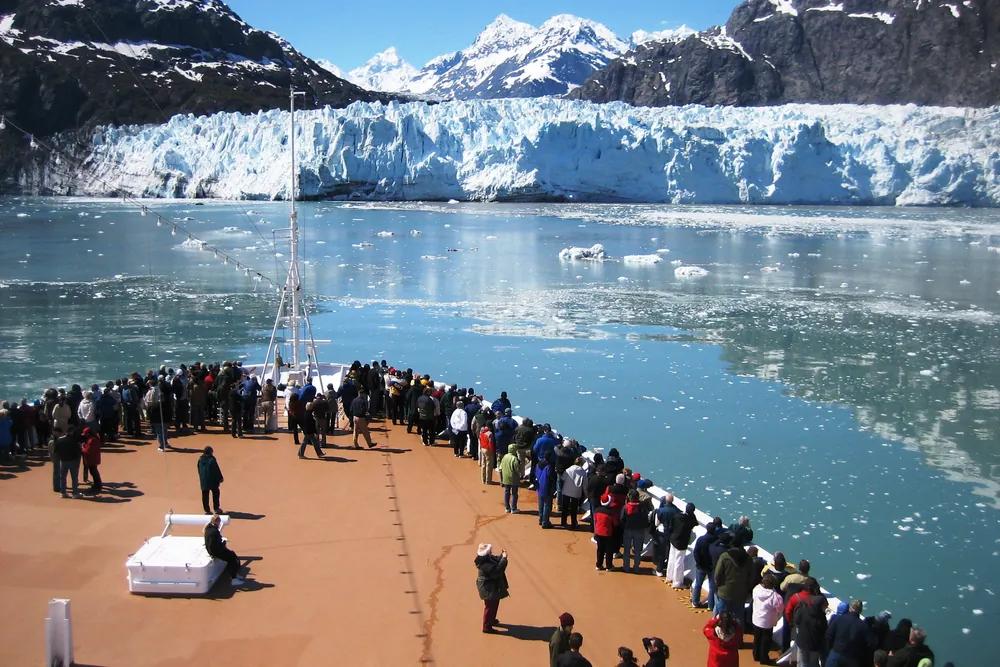
June is a useful starting choice for daylight and the historical coastal precipitation comparison. July offers warmer normals; late summer brings different trade-offs rather than universal improvement. Rain can obscure distant views, while wind and sea conditions affect excursions. No month guarantees glacier calving or a particular ship-to-glacier approach.
Juneau is not an ordinary road-trip stop from Anchorage. Travel Juneau’s transport guide explains the need for air or sea access to reach the city from outside its local road system. For independent ferry travel, check the Alaska Marine Highway’s actual timetable; do not assume a daily connection or immediate onward departure.
Best Time to Visit Denali National Park
Choose the summer bus season if your priority is travelling into the park along its road. NPS describes the usual bus window as mid-May through mid-September, but that is not confirmation that every route operates throughout it. Private-car access is limited; arriving with a rental car does not give unrestricted access to the whole road. See NPS guidance on visiting by bus.
The important 2027 update: an NPS release dated September 3, 2026 announced completion of the Pretty Rocks bridge and said full Park Road bus service was expected to resume in 2027. Bridge completion and restoration of visitor services are different milestones.
Treat that as an official expectation, not a guaranteed departure schedule. As of the NPS October 19, 2026 update, reservations for the 2027 Denali bus and campground season are scheduled to open December 1, 2026. Check the latest NPS information before booking. Before paying for a west-end itinerary, confirm the operating dates, bus destination and facilities on the current-conditions page. Older pages can retain closure wording; use dated updates and current route information together.
Winter Denali is a different visit. NPS winter guidance describes limited road access and snow-based recreation, with services reduced. Do not book a winter entrance-area stay expecting summer bus excursions. Mountain visibility is also weather-dependent in every season.
Best Time to See the Northern Lights in Alaska
Plan around darkness, a suitable location and flexible evenings, not a promised sighting. Travel Alaska gives a broad late-August-to-late-April window; the UAF Geophysical Institute gives roughly August 21–April 21 for Fairbanks. These describe viewing conditions, not dates when the aurora switches on or off.
Fairbanks is a practical base for an aurora-focused visit. Our winter itinerary uses several evenings there so the holiday does not depend on one clear night. Choose accommodation or tours with a safe viewing arrangement and a warm place to wait. More nights provide more opportunities, without creating a defensible sighting percentage for your booking.
Darkness alone is insufficient. Clouds can block the sky, and solar activity changes. Use UAF’s near-term forecasts alongside local weather close to travel. A high activity forecast cannot remove cloud cover, and a forecast available now cannot identify the successful nights of a 2027 holiday.
For a mixed summer-and-aurora trip, consider a late-August or September Interior extension, while checking seasonal transport. For snow activities, March is a useful starting point. Choose a dedicated land-based aurora stay if the lights matter more than the cruise.
Best Time to Visit Alaska for Wildlife
There is no single peak wildlife month covering all species and regions. The Alaska Department of Fish and Game seasonal guide relates viewing to migration, breeding and hibernation. Choose the animal and location before selecting your dates.
| Wildlife goal | Destination-specific planning window | Important distinction |
|---|---|---|
| Humpback whales | Glacier Bay: numbers typically peak in July–August | This is NPS monitoring guidance for Glacier Bay, not all Alaska waters |
| Bears fishing near Brooks Falls | July | Salmon and bear activity vary within the month |
| Bears along the lower Brooks River | September | The best viewing location can differ from July |
| Migrating waterfowl and shorebirds | Spring at named wetlands | Match the destination and species; Alaska migration is not simultaneous |
| Moose and other land mammals | Choose a suitable regional trip | Sightings are incidental, not an included guarantee |
NPS Glacier Bay whale monitoring reports that humpback numbers typically rise in mid-June and peak in July and August. Do not apply that pattern to every whale species or assume an orca sighting is included on a cruise.
For brown bears, Katmai’s official seasonal guidance identifies July and September as prime Brooks Camp viewing months. July is associated with bears fishing at the falls; later viewing can concentrate around the lower river. A generic recommendation of “summer for bears” misses this distinction.
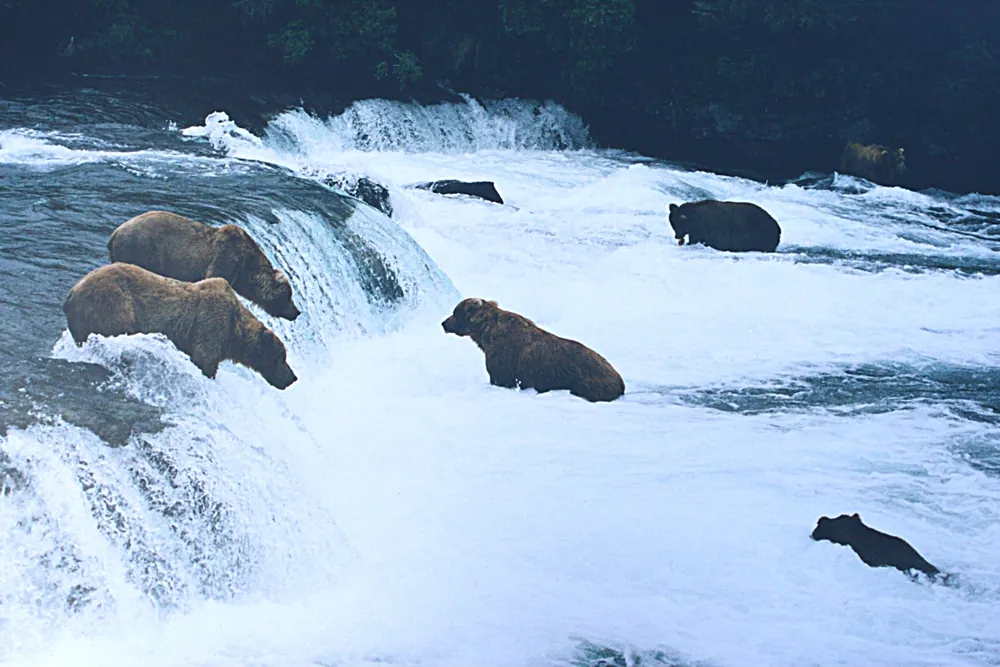
Katmai also requires separate logistics: NPS confirms there is no road connection from Anchorage to Brooks Camp or King Salmon. Allow for flights or boat arrangements and weather disruption. Do not squeeze a remote bear trip between two inflexible transport bookings. Follow local viewing rules and staff directions rather than approaching an animal for a photograph.
Summer vs. Winter in Alaska
| Planning issue | Summer trip | Winter trip |
|---|---|---|
| Main focus | Coast, cruises, park buses and hiking | Snow activities, culture and aurora evenings |
| Daylight | Long sightseeing days; bright nights can prevent aurora viewing | Shorter daylight; protect time for daytime activities |
| Rail | Seasonal passenger routes offer more options | Anchorage–Fairbanks service runs on selected days |
| Accommodation | Check availability near seasonal attractions | Confirm which lodgings and meal services stay open |
| Road travel | Allow for stops, construction and weather | Allow extra flexibility for ice, snow and limited daylight |
| Essential compromise | Do not expect every trail to be snow-free | Do not expect summer excursions to operate |
The Alaska Railroad’s published timetable lists Coastal Classic service between Anchorage and Seward for May 14–September 12, 2027. The Denali Star window is May 12–September 16, with direction-specific first and last days. Recheck dates before booking connections.
The Aurora Winter Train is not a daily substitute for the summer network: it runs weekends with selected midweek departures. Plan around the actual date, or choose a single winter base. For driving decisions, consult Alaska 511 rather than a summer journey-time estimate.
Cheapest Time to Visit Alaska
There is no verified price dataset here establishing a universally cheapest month. May and September are worth comparing with midsummer, but a lower advertised fare may cover a different cabin, route, departure time or set of inclusions. Winter transport and specialist activities can also change the total.
Compare the same trip components: flights, baggage, room nights, vehicle or transfers, excursions, meals and cancellation terms. For a cruise, check taxes, included dining, optional excursions and the cost of reaching both endpoint ports. For a land trip, compare the available accommodation near the actual activity, not just the gateway city.
Prioritise the experience that fixes your dates. If a particular bus, boat or remote lodge is essential, establish its availability before buying the rest of the trip. Travel Alaska recommends early planning for key summer arrangements; that supports booking preparation, not a guaranteed saving or a fixed booking deadline.
Two Realistic Alaska Itineraries
Seven nights in summer: Anchorage, Seward and Denali
Use this as a road-trip framework within the relevant summer operating windows. It splits the coast-to-Interior transfer with an Anchorage night rather than treating Seward and Denali as neighbouring stops. Accommodation and excursions must be confirmed for the chosen dates.
| Day | Overnight | Main plan | Transfer allowance |
|---|---|---|---|
| 1 | Anchorage | Arrive, collect transport and rest | Keep arrival day flexible |
| 2 | Seward | Travel south; settle in and explore locally | About 2½ hours driving before stops or delays |
| 3 | Seward | Booked marine sightseeing, with a land alternative if cancelled | Stay locally |
| 4 | Anchorage | Return north; use remaining time for the city | About 2½ hours driving before stops or delays |
| 5 | Denali entrance area | Travel north and prepare for the park visit | About 5 hours driving before stops or delays |
| 6 | Denali entrance area | Confirmed bus trip or accessible entrance-area activities | Follow the actual operating itinerary |
| 7 | Anchorage | Return south and keep the evening uncommitted | About 5 hours driving before stops or delays |
| 8 | None | Depart Anchorage | No long intercity transfer planned |
Night count: Anchorage 3 + Seward 2 + Denali entrance area 2 = 7. Driving allowances follow Visit Anchorage’s transport comparison, not a guarantee of road conditions.
These places are rail-connected, but the train is not a drop-in replacement for every driving leg. The published northbound Coastal Classic takes 4 hours 35 minutes to Seward; Anchorage–Denali on the Denali Star takes 7 hours 20 minutes. A rail version needs station transfers and late-arrival accommodation arrangements. Do not attach a fixed same-day departure to the final long transfer.
Seven nights in winter: Fairbanks with a Chena overnight
This plan avoids a long winter intercity circuit. March is a sensible starting point, with activities chosen for actual snow and weather conditions. Reserve local transfers and evening viewing arrangements; do not assume remote accommodation includes transport.
| Day | Overnight | Main plan | Transfer allowance |
|---|---|---|---|
| 1 | Fairbanks | Arrive and organise winter clothing | Arrange airport-to-hotel transport |
| 2 | Fairbanks | Museum visit and a rested aurora evening | Local transfers |
| 3 | Fairbanks | A booked snow activity appropriate to conditions | Confirm the operator’s pickup |
| 4 | Fairbanks | Flexible city day; another viewing opportunity | Avoid an unnecessary long drive |
| 5 | Chena Hot Springs | Prearranged transfer and overnight | Allow roughly 1½–2 hours in suitable conditions |
| 6 | Fairbanks | Return and rest | Allow roughly 1½–2 hours, plus disruption margin |
| 7 | Fairbanks | Weather buffer and final viewing opportunity | Stay near the departure gateway |
| 8 | None | Depart Fairbanks | Confirm airport transfer |
Night count: Fairbanks 6 + Chena Hot Springs 1 = 7. The resort’s transport page gives the approximate transfer duration; confirm your pickup and current terms directly. A late viewing night is not a reason to drive while tired.
The University of Alaska Museum of the North provides an indoor anchor; check current hours rather than relying on an old gallery brochure. Its official calendar lists Shaped by Ice from October 24, 2026, to September 26, 2027. Recheck the exhibition before building a visit around it.
What to Pack for Alaska by Season
For a summer coast-and-land trip, pack a base layer, insulation and waterproof outerwear, following NPS advice for Kenai Fjords. Add suitable walking footwear, sun protection and insect protection. Keep rainwear accessible during a boat trip.
On a cruise or marine excursion, plan for wind and spray on deck even when the port feels comfortable. For hiking, match footwear and equipment to the actual route; an airport’s normal temperature is not a mountain forecast. Ask guides about required equipment before buying or packing specialist items.
For winter, confirm whether your operator provides insulated boots, outer layers and hand protection, and in what sizes. Bring warm layers for both active daytime use and stationary aurora viewing. Protect spare batteries from the cold and carry an additional dry layer. Ask about mobility, age and exposure limits when choosing activities.
In either season, pack for the itinerary you have booked rather than an imagined statewide average. A coastal cruise, a mountain walk and an outdoor winter wait place very different demands on the same traveller.
Alaska Travel FAQs
What is the best month to visit Alaska for the first time?
June or July is a useful starting choice for a first summer trip combining coastal sightseeing and inland travel. July has warmer normal average highs at the three airport stations compared here; June offers long days and lower historical precipitation than late summer in Anchorage and Juneau. Confirm the specific services you need.
What is the best time to cruise Alaska?
Most travellers should compare sailings from May through September. Choose by itinerary, named glacier stops, port hours and available excursions as well as weather. Some operators sail outside this window, but an early or late departure does not guarantee the same shore services as midsummer.
Can you see the northern lights in Alaska in June?
June’s bright nights make it unsuitable for an aurora-focused Fairbanks trip. Choose the darker part of the year instead. Even during the usual viewing season, darkness, cloud cover and auroral activity must align; no month guarantees a sighting.
Will the full Denali Park Road be open in 2027?
NPS announced the Pretty Rocks bridge’s completion in September 2026 and said full road bus service was expected to resume in 2027. That is not confirmation of every route or operating date. Check current NPS notices and the exact bus booking before committing to a west-end visit.
What is the cheapest month to visit Alaska?
No single cheapest month is established by the evidence used here. Compare actual May, September and midsummer quotes for equivalent arrangements, including transport, accommodation, excursions and cancellation terms. Reduced service availability can make a cheaper fare unsuitable for your intended trip.
Is one week enough for Alaska?
Seven nights can work for a focused route, such as Anchorage, Seward and Denali in summer, or Fairbanks with a Chena overnight in winter. It is not enough to treat the whole state as one road circuit. Juneau and Katmai require separate air or sea access arrangements.