Best Time to Visit Bora Bora: A Month-by-Month Guide
When Should You Go to Bora Bora?
Bora Bora’s air and sea temperature barely moves across the calendar — every month sits within a few degrees of 80–84°F. What actually separates a May trip from a December one isn’t heat, it’s whether an afternoon downpour interrupts your one week on the island, and what you’ll pay to be there when it doesn’t.
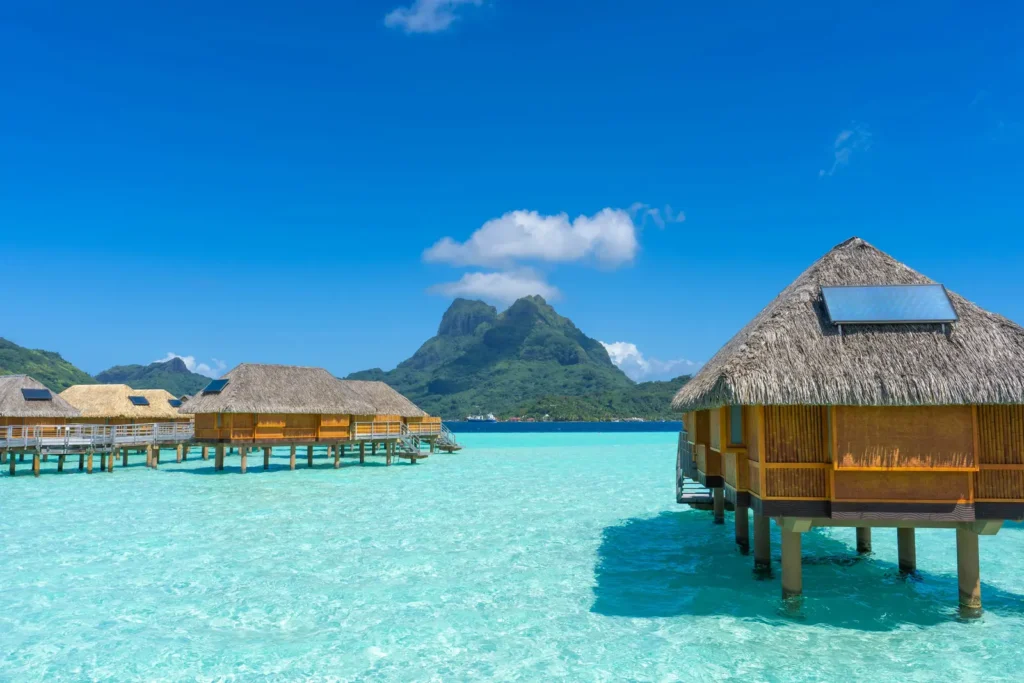
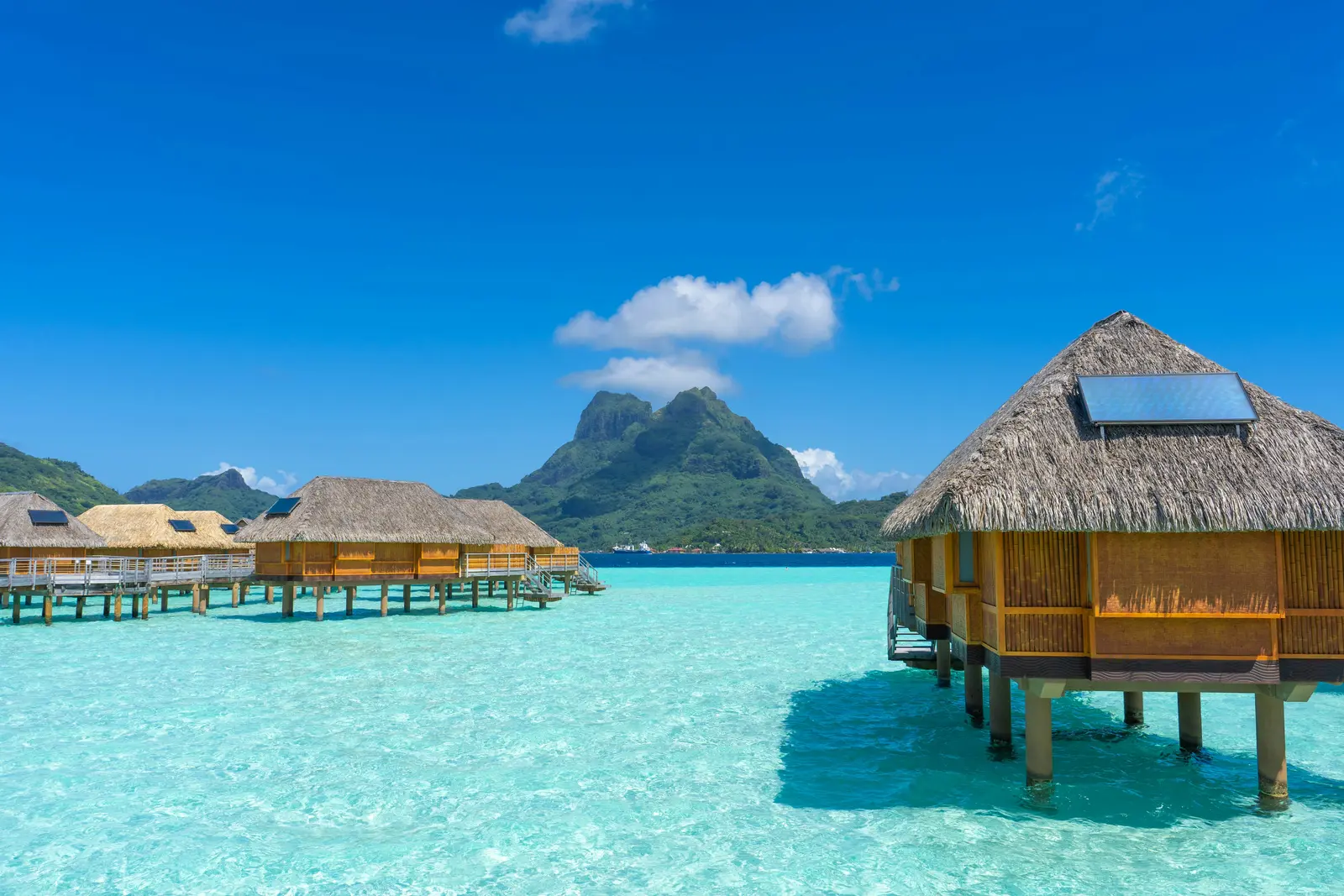
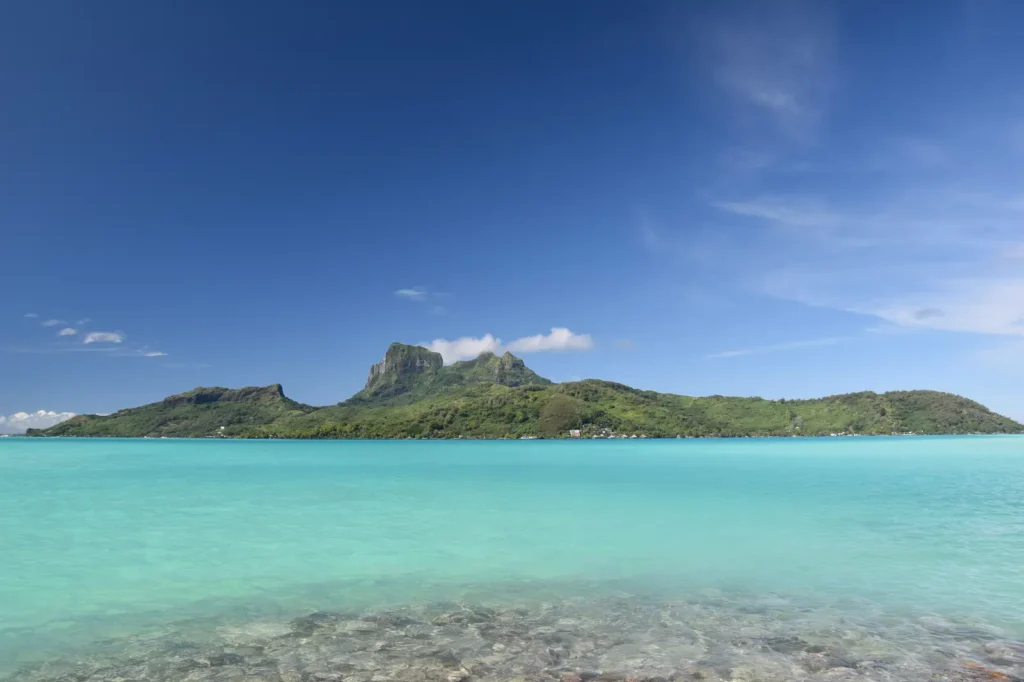
Bora Bora is a volcanic island in French Polynesia’s Society Islands, ringed by a coral reef lagoon. Its dry season (May–October) brings the lowest rainfall and clearest lagoon visibility, while November–April brings more frequent, heavier downpours — with temperatures holding almost steady across both.
Rainfall Swings Nearly 5x Between Bora Bora’s Wettest and Driest Months
August is Bora Bora’s driest month, averaging just 59mm (2.3 in) of rain across roughly 13 rainy days, while December is the wettest, averaging around 283mm (11 in) across about 12 rainy days — almost five times as much rain, even though the number of rainy days barely changes. That’s the detail most “best time to visit” pages skip: it isn’t that the wet season rains constantly, it’s that each rain event carries far more water — which is why rainfall intensity, not temperature, is the seasonal variable that actually matters here.
| Season | Months | Rainfall | Air / Sea Temp | What to Expect |
|---|---|---|---|---|
| Dry season | May–Oct | Lowest of the year; August is the driest month (~59mm) | 81–84°F / 80–84°F | Clearest lagoon visibility (15m+), sunniest days average 8.3 hrs of sun in August |
| Transition | April & November | Rising or falling toward the wet-season peak | 82–84°F / 82–84°F | Fewer crowds, softer rates, still mostly dry-season conditions |
| Wet season | Dec–Mar | Highest of the year; December is the wettest month (~283mm) | 82–84°F / 82–84°F | Short, heavy afternoon downpours; small cyclone risk in Feb–Mar; least sunshine in January (6.8 hrs/day) |
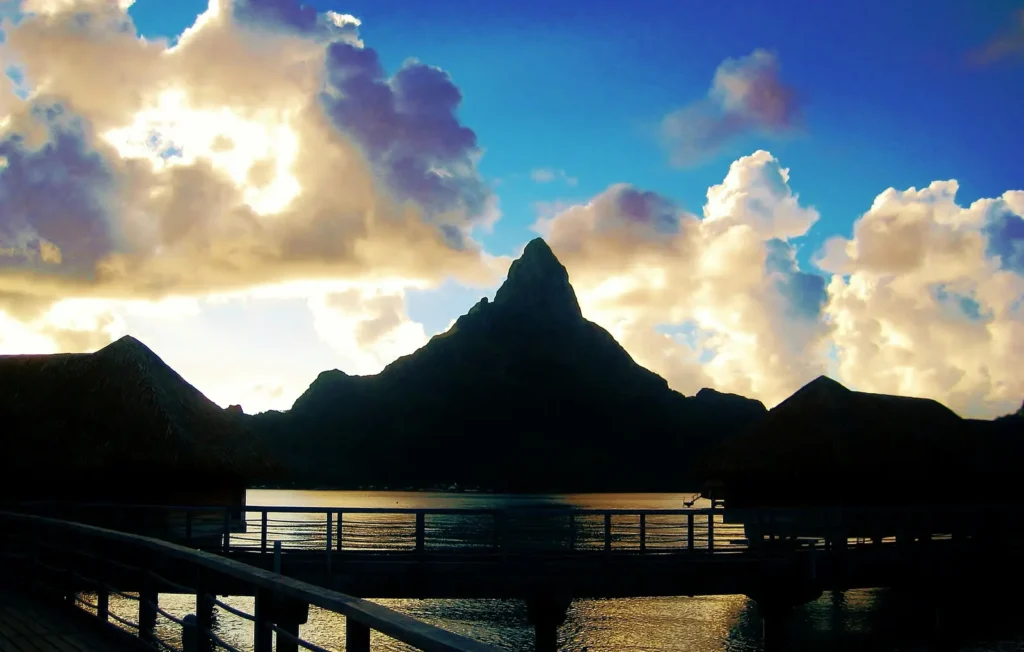
Heiva i Bora Bora Turns the Island Into a Six-Village Competition Every July
Heiva i Bora Bora 2026 runs from June 26 to August 2, with six villages — Anau, Amanahune, Faanui, Hiti’a, Nunue, and Tiipoto — competing in traditional dance, hīmene singing, and Polynesian sports across the festival’s five-week run. The core competition nights, when the jury scores each village’s hīmene and ‘ōte’a performances, fall in the second week: July 7 to 13. Prize-giving follows on July 19, with a closing soirée des lauréats on July 24. If you can only be on the island for a handful of nights, build your trip around July 7–13 rather than the festival’s opening or its quieter final weeks. This is also, not coincidentally, Bora Bora’s most expensive and most booked-up travel window, so a Heiva trip means planning flights and resorts several months out rather than a few weeks.
| Event | 2026 Dates | What It Is |
|---|---|---|
| Heiva i Bora Bora — competition nights | Jul 7 – Jul 13 | Jury-scored hīmene and ‘ōte’a performances — the nights to prioritize |
| Heiva i Bora Bora — full festival | Jun 26 – Aug 2 | Six villages compete in dance, singing, and traditional sports |
| Heiva i Tahiti (Papeete) | Jul 2 – Jul 18 | The larger sister festival in Tahiti, if your trip includes Papeete |
| Tahiti Pearl Regatta | Varies (typically May) | Sailing race between Bora Bora, Raiatea, Huahine, and Taha’a |
| Bora Bora Liquid Festival | December | Watersports competition with beach parties in the lagoon |
Confirm exact festival and competition-night dates directly with the Bora Bora commune or Tahiti Tourisme closer to your travel date, since municipal calendars can shift by a few days year to year.
Getting to Bora Bora Always Means Two Flights — Plan Around That, Not Just the Season
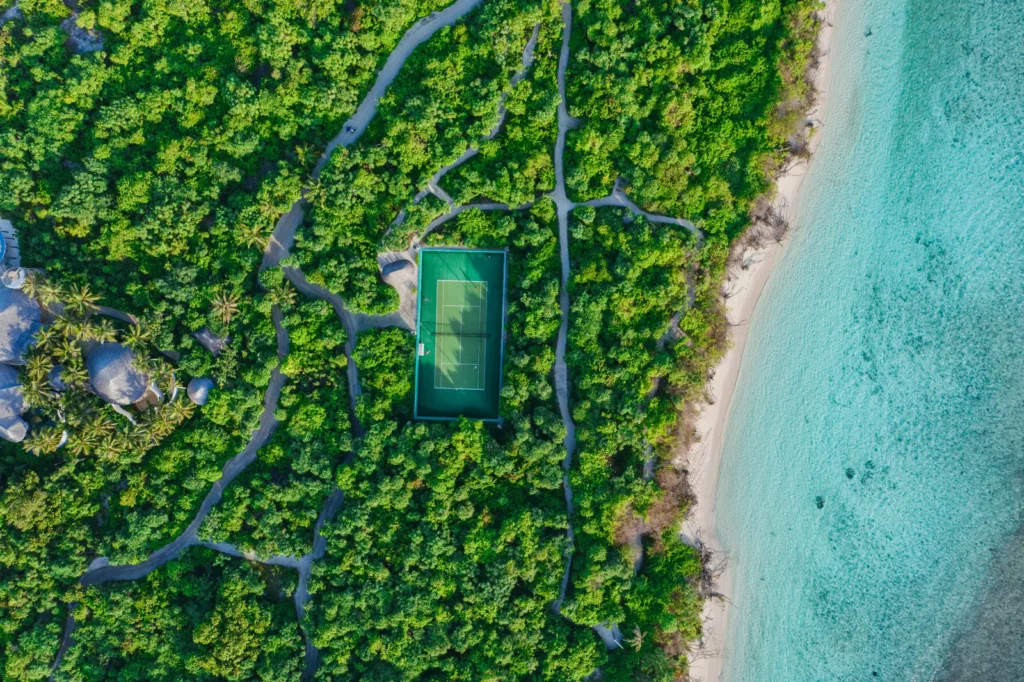
There are no direct international flights to Bora Bora: every traveler flies into Faa’a International Airport (PPT) in Papeete, Tahiti, first, then connects on a short Air Tahiti or Air Moana flight — typically 45 to 55 minutes — to Bora Bora’s airport on Motu Mute. From the US West Coast, that means about 8 hours nonstop to Papeete (Air Tahiti Nui operates LAX–PPT), plus the domestic hop; from Paris, figure roughly 17.5 hours direct or longer with a Los Angeles connection. Build in at least 3–4 hours of buffer in Papeete for immigration, baggage, and re-check-in — the domestic Air Tahiti counter is a separate check-in from international arrivals, and it typically closes about an hour before departure.
Air Tahiti’s last Bora Bora departure of the day is usually in the late afternoon (commonly cited around 5:30pm, though this shifts by season and isn’t guaranteed), so if your international flight lands in the late afternoon or evening, you’ll likely need to spend a night in Tahiti before continuing on — always check the current domestic schedule when you book, since missing that last flight means an unplanned hotel night. A slower alternative exists: the Apetahi Express catamaran (around 7 hours, daytime) or an overnight cargo-passenger ferry (12–14 hours) — worth knowing about as a backup or budget option, though schedules should be reconfirmed directly with the operator before you rely on one.
What an Overwater Bungalow Actually Costs, Tier by Tier
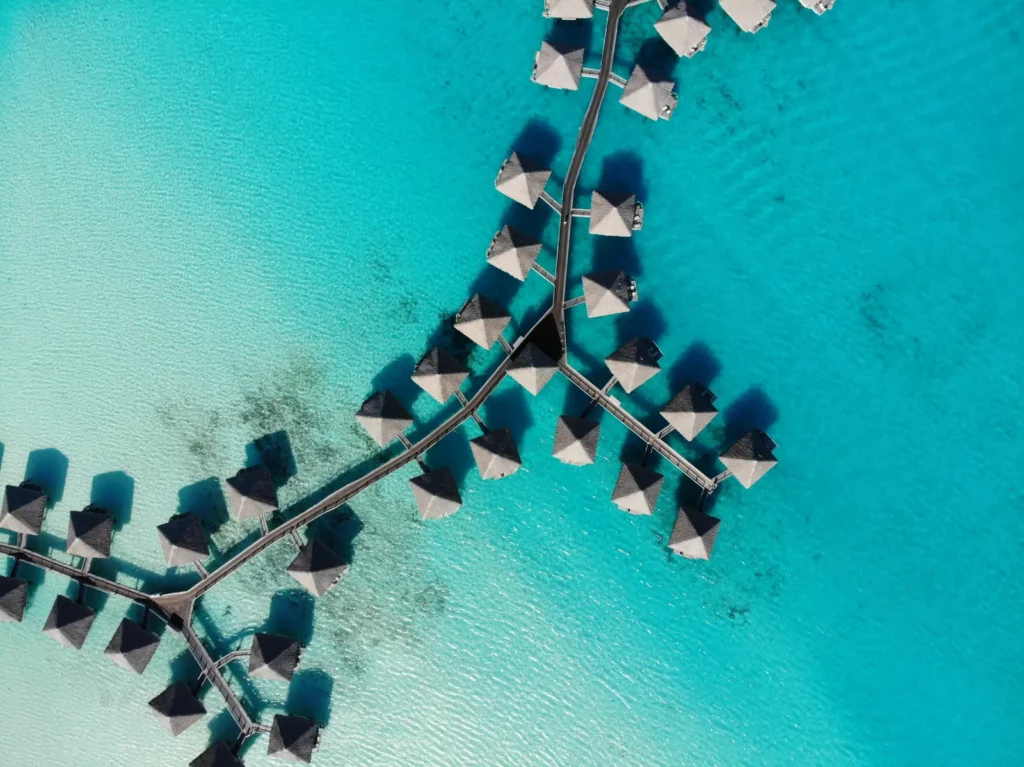
Bora Bora’s overwater bungalows split into three real price tiers rather than one blurry “expensive” category. Entry-level main-island properties like the Maitai and InterContinental Le Moana start around $600–$900 a night in low season (climbing toward $1,200 in peak periods), motu resorts like the Westin, Thalasso, Conrad, and Le Méridien typically run $1,000–$1,900, and the top suites at the Four Seasons and St. Regis range from roughly $1,800 up to $3,000–$7,000 a night during June–August and the December–January peak. Treat these as directional ranges rather than quotes — rates move with the season, the exchange rate, and each resort’s own pricing, so confirm current rates directly before booking.
| Tier | Example Resorts | Low Season | Peak Season |
|---|---|---|---|
| Entry-level | Maitai Polynesia, InterContinental Le Moana | $600–$900/night | up to ~$1,200/night |
| Motu mid-tier | Westin, Thalasso, Conrad Nui, Le Méridien | $1,000–$1,500/night | $1,500–$1,900/night |
| Luxury | Four Seasons, St. Regis | $1,800–$2,500/night | $3,000–$7,000+/night |
A few costs that don’t show up in the nightly rate: motu resorts run their own boat transfer from the airport, commonly in the $200–$400 per person round-trip range depending on the resort and boat type, and most rates are room-only, so meal plans are usually a separate add-on. Confirm the transfer cost with your resort when you book — it’s often bundled differently package to package. Booking 60–90 days ahead tends to strike the best balance of availability and price — later bookings skew toward whatever’s left, which is rarely the cheapest inventory. Traveling in the wet season (November–March, outside the December holiday peak) remains the single biggest lever for cutting the cost of a trip, since it discounts across every tier at once.
Coral Gardens, the Lagoonarium, and When the Water Is Actually Clearest
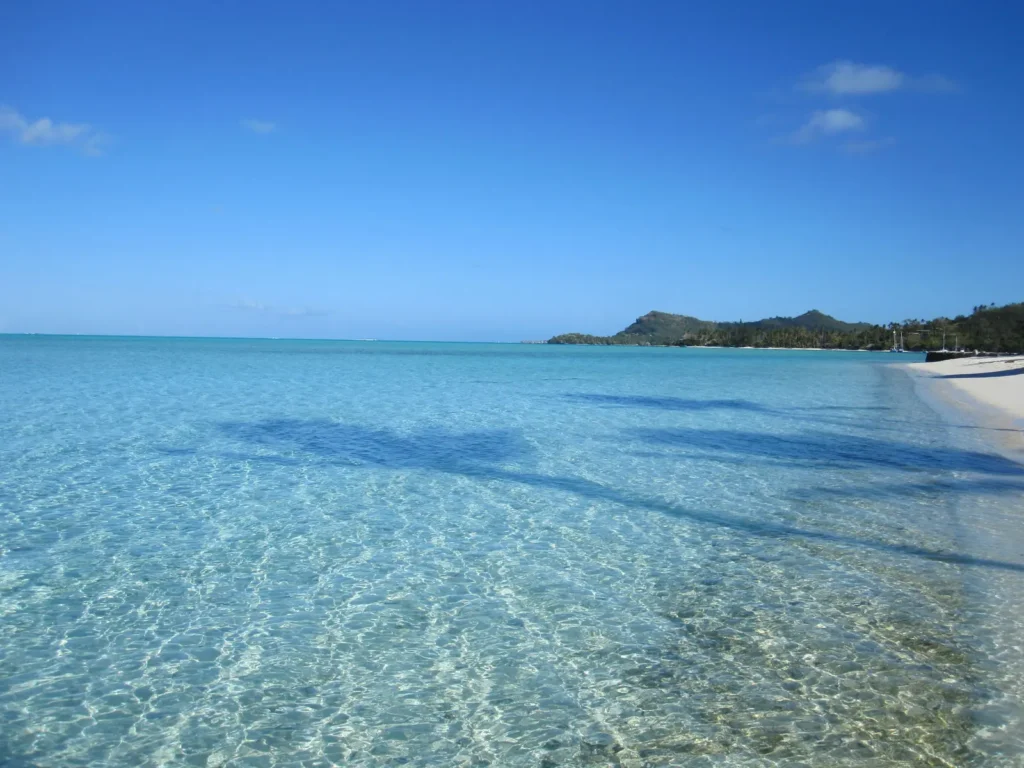
The two most accessible snorkeling spots — the Coral Gardens (also called “the Aquarium,” off Motu Pitiaau near the southern lagoon) and the Lagoonarium, a natural coral-ringed enclosure on the western side of the lagoon — are both reachable without a full-day boat charter and regularly turn up blacktip reef sharks, manta rays, spotted eagle rays, and sea turtles. August and September offer the best combination of water clarity and lighter boat traffic, with dry-season visibility running upward of 15 meters; spotted eagle rays are most active in the first two hours after sunrise, and the Coral Gardens themselves are calmest before 9am or after 3pm, once the midday tour-boat crowds have thinned out.
If you’d rather not join a group tour, the Coral Gardens are shore-accessible; the Lagoonarium and shark/ray feeding circuits generally require a guided boat tour, typically $60–$150 per person — confirm current pricing and inclusions with the operator, since it varies by trip length and group size.
How Bora Bora Compares to Moorea, Tahiti, and Rangiroa
| Island | Best Months | Vibe | Overwater Bungalows |
|---|---|---|---|
| Bora Bora | May–Oct | Iconic lagoon, luxury resorts, most photographed | Yes — the original, and the most expensive |
| Moorea | May–Oct | Same climate pattern, noticeably cheaper, closer to Tahiti | Limited |
| Tahiti | May–Oct | Main gateway island, more urban, black-sand beaches | Few |
| Rangiroa | Jun–Sep | World-class diving, coral atoll instead of a volcanic peak | Some |
If Bora Bora’s rates are outside your budget, Moorea shares the same seasonal pattern at a noticeably lower price point and is a short ferry from Tahiti’s international airport — a reasonable base if you want the region’s climate without the flagship-island premium.
Frequently Asked Questions
Do I need to spend a night in Tahiti before reaching Bora Bora?
If your international flight lands in Papeete in the late afternoon or evening, likely yes — the last domestic flight to Bora Bora is usually in the late afternoon (commonly around 5:30pm, though this can shift seasonally), and Air Tahiti’s counter typically closes about an hour before departure. Anyone landing after early afternoon should plan on an airport-area hotel in Tahiti for one night, and should double-check that day’s actual last-flight time when booking.
What’s the actual cheapest way to experience Bora Bora?
Book an entry-level main-island resort like the Maitai or InterContinental Le Moana ($600–$900/night in low season) instead of a motu resort, and travel in the wet season outside the December holiday peak — that combination is the single biggest cost lever available.
When is the water clearest for snorkeling?
August and September, when dry-season visibility regularly exceeds 15 meters and boat traffic at the main sites is lighter than during the June–August school-holiday peak.
Is there a real cyclone risk?
Bora Bora sits far enough east in the South Pacific that cyclones are uncommon. The small risk window falls in February and March, well after the December rainfall peak.
Is Heiva worth planning a trip around?
If you want to see Bora Bora’s culture rather than just its lagoon, yes — but expect peak-season pricing and book flights and resorts months ahead, since the competition-night window overlaps with the island’s already-busiest travel season.
Planning a broader South Pacific trip? See our guides to the best time to visit New Zealand and the best time to visit Hawaii for comparison.