Best Time to Visit Peru: Month-by-Month Guide
Why Doesn’t Peru Have One Single Best Time to Visit?
Cusco and Lima are barely 90 minutes apart by plane, yet Cusco’s driest, sunniest month is often Lima’s greyest — book a trip around one city’s ideal window and you can land squarely in the other’s worst. That’s the trap Peru sets for first-time planners: the coast, the Andes, and the Amazon run on three different calendars, and a month that’s ideal for Machu Picchu can be the coast’s foggiest stretch, and vice versa.
Peru is a South American country spanning three climate zones — desert coast, Andean highlands, and Amazon rainforest — each running its own wet and dry season, which is why “best time to visit Peru” only makes sense once you know which region and activity you’re planning around. Hawaii packs a similar range of climates into a far smaller area, where elevation alone can separate a snowy summit from a tropical coastline.
When Should You Visit Peru? (Quick Answer)
- Best overall for first-time visitors: May through September — the Andean dry season, when Machu Picchu, Cusco, and the Sacred Valley all have their clearest, most reliable weather.
- Best for the Inca Trail and other treks: April–October, avoiding February when the classic Inca Trail closes entirely for annual maintenance.
- Best for the Amazon rainforest: May–October for easier wildlife viewing and drier trails; December–April if you prefer higher water levels for boat access and don’t mind daily rain.
- Best for Lake Titicaca: May–October for the driest, sunniest days, though nights are cold at this altitude year-round.
- Best for the desert coast (Lima, Nazca, Ica): December–April for warm, sunny beach weather; May–November brings the coastal fog locals call the garúa.
- Best for festivals: June, when Inti Raymi, Corpus Christi, and Qoyllur Rit’i cluster into Cusco’s single busiest month.
- Best for lower prices and thinner crowds: February (rainy in the Andes, Inca Trail closed) or the shoulder months of April and October–November.
When Is the Best Time to Visit Cusco and Machu Picchu?
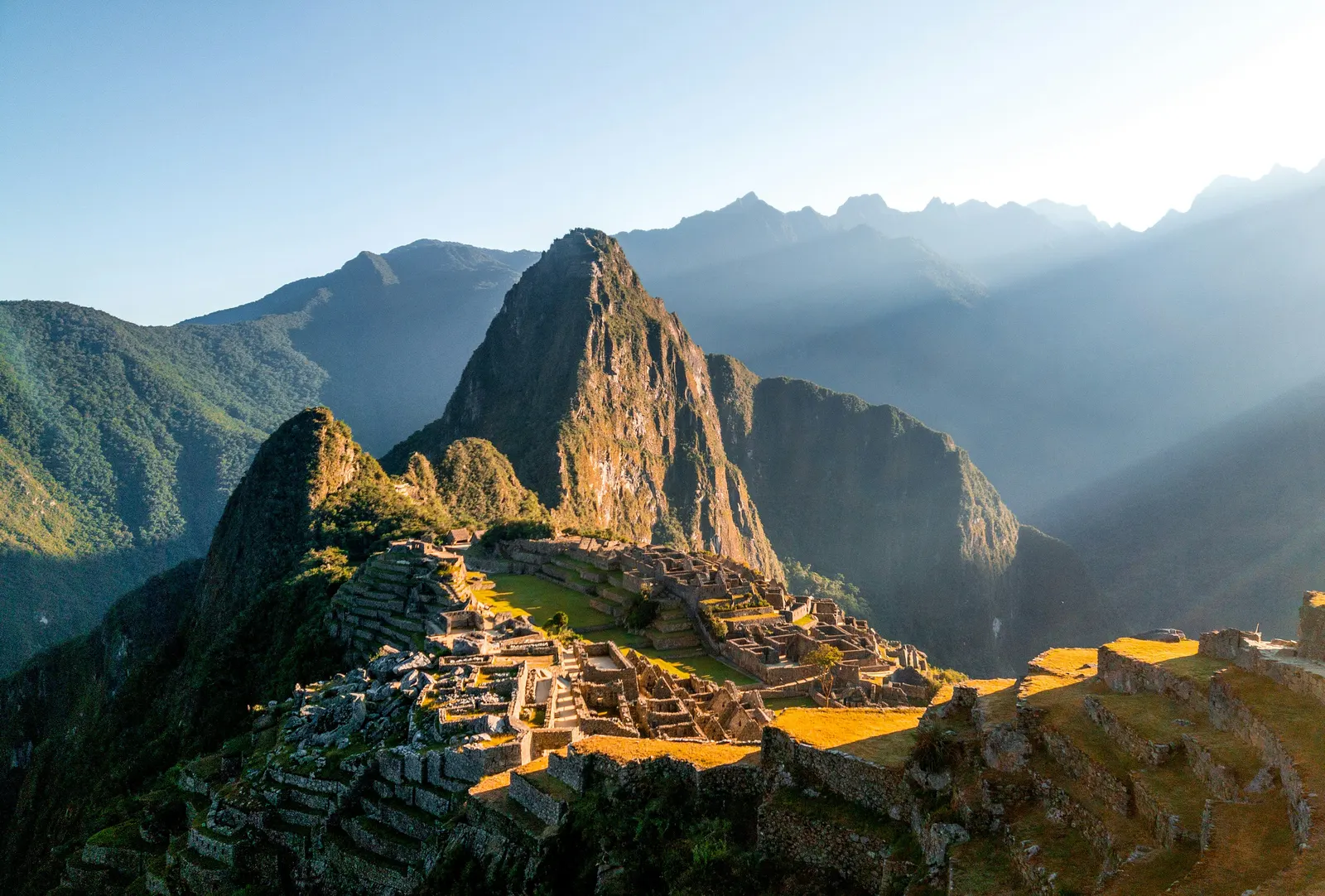
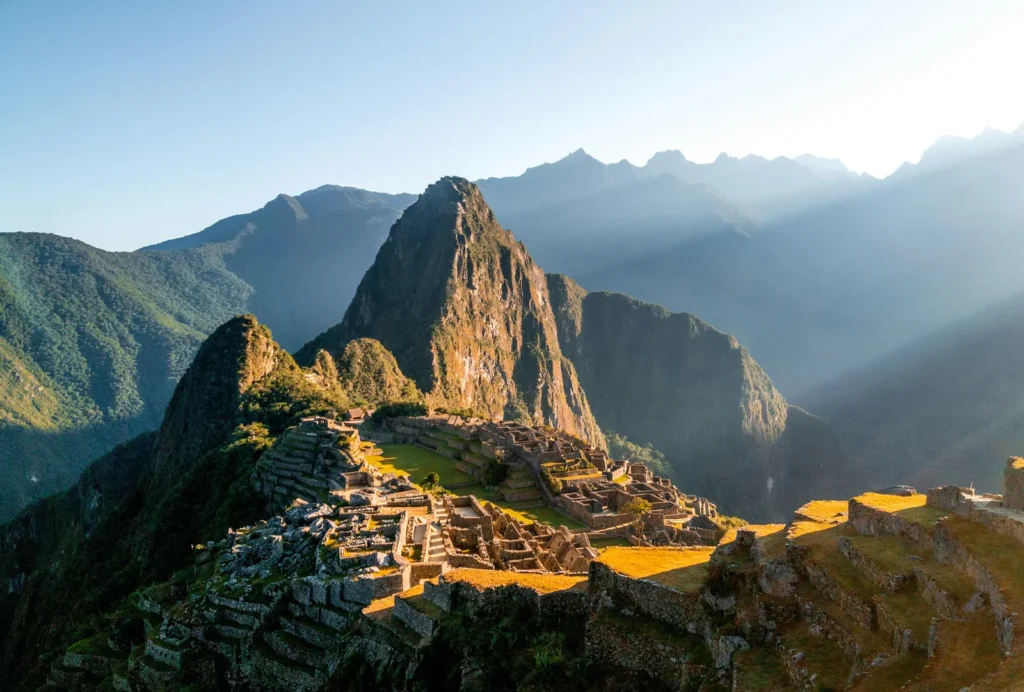
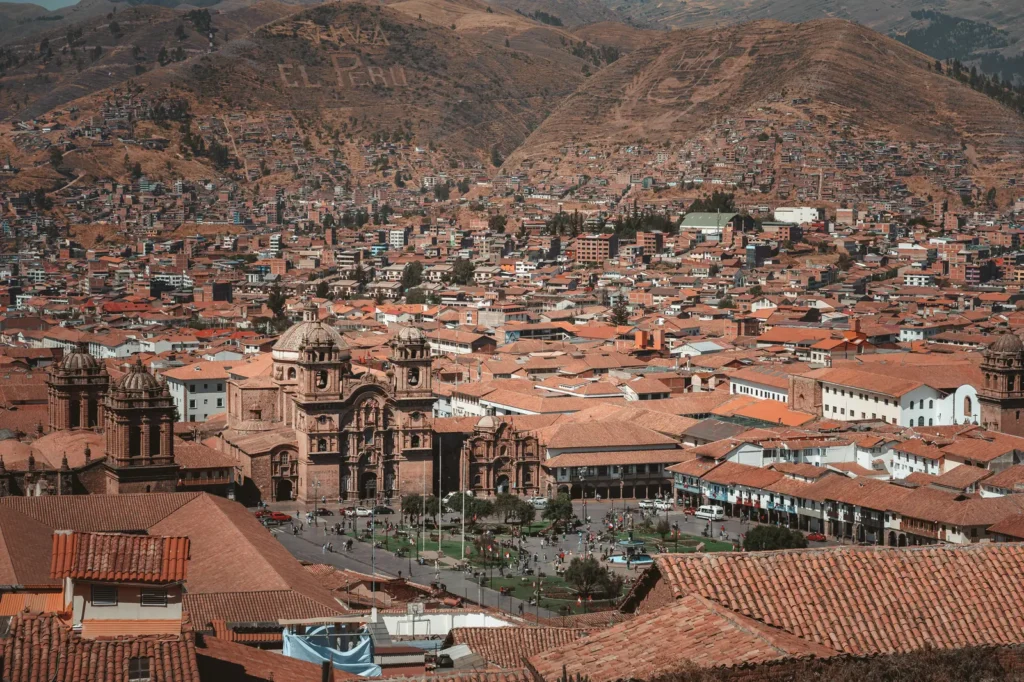
The best time to visit Cusco and Machu Picchu is the dry season, April through October, with June through August being the driest and busiest stretch. Machu Picchu itself sits at 2,430m (7,972ft) in a cloud-forest microclimate that stays relatively mild year-round — daytime highs of 18–25°C (64–77°F) don’t swing much between seasons — so rainfall, not temperature, is what actually separates a good visit from a soggy one. Cusco, higher and more exposed at 3,400m (11,175ft), tells a different story: June and July nights regularly drop to freezing, so “dry” doesn’t mean “warm after dark.”
The rainy season (November–March, peaking in January and February) turns the Sacred Valley green and thins out the crowds, but it also closes the classic four-day Inca Trail entirely every February for trail maintenance — Machu Picchu itself stays open via train through Ollantaytambo, but trekkers need to plan around it. March marks the turn toward drier weather, and April and September are usually the sweet spot: dry-season clarity without July and August’s peak-season prices and packed trails.
| Month | Cusco Daytime | Cusco Night | Rainfall | Notes |
|---|---|---|---|---|
| Jan | 18°C / 64°F | 5°C / 41°F | Heavy | Rainy season peak, lush and green |
| Feb | 18°C / 64°F | 5°C / 41°F | Heaviest | Classic Inca Trail closed for maintenance |
| Mar | 19°C / 66°F | 6°C / 43°F | Decreasing | Transition month, still green |
| Apr | 20°C / 68°F | 5°C / 41°F | Low | Best for most itineraries — dry, less crowded |
| May | 20°C / 68°F | 3°C / 37°F | Very low | Best for hiking, greenery from recent rains still visible |
| Jun | 19°C / 66°F | 0°C / 32°F | Lowest | Driest month, Inti Raymi (Jun 24), coldest nights |
| Jul | 19°C / 66°F | 0°C / 32°F | Very low | Peak season, book Inca Trail and trains months ahead |
| Aug | 20°C / 68°F | 2°C / 36°F | Very low | Peak season continues, still dry |
| Sep | 21°C / 70°F | 4°C / 39°F | Low | Best for most itineraries — dry, thinning crowds |
| Oct | 21°C / 70°F | 6°C / 43°F | Rising | Transition toward rainy season, still workable |
| Nov | 21°C / 70°F | 6°C / 43°F | Increasing | Rainy season begins, afternoon showers common |
| Dec | 20°C / 68°F | 6°C / 43°F | Heavy | Wet season underway, warm days between showers |
When Is the Best Time to Visit the Peruvian Amazon?
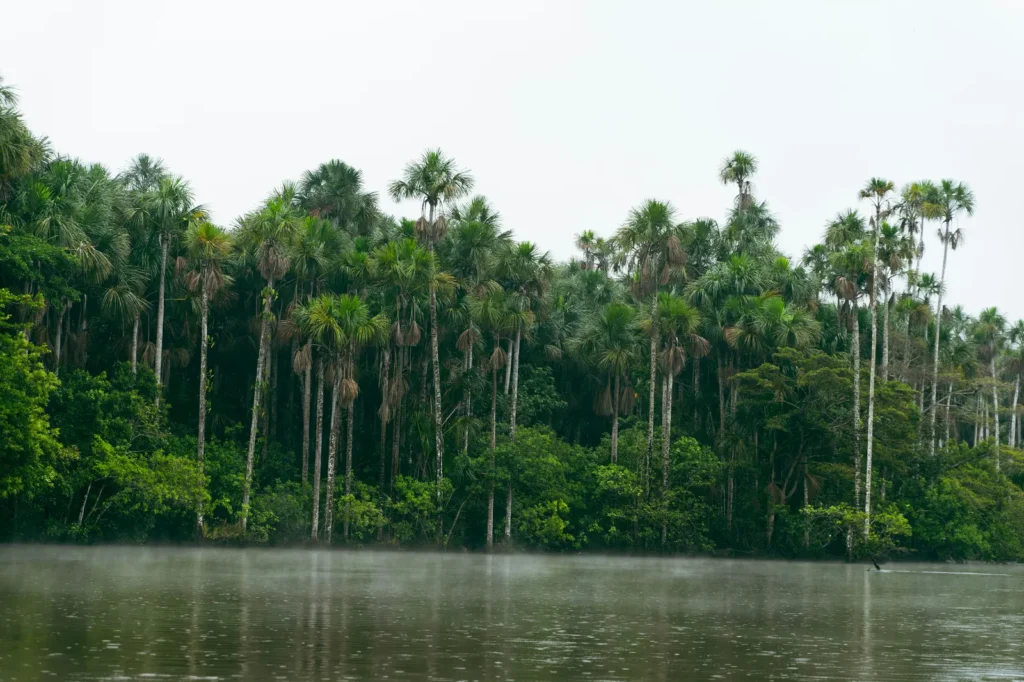
Visit the Peruvian Amazon (Iquitos or Puerto Maldonado) from May through October for the dry season’s easier wildlife viewing and firmer trails, or December through April if you’d rather explore by boat when water levels — and access to flooded creeks — are at their highest. There’s no true dry season in the lowland jungle; rain is possible any day of the year, and the difference between the two “seasons” is really about water levels and how you move through the forest rather than whether you’ll get wet. It’s a similar logic to how Costa Rica’s dry season concentrates wildlife around fewer, more predictable water sources.
Temperatures stay warm and steady year-round: daytime highs of 30–33°C (86–91°F) and nighttime lows of 19–23°C (66–73°F), with humidity as the real factor in how the heat feels. One quirk worth knowing about: in the southern Amazon around Puerto Maldonado, cold fronts called friajes occasionally push up from Patagonia between May and August, dropping temperatures as low as 7°C (45°F) within 24 hours — rare, but worth packing a light layer for if you’re visiting that region in the dry season. February is the one month most guides suggest avoiding in the Amazon, since it combines the heaviest rain with the highest, most difficult-to-navigate water levels.
When Is the Best Time to Visit Lake Titicaca?
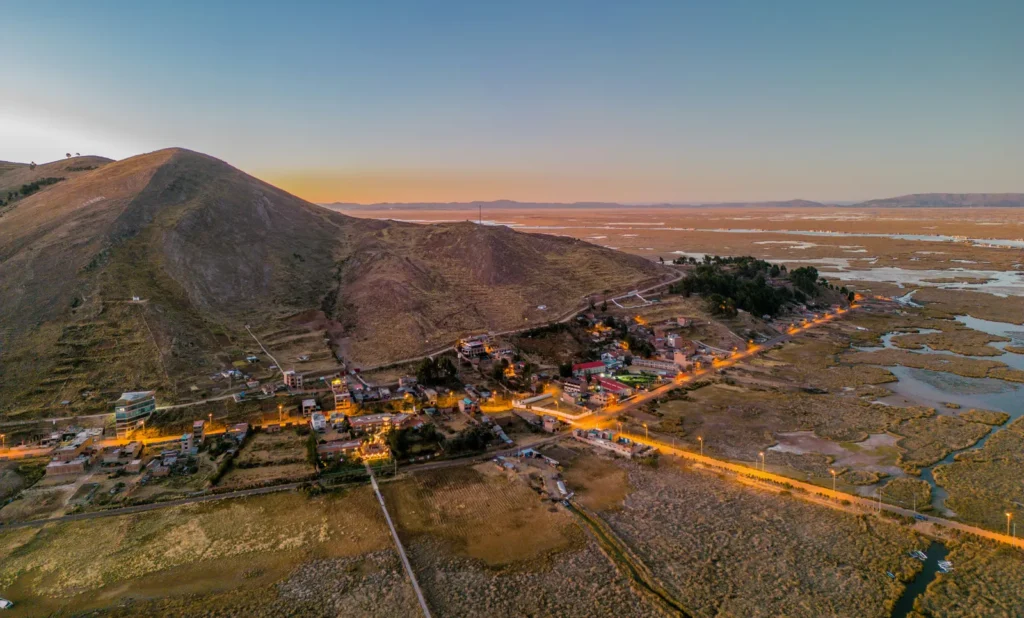
Visit Lake Titicaca and Puno from May through October, when the altiplano’s dry season delivers the clearest skies and least chance of rain — though at 3,810m (12,500ft), nights are cold here no matter the month. Puno’s rainy season runs October through April, and even in the “warmer” months of November through March, daytime highs only reach the mid-teens Celsius (upper 50s°F); winter nights (June–August) regularly drop below freezing, with Puno recording sub-zero mornings more often than almost anywhere else in Peru. Because Titicaca sits higher than Cusco, it’s also worth treating as a separate altitude-acclimatization stop rather than a quick add-on to a Cusco itinerary — many travelers feel the elevation here more than they did in Cusco itself.
When Is the Best Time to Visit Peru’s Desert Coast (Lima, Nazca, Ica)?
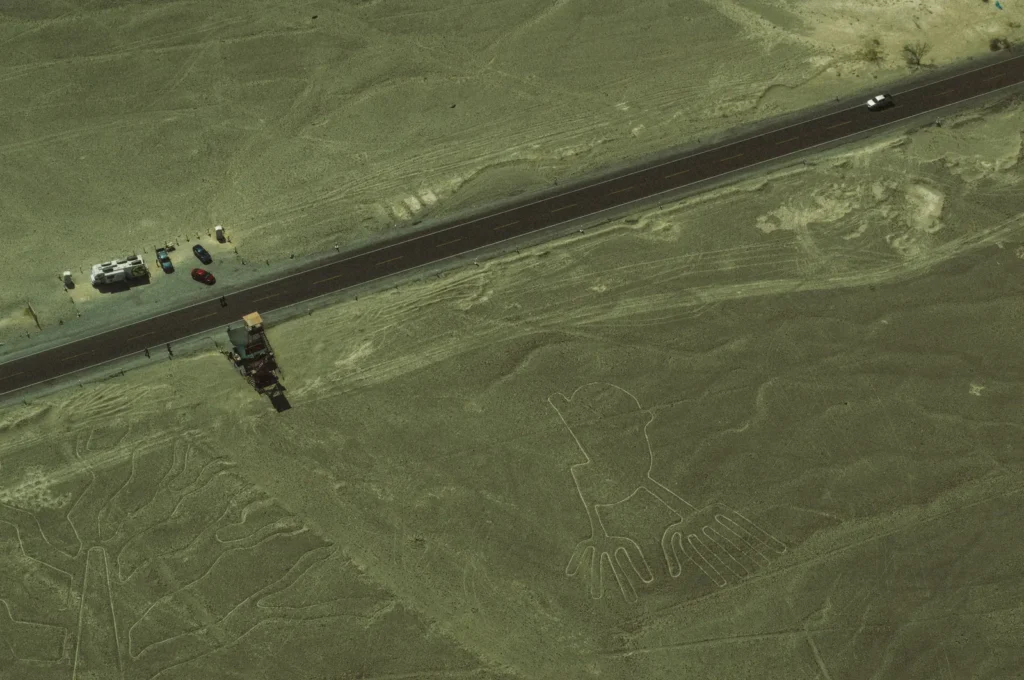
Visit Peru’s desert coast from December through April for warm, sunny beach weather with highs that can reach into the 30s°C (90s°F); visit May through November if you don’t mind the garúa, a persistent gray coastal fog that settles over Lima and keeps the city’s winter cool and overcast even though it almost never rains. The coast is a genuine desert — the Humboldt Current keeps things temperate rather than tropical — and cities like Lima and Trujillo hover in a fairly narrow band of 16–27°C (60–80°F) all year regardless of season. Inland from the fog belt, Nazca and Ica stay sunnier and drier even in winter, since the garúa is a coastal phenomenon that doesn’t reach as far as the desert interior — which is also why Nazca Lines flights and Huacachina’s sand dunes are workable virtually any month.
When Is the Best Time to Visit Arequipa?
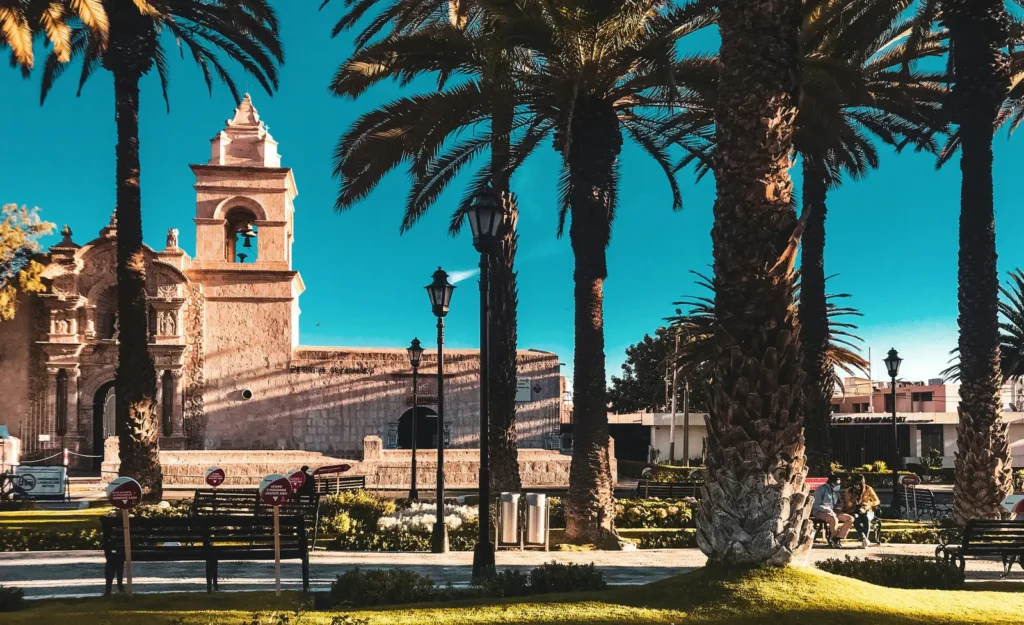
Arequipa is Peru’s most forgiving climate, and there’s no real bad time to go — sitting at a lower elevation than Cusco (2,335m/7,660ft versus 3,400m/11,175ft), it earns its “White City” nickname partly from its volcanic sillar-stone buildings and partly from its reliably sunny, mild weather, averaging around 14–15°C (58°F) year-round with far less of the extreme day-to-night temperature swing that defines higher Andean cities. May through October brings the driest, clearest skies for exploring the Colca Canyon nearby; November through April sees more cloud and occasional rain but rarely disrupts a trip.
What Is Peru’s Weather Like Region by Region, Month by Month?
| Month | Cusco/Andes | Amazon | Coast (Lima/Nazca) | Titicaca/Puno |
|---|---|---|---|---|
| Jan | Rainy, green, warm days | High water, rain likely | Best — hot, sunny beach season | Rainy, mild days, cold nights |
| Feb | Wettest, Inca Trail closed | Avoid — heaviest rain, hardest access | Best — peak summer heat | Wettest month |
| Mar | Transition, still green | Rain easing slightly | Good, still warm | Transition, rain easing |
| Apr | Best for most itineraries | Good transition month | Good, cooling | Good, drying out |
| May | Best for hiking | Best begins — drier, easier access | Garúa fog begins in Lima | Best begins — dry, sunny |
| Jun | Driest, coldest nights, Inti Raymi | Best — dry, good wildlife viewing | Garúa fog, cool and gray | Best, but coldest nights |
| Jul | Peak season, dry | Best, watch for friaje cold snaps | Garúa fog continues | Best, very cold nights |
| Aug | Peak season, dry | Best, watch for friaje cold snaps | Garúa fog continues | Best, cold nights ease slightly |
| Sep | Best for most itineraries | Best, wildlife still active | Fog lifting gradually | Good, warming |
| Oct | Good, rain increasing | Good, transition begins | Sunnier, warming | Good, rain returning |
| Nov | Rainy season begins | Wetter, water levels rising | Best begins — warm and sunny | Rainy season begins |
| Dec | Rainy, warm days | High water, rain likely | Best — hot, sunny beach season | Rainy, mild days |
What’s the Best Time to Visit Peru Based on What You Want to Do?
| Your Priority | Go | Why |
|---|---|---|
| First trip, want to see it all | April–May or September–October | Dry-season clarity in the Andes without June–August’s peak-season crowds and prices |
| Hiking the Inca Trail | April–October, avoid February | Trail is closed every February for maintenance; dry season means clearer passes |
| Amazon wildlife viewing | May–October | Lower water levels expose riverbanks and clay licks where animals gather |
| Amazon by boat / flooded forest | December–April | Higher water levels open up flooded creeks unreachable in the dry season |
| Rainbow Mountain (Vinicunca) | April–October | Same dry-season window as Cusco; trail can be muddy and obscured by cloud in wet months |
| Beach time on the coast | December–April | Peru’s coastal summer — warm, sunny, before the garúa fog sets in |
| Music, culture & festivals | June | Inti Raymi, Corpus Christi, and Qoyllur Rit’i all fall in Cusco’s single busiest month |
| Budget travel, thinner crowds | February or April/October | February is the off-season for a reason (rain, closed trail) — see the cost breakdown below for exactly how much that saves you, and why April/October is usually the smarter trade |
Does Altitude Affect When You Should Visit Peru?
Yes — more than most travelers expect, and it matters regardless of season. Cusco sits at 3,400m (11,175ft), Puno and Lake Titicaca higher still at 3,810m (12,500ft), and altitude sickness (soroche) can affect visitors at any time of year, dry season or wet. The general guidance is the same in June as it is in January: spend a day or two acclimatizing in Cusco before heading to higher elevations or starting a trek, stay hydrated, avoid alcohol for the first 24 hours, and consider a lower-altitude stop like Arequipa (2,335m/7,660ft) on the way up if your itinerary allows it. Season affects comfort and views; it doesn’t change how your body handles the elevation.
What Does a Peru Trip Cost, By Season?
Timing shifts Peru’s price tag more than almost anything else you can control, and the swing is steepest in Cusco.
Inca Trail & Machu Picchu. The classic 4-day Inca Trail runs roughly $600–$1,500+ per person depending on operator tier (budget, mid-range, premium), bundling the $80 government permit fee, a guide, porters, camping gear, and meals. As of 2026, Machu Picchu’s entrance ticket (roughly $50–$70) is purchased separately from the trail permit — budget for both. Permits are capped at about 200 trekkers a day, released each October for the following year, and peak-season dates (May–September) commonly sell out four to six months ahead, so book early regardless of season.
Cusco hotels. Expect to pay roughly 25–40% more for a Cusco hotel room in June–August than in the April–May or September–October shoulder months, and even more compared to the November–March rainy season, when discounts of 30–60% off peak rates are common — February is typically the cheapest month of all. A room running around $120/night in July might cost $70–80 in shoulder season and $50–60 in February, same property.
Domestic flights. The Lima–Cusco leg — the backbone of almost every Peru itinerary — runs on the same seasonal pull as hotels: fares climb with June–August demand and during the holiday-heavy December stretch, and ease off in the shoulder and rainy-season months when seats are easier to find at short notice. Booking this leg alongside your Inca Trail dates, rather than after, avoids getting squeezed between a fixed permit date and a suddenly pricier flight.
Lima and the coast. Most guides describe Lima’s warm, sunny summer (December–April) as the highest-demand, priciest window and the garúa-fog winter (May–October) as cheaper, with discounts commonly cited in the 20–40% range. That pattern isn’t as clean as Cusco’s, though — some current hotel-pricing data actually shows October and November running higher than January, likely reflecting South American domestic holiday travel rather than the international tourist calendar alone. Treat “Lima summer is priciest” as a loose rule of thumb, not a guarantee, and compare specific dates before booking.
Amazon lodges. Pricing here is driven far more by lodge tier than by season. Budget multi-day packages run roughly $150–350 per person for 3 days/2 nights all-inclusive (transport, meals, guide, activities); mid-range lodges run $300–500; high-end riverside lodges run $500–800+ for the same length of stay. Unlike Cusco, there’s no consistently documented seasonal discount pattern here — a rustic budget lodge and a luxury eco-lodge can differ by hundreds of dollars regardless of month, so lodge tier matters more than timing for this part of the trip.
The trade-off. February’s rock-bottom prices come bundled with the Inca Trail closed and the year’s heaviest rain, which is why April and October tend to be the better value play — the same shoulder-season value logic that makes October in Mexico worth booking: dry-season weather at a meaningful discount off peak pricing.
| Region | Peak Cost Driver | Value Window | Notes |
|---|---|---|---|
| Cusco hotels | Jun–Aug (~25–40% above shoulder) | Apr–May, Sep–Oct | Rainy season (Nov–Mar) discounts 30–60% off peak, deepest in Feb |
| Inca Trail / permits | May–Sep (sells out 4–6 months ahead) | Apr, Oct | Trail closed entirely every February |
| Lima / coast hotels | Dec–Apr per most guides | May–Oct (garúa season) | Real pricing data shows a mixed pattern — verify specific dates |
| Amazon lodges | Driven by lodge tier, not season | Compare tiers directly | Budget $150–350, mid-range $300–500, high-end $500–800+ (3D/2N, all-inclusive) |
When Are Peru’s Best Festivals?
June is Peru’s festival powerhouse — Inti Raymi (June 24), Corpus Christi, and often Qoyllur Rit’i all land within the same few weeks, concentrated in and around Cusco. That said, Qoyllur Rit’i and Corpus Christi are tied to the movable Christian calendar and can fall in late May some years, so confirm exact dates for the year you’re traveling rather than assuming June every time.
| Roughly When | Festival | Where | What It Is |
|---|---|---|---|
| Feb 2–18 | Virgen de la Candelaria | Puno | One of Peru’s largest religious festivals, two weeks of music and elaborate costumed dance around Lake Titicaca |
| Feb–Mar (dates vary) | Carnival | Nationwide, especially Cajamarca | Water fights, parades, and regional variations across the country |
| Mar–Apr (dates vary) | Semana Santa (Holy Week) | Ayacucho especially | Ayacucho’s Holy Week is considered one of Peru’s most elaborate, with nightly processions |
| Late May–early Jun (varies) | Qoyllur Rit’i | Sinakara Valley, near Ausangate | Andean pilgrimage blending Inca mountain-spirit worship with Catholic tradition; a multi-hour walk to a glacier base at 4,600m |
| Late May–Jun (varies) | Corpus Christi | Cusco | Statues of saints paraded through the Plaza de Armas over an eight-day celebration |
| June 24 | Inti Raymi | Cusco & Sacsayhuamán | Reenactment of the Inca Festival of the Sun, Peru’s largest single-day cultural event |
| June 24 | Festival of San Juan | Peruvian Amazon | The Amazon’s biggest celebration day, with riverside gatherings and traditional food — falls the same day as Inti Raymi |
| July 15–17 | Virgen del Carmen | Paucartambo, near Cusco | Costumed dance troupes reenact Peruvian history through masked choreography |
| July 28–29 | Fiestas Patrias | Nationwide | Peru’s Independence Day, the country’s biggest civic holiday |
| October | Señor de los Milagros | Lima | Purple-robed processions honoring the Lord of Miracles, one of the largest Catholic processions in the Americas |
| December | Santurantikuy | Cusco | Christmas artisan market in the Plaza de Armas, running since colonial times |
What Are Peru’s Must-See Historical and Cultural Sites?
Peru’s history runs from pre-Inca civilizations through the Inca Empire’s peak to Spanish colonial rule, and much of it is still standing — sometimes as a functioning city, sometimes as ruins that took centuries to rediscover.
Machu Picchu. The Inca citadel needs little introduction, but the detail worth knowing is timing: sunrise entry gives the clearest light and thinnest crowds before day-trip trains from Cusco arrive mid-morning. The site sits at a lower altitude than Cusco, which is part of why some travelers acclimatize there before, not after, visiting.
Sacsayhuamán. A massive Inca fortress on a hill above Cusco, built from stone blocks so precisely fitted together that a knife blade reportedly can’t slide between them — and the site of the Inti Raymi festival’s central ceremony every June 24.
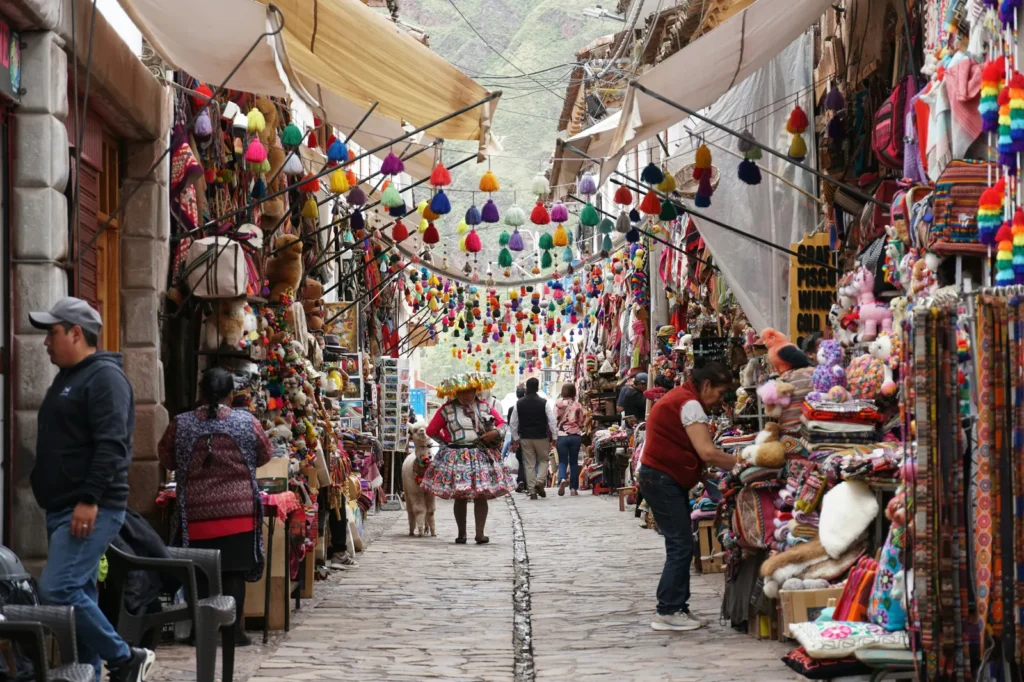
The Sacred Valley & Pisac. Strung along the Urubamba River between Cusco and Machu Picchu, the valley combines Inca agricultural terracing with market towns like Pisac, where a long-running crafts and produce market draws both locals and travelers.
Ollantaytambo. A working Inca town — not just ruins — where the original agricultural terraces, water channels, and street grid remain in daily use, alongside a fortress-temple complex that was one of the few sites where Inca forces successfully repelled a Spanish attack.
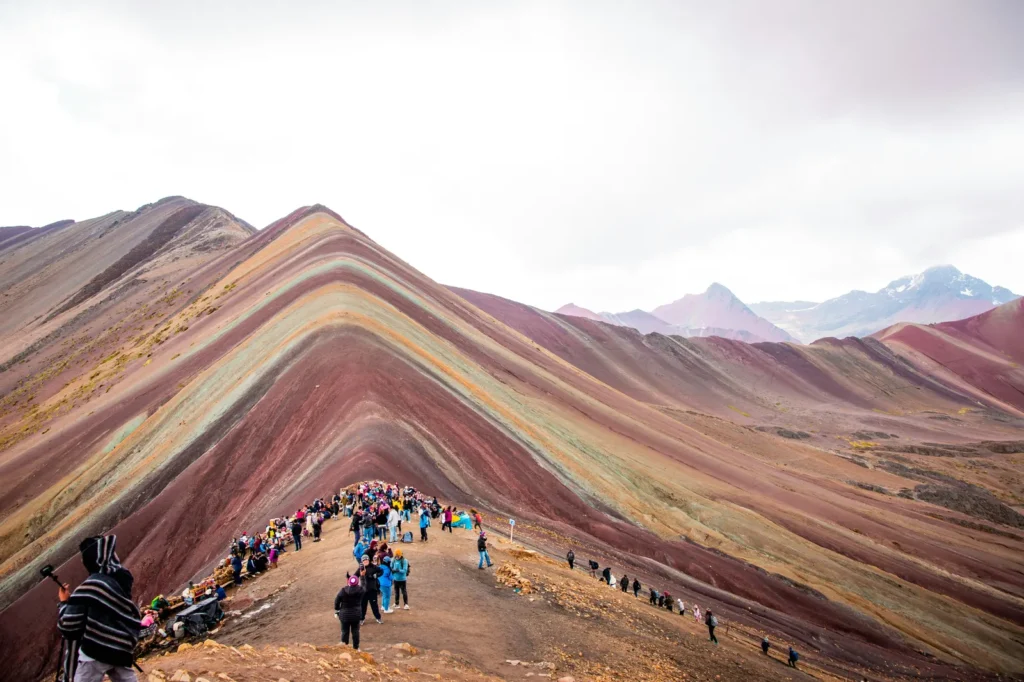
Rainbow Mountain (Vinicunca). Not ancient history, but a geological one: mineral-streaked slopes at 5,200m (17,060ft) whose colors were hidden under snow until glacial retreat exposed them within the last couple of decades, turning what was a local landmark into one of the most photographed hikes in Peru.
The Nazca Lines. Enormous geoglyphs etched into the desert floor roughly 2,000 years ago by the Nazca culture, depicting animals, plants, and geometric shapes only fully legible from the air — their exact purpose is still debated among archaeologists, ranging from astronomical calendars to ritual pathways.
Lake Titicaca & the Uros Islands. The highest navigable lake in the world sits on the Peru–Bolivia border, and its Uros communities live on floating islands built entirely from woven totora reeds, a tradition that predates the Inca Empire and continues today.
Arequipa’s Historic Center. Built largely from sillar, a white volcanic stone quarried from the surrounding mountains, Arequipa’s colonial center is a UNESCO World Heritage Site anchored by the Santa Catalina Monastery, a walled mini-city of colorful courtyards that housed cloistered nuns for over four centuries.
What Should You Know Before Traveling to Peru?
- Pack for altitude and temperature swings, not just season. Even a dry-season June trip means near-freezing Cusco nights and warm Andean sun during the day — layers matter more than the calendar month.
- Book the Inca Trail months in advance. Permits are limited and government-regulated; June–August dates can sell out four to six months ahead, and the trail closes entirely every February.
- The coast and the Andes are often opposite seasons for comfort. A “bad weather” month in Cusco (like June) can be Lima’s mild season, and vice versa in the coastal summer.
- Give yourself time to acclimatize before high altitude. A day or two in Cusco before a trek or before continuing to even-higher Puno reduces the odds of altitude sickness more than anything else you can plan around.
Frequently Asked Questions About Visiting Peru
Is it worth visiting Peru during the rainy season?
Yes, if you’re flexible. November–March turns the Sacred Valley green and thins crowds and prices, but expect afternoon showers most days and know the classic Inca Trail closes entirely every February.
Do I need different clothing for Cusco versus the Amazon?
Yes — pack for both. Cusco needs layers for near-freezing nights even in the dry season, while the Amazon stays hot and humid (30–33°C/86–91°F) year-round, so lightweight, breathable clothing and rain protection matter more than warmth.
Can you see Machu Picchu and the Amazon in one trip?
Yes, and many itineraries combine them — Puerto Maldonado is a short flight from Cusco. Just build in a buffer day, since Amazon flights are more weather-dependent than the Cusco–Lima route.
What’s the cheapest month to visit Peru?
February tends to be lowest-cost, since it’s the rainiest month in the Andes and the Inca Trail is closed — but April and October offer a better trade-off of lower prices with still-workable dry-season weather.
How many days do you need in Peru?
Ten to fourteen days covers Cusco, Machu Picchu, and one other region (Amazon, Titicaca, or the coast) at a reasonable pace, including 1–2 acclimatization days in Cusco before heading higher.
So, When Is the Best Time to Visit Peru?
May through September. There’s no single best month for Peru because there’s no single Peru — the coast, the Andes, and the Amazon run on three different calendars, and a beach trip, a Machu Picchu trek, and a jungle lodge stay each have their own ideal window. But May through September comes closest to a universal answer: it’s the Andean dry season, which covers Cusco, Machu Picchu, the Sacred Valley, Rainbow Mountain, and Lake Titicaca all at once, and it overlaps with the Amazon’s easier dry-season travel too — even if it means trading the coast’s summer sunshine for a few months of garúa fog in Lima.
See more Americas destination guides