Best Time to Visit Morocco: Month-by-Month Guide
Why Doesn’t Morocco Have One Single Best Time to Visit?
Because Morocco’s climate splits along elevation, not just latitude — the country climbs from sea level to 4,167m at the summit of Jebel Toubkal in under 100km, and each layer of that climb keeps its own calendar. The Marrakech basin, the Sahara’s edge, and the High Atlas peaks above Oukaimeden can be running three different seasons in the same week: mild and dry in the city, warm and clear in the desert, snowbound in the mountains — with no single month bringing all three into alignment at once. That’s why “best time to visit Morocco” doesn’t have one answer — it has four, one for each geography the country contains: the imperial cities and Marrakech basin, the Sahara, the High Atlas mountains, and the Atlantic coast plus the Rif mountains around Chefchaouen. It’s the same elevation-driven split that shapes trip planning in Portugal, where the coast and the mountainous interior can be in genuinely different seasons at once.
When Should You Visit Morocco? (Quick Answer)
- Best overall for first-time visitors: March–May or late September–November — mild enough for Marrakech and the desert, warm enough for the coast.
- Best for the Sahara specifically: October–April, avoiding June–August when Merzouga regularly hits 42–46°C (108–115°F).
- Best for Atlas Mountains hiking: April–June and September–October; the Toubkal circuit is snow-free and daytime temperatures are workable.
- Best for skiing: late December–February at Oukaimeden, in the High Atlas above Marrakech.
- Best for the Atlantic coast (Essaouira): June–September for wind sports, April–June and September–October for calmer beach time.
- Best for festivals: early-to-mid June in most recent years, when the Fes Festival of World Sacred Music, Mawazine, and the Gnaoua World Music Festival tend to cluster within about three weeks of each other — confirm current-year dates before booking around one.
- Best for lower prices and thinner crowds: January–February and July–August — the two windows most travelers avoid, for cold-at-night and desert-heat reasons respectively.
When Is the Best Time to Visit Marrakech, Fes, and Morocco’s Imperial Cities?
The best time to visit Marrakech, Fes, Meknes, and Rabat is spring (March–May) or autumn (late September–November), when daytime highs sit in the low-to-mid 20s°C (70s°F) instead of the extremes either side of them. These cities sit in Morocco’s semi-arid interior belt, and their climate pattern is the one most “best time to visit Morocco” advice is actually describing — hot, dry summers and mild, occasionally wet winters. Marrakech’s July highs average 36°C (97°F) with lows only easing to 20°C (68°F), while January highs sit around 19°C (66°F) with cold nights near 5°C (41°F). Fes, further north and slightly higher in elevation, runs a few degrees cooler in summer but noticeably wetter and colder in winter — November is its rainiest month, and a light snow dusting isn’t unheard of in January.
Spring (March–May) and autumn (late September–November) are when both cities are at their best: daytime highs in the low-to-mid 20s°C (70s°F), gardens like the Majorelle in bloom, and evenings mild enough to sit outside without a jacket. Midsummer isn’t unlivable — locals manage it — but it means restructuring the day around it: sightseeing before 10am and after 5pm, riad pools and shaded souks in between.
| Month | Marrakech High | Marrakech Low | Fes High | Fes Low |
|---|---|---|---|---|
| January | 19°C / 66°F | 5°C / 41°F | 17°C / 63°F | 6°C / 43°F |
| February | 20°C / 68°F | 7°C / 45°F | 19°C / 66°F | 7°C / 45°F |
| March | 23°C / 73°F | 9°C / 48°F | 22°C / 72°F | 9°C / 48°F |
| April | 25°C / 77°F | 11°C / 52°F | 24°C / 75°F | 11°C / 52°F |
| May | 28°C / 82°F | 14°C / 57°F | 28°C / 82°F | 14°C / 57°F |
| June | 32°C / 90°F | 17°C / 63°F | 32°C / 90°F | 17°C / 63°F |
| July | 36°C / 97°F | 20°C / 68°F | 35°C / 95°F | 20°C / 68°F |
| August | 35°C / 95°F | 20°C / 68°F | 36°C / 97°F | 21°C / 70°F |
| September | 31°C / 88°F | 18°C / 64°F | 31°C / 88°F | 18°C / 64°F |
| October | 28°C / 82°F | 14°C / 57°F | 27°C / 81°F | 14°C / 57°F |
| November | 23°C / 73°F | 10°C / 50°F | 21°C / 70°F | 10°C / 50°F |
| December | 20°C / 68°F | 6°C / 43°F | 18°C / 64°F | 7°C / 45°F |
When Is the Best Time to Visit the Sahara Desert in Morocco?
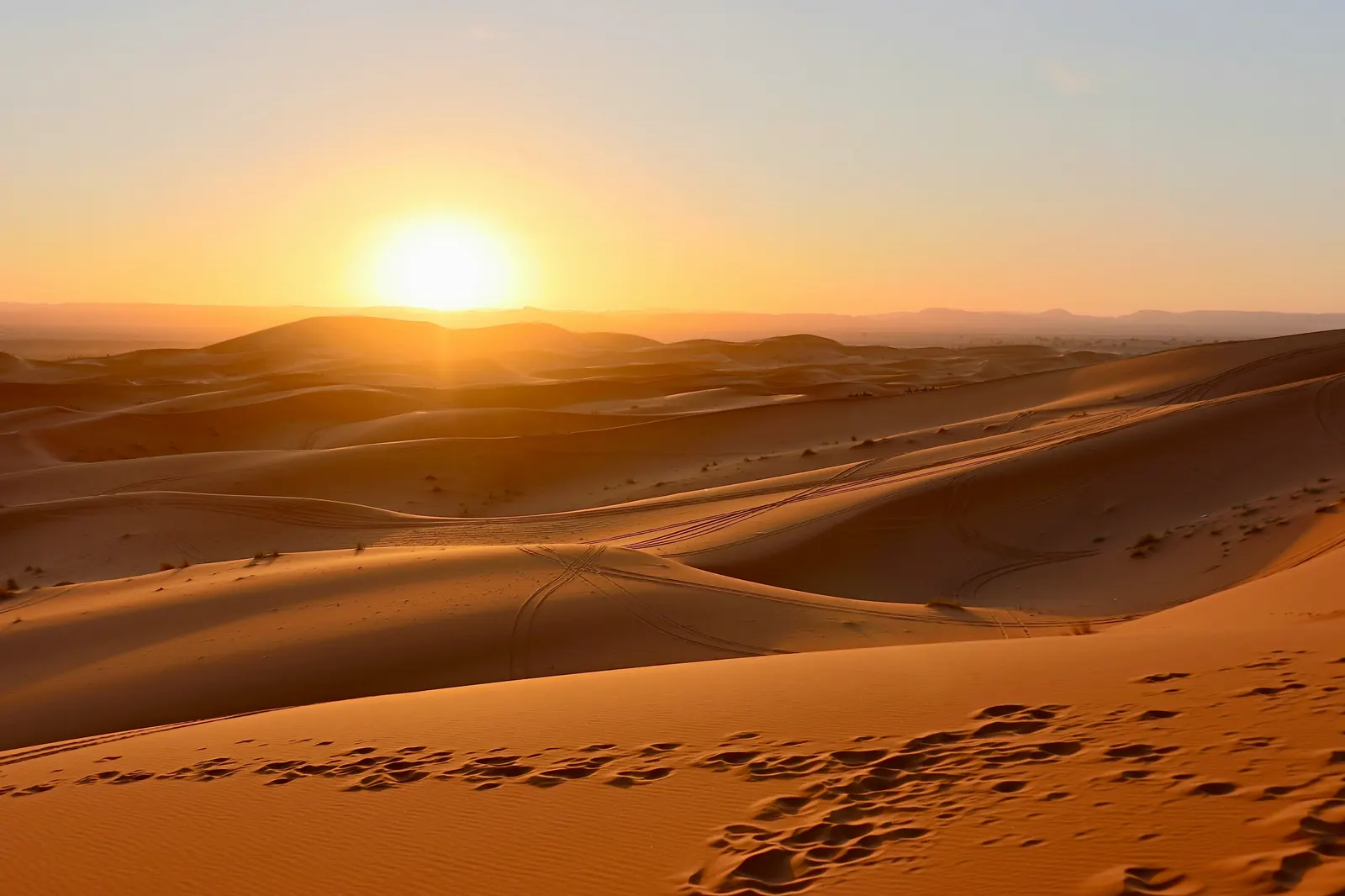
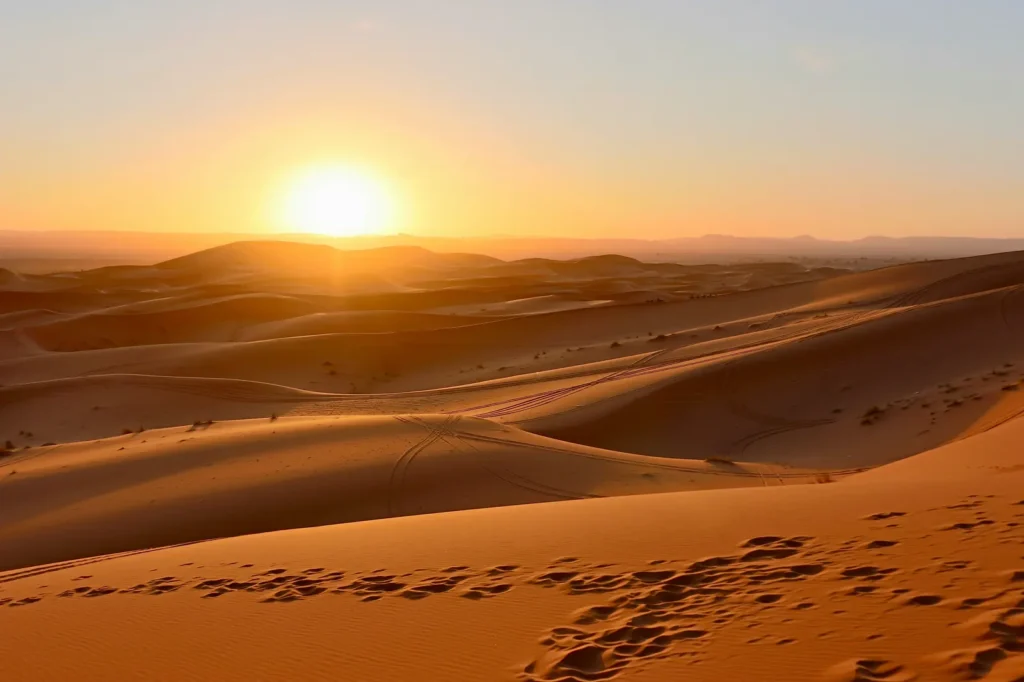
The best time to visit the Sahara Desert (Merzouga and Zagora) is October through April, avoiding June through August when daytime temperatures regularly hit dangerous highs. The Sahara’s weather divides into three practical seasons rather than four, and the swing between them is the widest of anywhere in the country. Summer (June–September) is extreme — Merzouga’s Erg Chebbi dunes regularly reach 42–46°C (108–115°F) in the early afternoon, and the sand surface itself can exceed 70°C (158°F), which is why most desert camps quietly move camel treks to sunset and sunrise only during these months. Winter (December–February) flips the problem: daytime is genuinely pleasant at 18–22°C (64–72°F), but clear desert skies mean heat radiates out fast after dark, and nights can drop close to freezing, occasionally lower at elevation.
The shoulder seasons — October–November and March–May — are where most experienced Morocco guides steer first-time desert visitors: days in the mid-20s to low-30s°C (77–90°F), nights cool but not punishing, and clear skies for the stargazing the Sahara is genuinely famous for. October has the extra pull of the Draa Valley date harvest running alongside it.
| Period | Daytime High | Overnight Low | What It’s Like |
|---|---|---|---|
| Dec–Feb (winter) | 18–22°C / 64–72°F | Near 0–6°C / 32–43°F | Pleasant days, genuinely cold desert nights — pack a proper coat, not just a scarf |
| Mar–May (spring) | 25–35°C / 77–95°F | 10–20°C / 50–68°F | Widest travel window; windiest month is April, occasional dust haze |
| Jun–Sep (summer) | 38–46°C / 100–115°F | 20–29°C / 68–84°F | Activities shift to dawn and dusk; midday is spent resting in shade |
| Oct–Nov (autumn) | 25–35°C / 77–95°F | 10–20°C / 50–68°F | Matches spring for comfort, plus the Draa Valley date harvest in October |
When Is the Best Time to Hike or Ski the High Atlas Mountains?
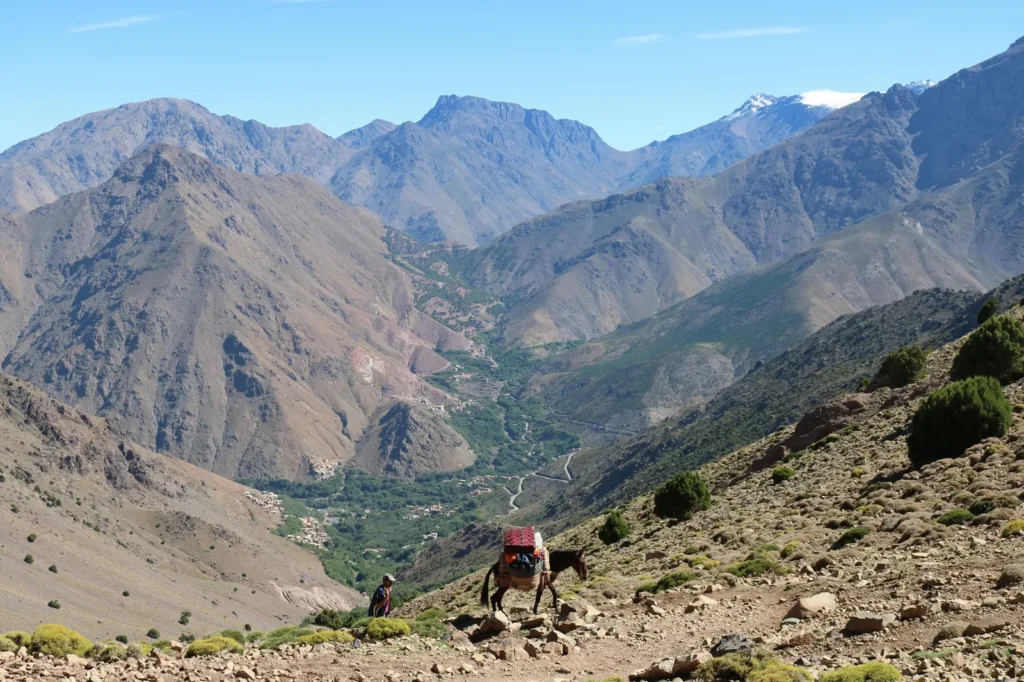
Ski the High Atlas from late December through February, and hike it from April through June or September through October — the two activities barely overlap because one needs snow and the other needs it gone. The High Atlas is Morocco’s most dramatic climate contrast to the lowlands — Jebel Toubkal, North Africa’s highest peak at 4,167m, sits less than 80km from Marrakech’s hot semi-arid basin, and the mountains between them run their own weather system entirely. It’s a similar short-distance climate jump to what separates Cusco’s cool highlands from the desert coast in Peru, just compressed into an even shorter drive here. Snow is reliable at altitude from late November through March, heaviest in January and February, and it’s substantial enough to support Oukaimeden, Africa’s highest ski resort at 2,650–3,250m elevation, roughly 80km outside Marrakech. The lift-served ski season there typically runs December to March, with January and February the most dependable for actual snow cover.
Once the snow clears, the same mountains become a hiking destination. The Toubkal circuit and the Imlil valley trailheads are workable from April through June and again September through October, when daytime temperatures at altitude sit in a comfortable range and the passes are clear. Full summer isn’t off-limits for high-altitude trekking — it’s actually when Toubkal’s summit route sees the least snow and ice — but the valley approach towns get hot, and winter attempts require real mountaineering gear and experience.
When Is the Best Time to Visit Essaouira and Chefchaouen?
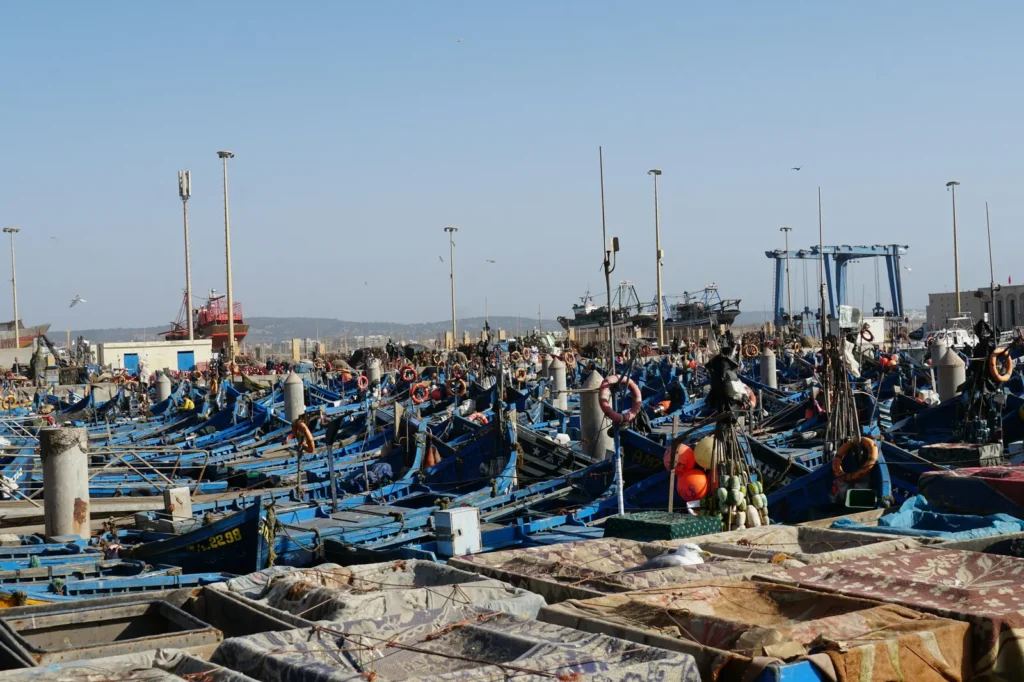
These two get grouped together as Morocco’s “green and breezy north,” but they run genuinely different climates, so treat them as two separate answers: visit Essaouira from June through September for wind sports, or April–June and September–October for calmer beach time; visit Chefchaouen from late March through early June or mid-September through mid-November, when the surrounding Rif Mountains are greenest. Essaouira, Morocco’s Atlantic answer to the interior heat, barely moves temperature-wise across the year — highs run 18°C (64°F) in January to about 26–27°C (79–81°F) in August, moderated by a cold Atlantic current and near-constant trade winds. That wind is the defining fact of the place: it’s what makes Essaouira one of the best windsurfing and kitesurfing spots in North Africa from roughly April through September, and it’s also why summer here is a genuine escape valve for travelers overheating in Marrakech — riads routinely route a Morocco itinerary to finish on the coast for exactly that reason. If you want calmer air for walking the ramparts and the old Skala rather than chasing wind sports, October–November trades a few degrees of warmth for stiller days.
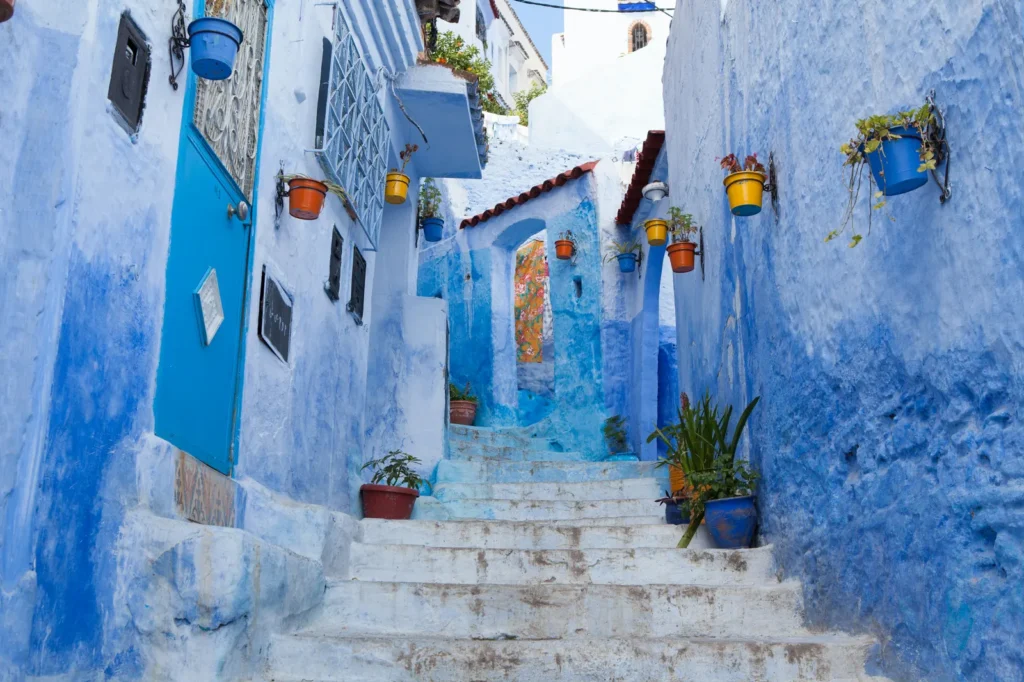
Chefchaouen, tucked into the Rif Mountains in the north rather than on the coast, runs its own microclimate again — cooler and wetter than Marrakech, warmer and drier than you’d expect from a mountain town. Late March through early June and mid-September through mid-November are the sweet spots: the Rif is green, the Akchour waterfalls are running full enough to swim in, and afternoon highs sit around a comfortable 21–22°C (70–72°F) after cool 10°C (50°F) mornings. August is Chefchaouen’s hottest and driest stretch, occasionally pushing past 33°C (91°F), while winter brings the Rif’s heaviest rain and, on rare occasions, a dusting of snow on the surrounding peaks that briefly turns the blue city white-capped.
What Is Morocco’s Weather Like Month by Month?
No single month is “best” everywhere in Morocco at once — here’s how the same twelve months play out across all four regions side by side, so you can see which month works for your specific route.
| Month | Marrakech/Fes | Sahara | High Atlas | Essaouira/Chefchaouen |
|---|---|---|---|---|
| Jan | Good value, cold nights | Good for days, pack for cold nights | Best for skiing | Skip — wettest stretch |
| Feb | Good value, warming | Good, nights ease slightly | Best for skiing | Still wet, low priority |
| Mar | Good for most itineraries | Good, gets windier late-month | Too much snow to hike yet | Rif greening, worth a visit |
| Apr | Best for most itineraries | Good, but April is the windiest month | Best for hiking starts | Best for Chefchaouen |
| May | Best for most itineraries | Good, heat starting to build | Best for hiking | Good, waterfalls full |
| Jun | Too hot for midday sightseeing | Too hot for desert activities | Workable at altitude | Best for kitesurfing starts |
| Jul | Too hot for midday sightseeing | Too hot — activities shift to dawn/dusk | Workable at altitude only | Best for kitesurfing |
| Aug | Too hot for midday sightseeing | Too hot for desert activities | Workable at altitude only | Skip Chefchaouen — too hot |
| Sep | Good, cooling by late month | Good again by late month | Best for hiking resumes | Best for the coast |
| Oct | Best for most itineraries | Best — plus the date harvest | Best for hiking | Good, calmer than summer |
| Nov | Good, cooling toward winter | Good, cooling toward winter | First snow closes trails | Best for Chefchaouen |
| Dec | Good value, mild days | Good for days, cold nights return | Best for skiing starts | Wet season begins, low priority |
What’s the Best Time to Visit Morocco Based on What You Want to Do?
| Your Priority | Go | Why |
|---|---|---|
| First trip, want to see it all | Late March–May or Oct–Nov | Only windows where Marrakech, the desert, and the mountains are simultaneously comfortable |
| Sahara desert camp & camel trek | Oct–Apr, avoid Jun–Aug | Summer daytime heat makes midday activity unsafe; winter nights need real cold-weather layers |
| Skiing at Oukaimeden | Late Dec–Feb | Most dependable snow cover at altitude |
| Toubkal & Atlas trekking | Apr–Jun or Sep–Oct | Snow-free trails without full summer heat in the valley approaches |
| Windsurfing/kitesurfing Essaouira | Jun–Sep | Trade winds are strongest and most consistent in these months |
| Photographing Chefchaouen’s blue medina | Late Mar–early Jun or mid-Sep–mid-Nov | Green surrounding hills, comfortable light, fewer harsh midday shadows than summer |
| Music & arts festivals | Early-to-late June | Fes Sacred Music, Mawazine, and Gnaoua all cluster within about three weeks |
| Budget travel, thinner crowds | Jan–Feb or Jul–Aug | The two stretches most travelers actively avoid, for opposite reasons (cold nights vs. desert heat) |
Does Ramadan Affect Travel to Morocco?
Yes, but it changes the country’s daily rhythm far more than it changes whether you should go. Ramadan shifts roughly 10–11 days earlier every year because it follows the lunar calendar, which means it can land in any season depending on when you’re reading this — check the current year’s dates before you book rather than trusting a fixed date printed anywhere, including here. During Ramadan, observant Muslims fast from sunrise to sunset, which changes the rhythm of the country more than the weather does: many local restaurants and cafés close or reduce hours during the day, the streets are noticeably quieter in the afternoon, and then everything comes alive after the sunset iftar meal, often running late into the night. Hotels, riads, and restaurants geared toward tourists generally operate normally throughout, and visiting during Ramadan isn’t a reason to avoid a trip — many travelers find the after-dark atmosphere in medinas like Fes and Marrakech more festive than any other time of year. It’s simply a different Morocco than the one daytime-souk photos usually show, and worth planning around rather than being surprised by. Eid al-Fitr, the multi-day holiday immediately following Ramadan, is worth avoiding for a first visit if flexibility matters — domestic transport books up and many local businesses close entirely for the holiday itself.
When Are Morocco’s Best Festivals?
In most recent years, early-to-mid June has been Morocco’s busiest festival stretch — the Fes Festival of World Sacred Music, Mawazine in Rabat, and the Gnaoua World Music Festival in Essaouira have tended to cluster within about three weeks of each other, letting a well-timed trip catch two or three. That said, exact dates shift annually and aren’t fixed years in advance, so confirm the current year’s calendar before booking around any single festival. Beyond Ramadan, Morocco runs one of the most active festival calendars in North Africa year-round:
| Roughly When | Festival | Where | What It Is |
|---|---|---|---|
| Late January | Marrakech Marathon | Marrakech | International road race through the city and palm groves |
| Mid-to-late February | Almond Blossom Festival | Ameln Valley / Tafraoute | Anti-Atlas hillsides bloom pink and white; local Amazigh cultural events |
| Early May | Rose Festival | Kelaat M’Gouna (Dades Valley) | Celebrates the annual damask rose harvest with parades and a rose queen |
| Early June | Fes Festival of World Sacred Music | Fes | Nine days of devotional and spiritual music from around the world, staged in medina palaces |
| Mid-to-late June | Mawazine — Rhythms of the World | Rabat | Morocco’s largest music festival by attendance, mostly free outdoor stages |
| Late June | Gnaoua World Music Festival | Essaouira | Gnawa spiritual music tradition meets jazz, rock, and hip-hop collaborations |
| Summer (dates vary) | National Festival of Popular Arts | Marrakech | Folk troupes, traditional dance, and music from across Morocco’s regions |
| September | Imilchil Marriage Moussem | Imilchil, High Atlas | Traditional Amazigh gathering historically tied to matchmaking, with music and horse displays |
| October | Erfoud Date Festival | Erfoud, near Merzouga | Celebrates the Tafilalt date harvest at the edge of the Sahara |
| Late autumn (dates vary) | Marrakech International Film Festival | Marrakech | Red-carpet screenings plus free public film nights on Jemaa el-Fnaa |
What Are Morocco’s Must-See Historical and Cultural Sites?
The essential list runs from Casablanca’s Hassan II Mosque to the fortified kasbah of Ait Ben Haddou, and it’s worth building an itinerary around at least three or four of these rather than treating them as add-ons. Morocco’s history shows up as a physical layer wherever you go — Amazigh (Berber), Arab, Andalusian, French colonial, and Saharan trade-route influences all sit visibly on top of each other, sometimes in the same building.
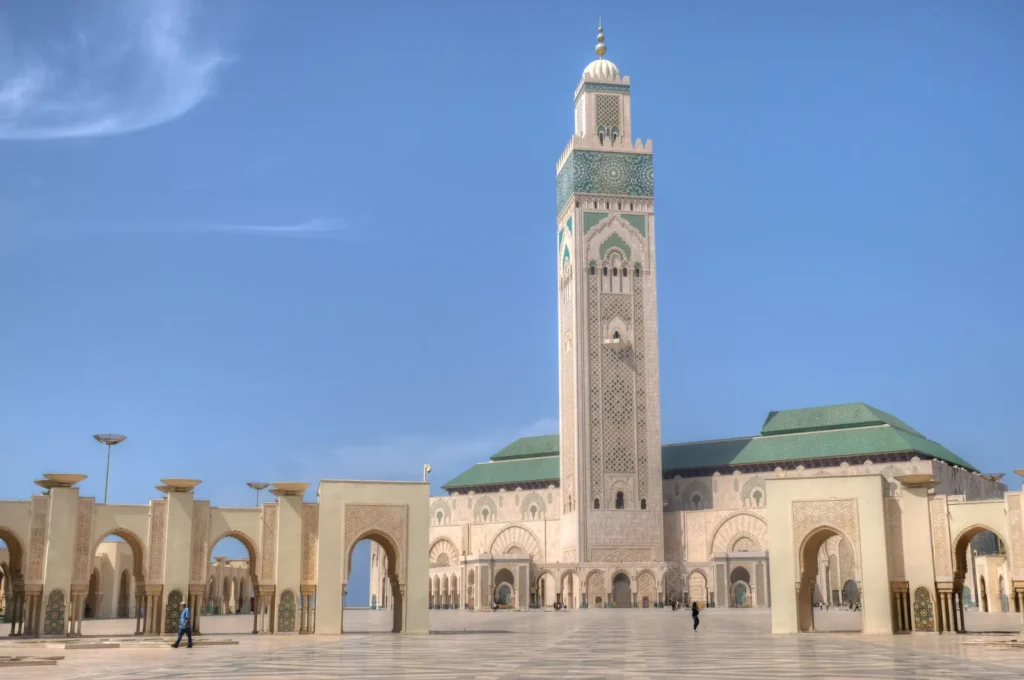
Hassan II Mosque, Casablanca. One of the largest mosques in the world and the only one in Morocco non-Muslims can tour, its 210m minaret is the tallest religious structure on the continent, and half the building sits over the Atlantic on reclaimed land. Guided tours run outside prayer times.
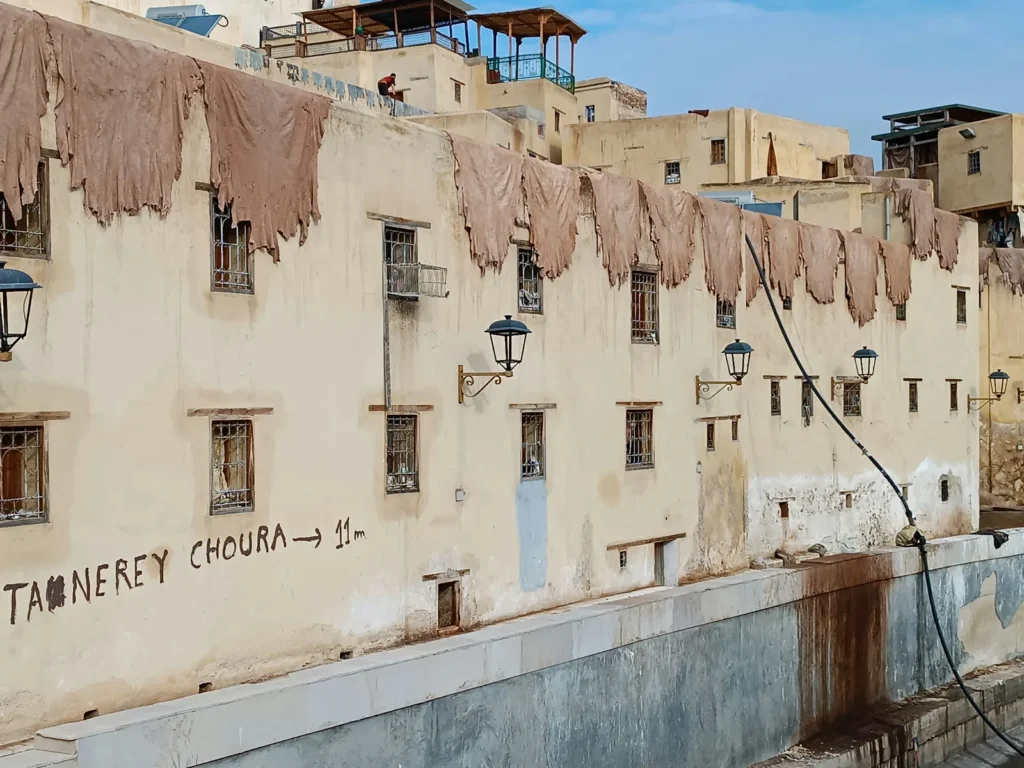
Fes el-Bali, Fes. The old walled medina is the largest car-free urban zone in the world and a UNESCO World Heritage Site, its 9,000-plus alleys unchanged in layout since the medieval period. The Chouara Tannery, with its stone dye-vats arranged like a giant paint palette, has processed leather the same way since the 11th century — most rooftop viewpoints hand visitors a sprig of mint to hold against the smell.
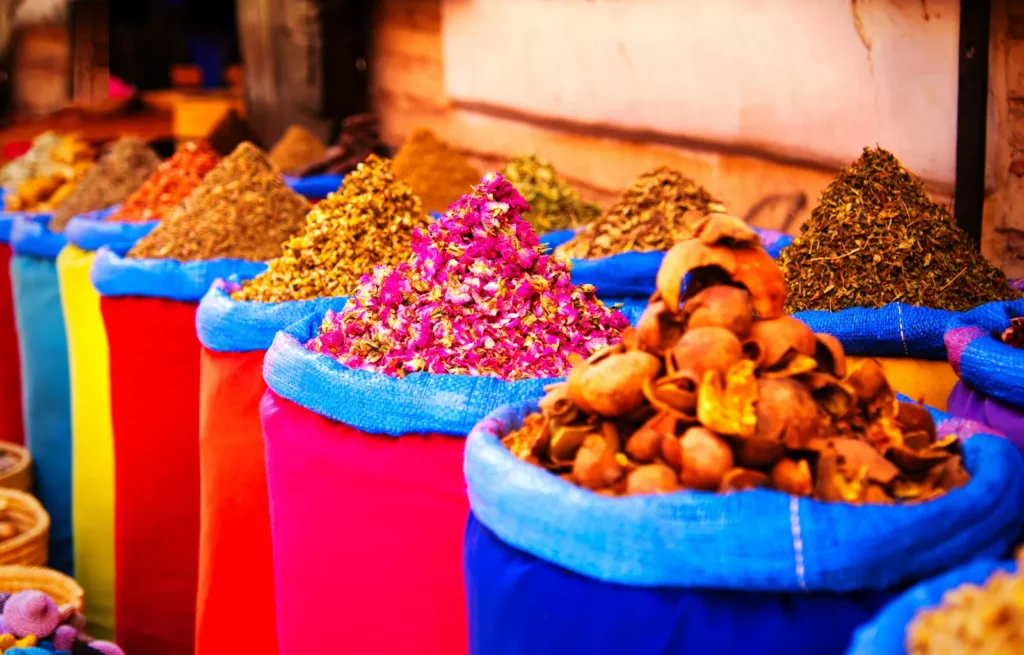
Koutoubia Mosque & Jemaa el-Fnaa, Marrakech. The Koutoubia’s 12th-century minaret set the architectural template later echoed by Spain’s Giralda tower in Seville, evidence of how far Almohad-dynasty influence traveled. A few minutes’ walk away, Jemaa el-Fnaa square shifts personality completely between day (orange juice carts, snake charmers) and night (food stalls, storytellers, musicians) — UNESCO recognized it as a Masterpiece of Oral and Intangible Heritage largely because of that living, nightly transformation. The surrounding souks, piled with spices, leather, and textiles, are as much a part of the sightseeing as the square itself.
Bahia Palace, Marrakech. A late-19th-century vizier’s palace built explicitly to be the finest in Morocco, with carved cedar ceilings, zellige tilework, and a series of courtyards and riad gardens that took the better part of 14 years to complete.
Ait Ben Haddou. A fortified ksar (kasbah village) of red-clay buildings on the old caravan route between the Sahara and Marrakech, UNESCO-listed and still partially inhabited, though most of its film-set fame (used in productions ranging from Lawrence of Arabia to Game of Thrones) comes from how intact its earthen architecture remains.
Chefchaouen’s Medina. Founded in 1471 as a refuge for Moors and Jews fleeing the Spanish Reconquista, the town’s Andalusian roots still show in its tilework and its food; the reason for the blue paint itself is debated locally between Jewish tradition, insect-repellent practicality, and simple aesthetic habit that stuck.
Volubilis. Morocco’s best-preserved Roman ruins, a UNESCO site near Meknes with mosaic floors still largely intact in situ — a reminder that Morocco’s history layer runs back well before the Islamic period that dominates the rest of the country’s monuments.
Todra Gorge. A dramatic limestone canyon in the eastern High Atlas foothills, with rock walls rising up to 300m above a narrow river-cut passage — popular for short walks, rock climbing, and as a scenic stop between the desert and the mountains.
What Should You Know Before Traveling to Morocco?
- Pack for both ends of the thermometer, always. Even a summer trip needs a layer for evening desert or mountain temperature drops; even a winter trip needs sun protection for midday in Marrakech or the Sahara.
- The coast runs noticeably cooler than the interior. If your itinerary runs Marrakech → desert → coast, expect Essaouira to feel 10–15°C cooler than inland stops at the same time of year — plan the wardrobe shift accordingly.
- Snow closes some mountain routes in winter. Passes over the High Atlas (notably the Tizi n’Tichka toward the desert) can see brief winter closures after heavy snow — build in a buffer day if traveling December–February.
- Friday afternoons are quieter for sightseeing bookings. Many local businesses adjust hours around the weekly Friday prayer; it rarely affects tourist sites but can affect transport and smaller shops.
So, When Is the Best Time to Visit Morocco?
Late March through May, or late September through November. There’s no single best month for Morocco because there’s no single Morocco — a Marrakech-only trip, a Sahara expedition, an Atlas Mountains trek, and a Chefchaouen-and-coast itinerary each have their own ideal window, and they don’t fully overlap. But these two stretches come closest to a universal answer: they’re the only windows mild enough to move between the desert, the mountains, and the medinas without any one of them working against you.