Best Time to Visit Iceland (2026 Month-by-Month Guide)
Quick Answer:
There’s no single “best” month for Iceland — there’s a best month for what you specifically want to see:
- Best overall: June–August
- Best balance of weather and crowds: May or September
- Best for northern lights: late August–late April
- Best for winter travel and ice caves: November–March
- Best for the Highlands: summer
- Best for puffins: June–July
June to August brings the mildest weather, nearly 24-hour daylight, and the widest road access of the year — but also the highest prices and the biggest crowds. September through late April is northern lights season, when dark skies make the aurora visible on clear nights, though winter driving conditions and short daylight limit how much ground you can realistically cover in a day. May and September sit in between: fewer crowds, workable weather, wildlife still active, and — especially in September — a genuine shot at the aurora without the peak-season price tag.
Iceland Weather and Temperature by Month
Iceland’s climate is milder than its latitude suggests, thanks to the Gulf Stream — but “mild” here means cool and changeable rather than warm. Reykjavík rarely drops much below freezing even in the depths of winter, and rarely climbs much past 15°C (59°F) at the height of summer. What catches most first-time visitors off guard isn’t the cold, it’s the wind and the speed with which weather flips — locals genuinely mean it when they say “if you don’t like the weather, wait five minutes.” Pack for four seasons in a single day, whatever month you’re traveling.
| Month | Avg. High | Avg. Low | Rain Days | Daylight |
|---|---|---|---|---|
| January | 3°C / 37°F | -3°C / 27°F | ~13 | ~5 hrs |
| February | 3°C / 37°F | -2°C / 28°F | ~11 | ~8 hrs |
| March | 4°C / 39°F | -1°C / 30°F | ~14 | ~11 hrs |
| April | 7°C / 45°F | 1°C / 34°F | ~11 | ~15 hrs |
| May | 11°C / 52°F | 4°C / 39°F | ~10 | ~18 hrs |
| June | 14°C / 57°F | 7°C / 45°F | ~9 | ~21 hrs |
| July | 16°C / 61°F | 9°C / 48°F | ~10 | ~19 hrs |
| August | 15°C / 59°F | 8°C / 46°F | ~11 | ~15 hrs |
| September | 11°C / 52°F | 6°C / 43°F | ~13 | ~12 hrs |
| October | 7°C / 45°F | 2°C / 36°F | ~14 | ~9 hrs |
| November | 4°C / 39°F | -1°C / 30°F | ~13 | ~6 hrs |
| December | 3°C / 37°F | -3°C / 27°F | ~13 | ~4-5 hrs |
Figures are long-term Reykjavík averages and will vary year to year and by region — see the region-by-region breakdown below for how the south coast, north, Westfjords, and Highlands differ from these numbers.
Iceland Daylight Hours: Why They Matter More Than Temperature
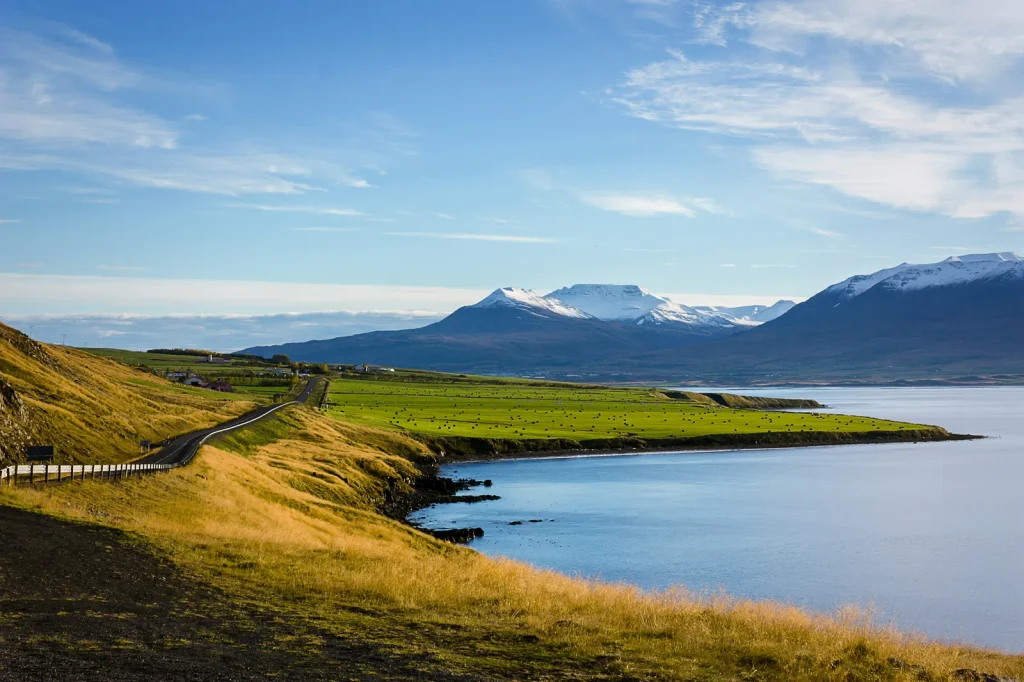
Because Iceland sits just south of the Arctic Circle, daylight — not temperature — is really what shapes an itinerary here. Around the June solstice, Reykjavík gets roughly 21 hours of daylight and the sun barely dips below the horizon; up in the north, near Akureyri and Húsavík, it’s close to true midnight sun. Around the December solstice, that shrinks to about 4–5 hours, with sunrise near 11:20 AM and sunset by 3:30 PM.
This isn’t just a curiosity — it directly determines how much you can do in a day. A July visitor can drive the Ring Road, stop for photos, hike to a waterfall, and still have daylight left after a late dinner. A January visitor needs to plan the day’s driving and sightseeing around a narrow midday window and be off unfamiliar roads well before dark, since Icelandic winter roads can be genuinely hazardous at night.
~5h
~8h
~11h
~15h
~18h
~21h
~19h
~15h
~12h
~9h
~6h
~4-5h
Best Time to See the Northern Lights in Iceland
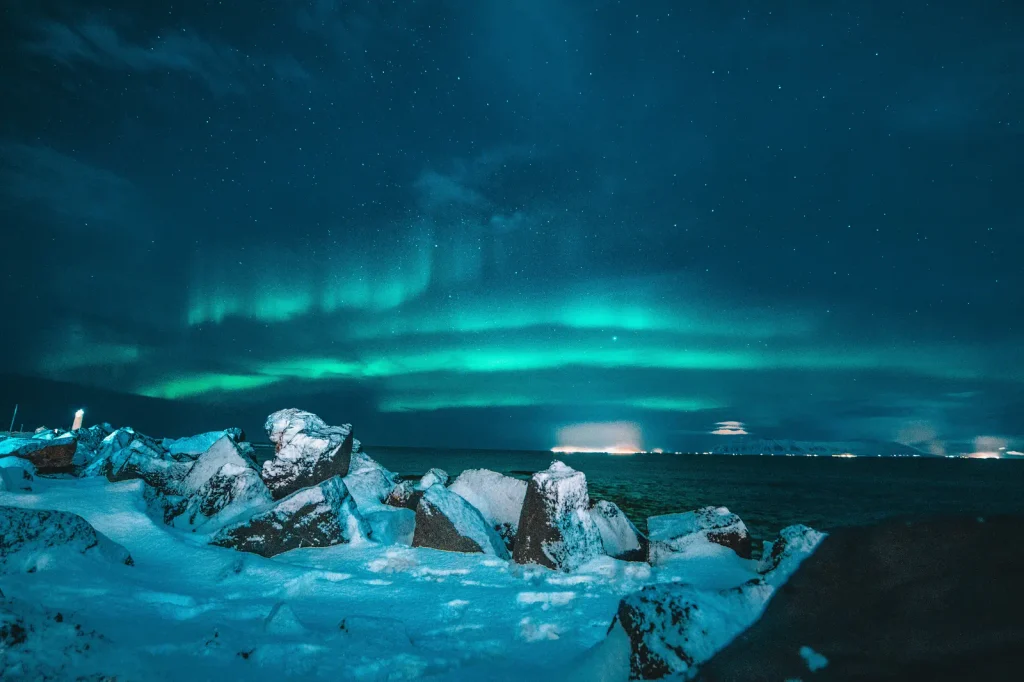
The aurora is visible in Iceland any time the sky is dark and clear enough — which rules out summer entirely, since the midnight sun never lets the sky get properly dark from roughly mid-May through early August. Iceland’s official tourism guidance puts the realistic aurora season at late August through late April.
September, October, February, and March are popular choices because they offer plenty of darkness without the deepest winter conditions — not because they’re statistically guaranteed to outperform the rest of the season.
Getting away from Reykjavík’s light pollution matters as much as timing — even a 20–30 minute drive out of the capital, to somewhere like Þingvellir or the Grótta lighthouse area, meaningfully improves visibility over staying in the city center. North Iceland, being drier than the south, tends toward better clear-sky odds on a given winter night — a general tendency worth knowing, not something you can count on for any one specific trip.
Planning anchor, not a guarantee: Even in peak season, the aurora depends on solar activity and clear skies working together on the same night. Spending several nights in Iceland during aurora season, rather than relying on a single overnight stop, meaningfully improves your odds, and checking the Icelandic Met Office’s aurora forecast daily is worth doing once you’re there.
Whale Watching and Puffins: Iceland’s Wildlife Seasons
celand’s two signature wildlife sightings run on their own separate calendars, and both overlap with the warmer months rather than the aurora season.
Whale watching is offered nearly year-round out of Reykjavík and Akureyri, with April through September generally considered a popular period. Summer’s long daylight hours and generally favorable sea conditions make it a natural high point for tours, though sighting rates vary by operator, route, and season, and shouldn’t be read as a fixed statistic. Húsavík in the north, sometimes called Iceland’s whale-watching capital, remains an active choice into September as well.
Puffins are only in Iceland to nest — they spend the rest of the year far out at sea. Nesting runs roughly May through August, and puffins generally leave by late August, so sightings become unlikely after the nesting season ends. The Westman Islands, the Látrabjarg cliffs in the Westfjords, and the headlands around Borgarfjörður Eystri in the east hold the largest colonies, with June and July offering the strongest overlap with peak nesting activity.
Summer in Iceland (June–August): Midnight Sun Season
Summer is Iceland’s most forgiving season logistically. Many roads, including the Highland F-roads, become accessible in summer, though opening dates and conditions vary by route and year — check Safetravel before planning a highland leg of your trip. Temperatures hover in the mild teens, and the near-endless daylight means there’s no rush to be anywhere by a fixed time. It’s also a strong period for both whale watching and puffins, so travelers combining wildlife with landscape photography get the most overlap here.
The trade-off is crowding and cost. This is when Iceland is busiest and most expensive: book accommodation, especially along the popular south coast and near Þingvellir and the Golden Circle, well ahead — some south coast guesthouses sell out for July weekends months in advance.
Winter in Iceland (November–March): Ice Caves and Aurora
Winter trades daylight for two things summer can’t offer: the northern lights and access to natural ice caves inside the Vatnajökull glacier. Natural ice-cave tours are generally a winter activity, when guides can assess which caves are stable and safe to enter — access depends on ongoing conditions and guided-tour availability rather than a fixed calendar window. It’s also when the Blue Lagoon and Iceland’s other geothermal spots feel most dramatic, with steam rising against snow and ice.
Winter self-drive trips require careful monitoring of road and weather conditions, a vehicle appropriate for the route, and a flexible itinerary. Conditions can change within a few hours, and a well-equipped vehicle alone does not make winter driving safe — check road.is and the Icelandic Met Office’s Safetravel site before heading out each day, rather than planning the whole trip in advance and hoping the weather cooperates.
Shoulder Season: Spring and Fall in Iceland
May and September are the two months that quietly do double duty, and they’re often the sweet spot for travelers who want the best of both worlds without picking one extreme. It’s the same shoulder-season logic that makes Portugal’s May and September such reliable picks — fewer crowds without much of a weather trade-off.
May brings lengthening daylight, thawing lowland roads, the start of wildlife season, and noticeably fewer tour buses than June. Highland F-roads are still typically closed this early, so it isn’t the month for interior trips, and any aurora chances in the first days of May are marginal — worth knowing about, but not a real reason to pick the month.
September is arguably Iceland’s best compromise month, and deserves real emphasis here. It offers fewer summer crowds, autumn scenery, still-reasonable daylight, generally accessible main routes, the return of aurora visibility as the sky darkens later in the month, continued wildlife activity around Húsavík, and typically easier pricing than July or August.
Region-by-Region: When Each Part of Iceland Is Best
Reykjavík averages hide a lot — Iceland’s regions run on genuinely different calendars, and that matters more here than in most destinations because several regions are simply harder or impossible to reach outside their window. It’s a more extreme version of the lowland-versus-mountain divide that shapes trip planning in Switzerland, where a valley town and a nearby peak can be in completely different seasons.
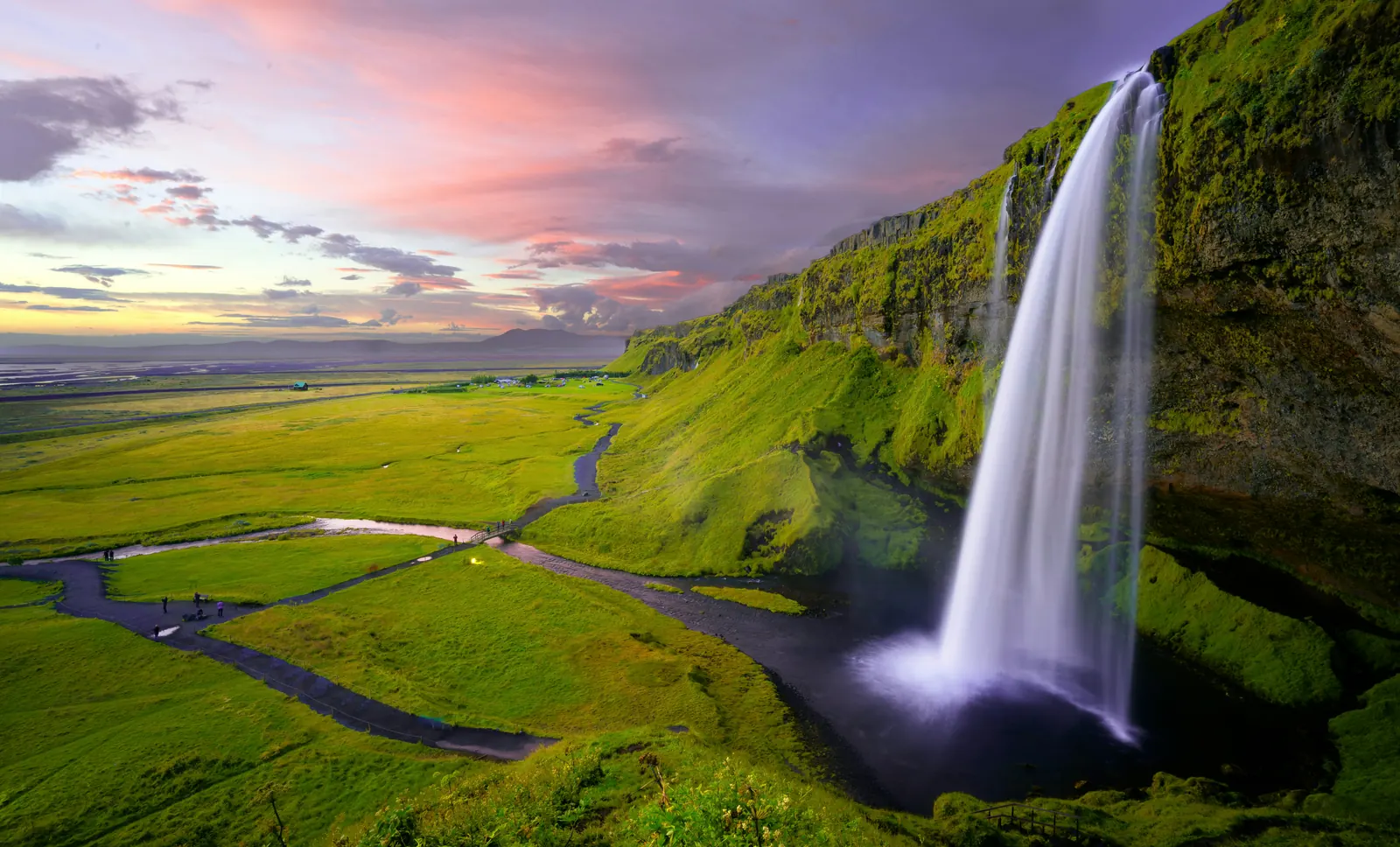
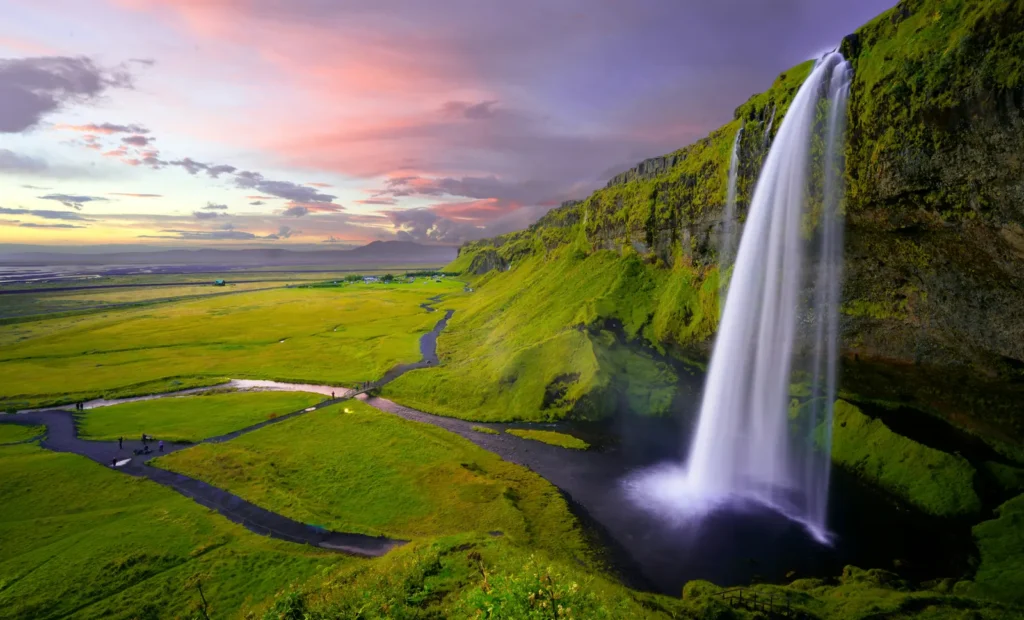
South Coast (Seljalandsfoss, Skógafoss, Vík, Jökulsárlón): The most forgiving region year-round. Winter access along the south coast Ring Road is possible but never guaranteed — serious storms can still close sections with little notice — and this is where most winter ice-cave and glacier-lagoon tours operate from.
North Iceland (Akureyri, Mývatn, Húsavík): Colder and drier than the south, which tends toward better aurora-viewing odds on a clear winter night, though this is a general pattern rather than something you can count on for a specific trip. Akureyri runs its own small ski resort and works well as a winter aurora base without driving the full Ring Road. Húsavík is Iceland’s whale-watching hub.
Westfjords: Summer — June through August — is the easiest and most reliable time to visit, with the widest road access and mildest weather. It’s a remote region with narrow gravel roads winding around every fjord rather than cutting through. Outside that window, conditions can be considerably more challenging: travelers should check road conditions carefully and build in extra flexibility, since a larger vehicle on its own doesn’t solve winter road closures or hazardous conditions.
The Highlands (Landmannalaugar, Þórsmörk, the Kjölur route): Most Highland F-roads are closed outside the summer driving season. A Highlands trip needs to be built around that window specifically, rather than fitted around anything else.
Reykjavík: Iceland’s Capital, Any Season
Unlike the Ring Road or the highlands, Reykjavík itself doesn’t really have an off-season. Museums, restaurants, and the geothermal pools locals use year-round are all open regardless of month, which makes the capital a reasonable base for travelers visiting purely for a city break, or for anyone tacking a few days onto a winter aurora trip without wanting to drive icy rural roads. New Year’s Eve is worth a special mention — Reykjavík has one of the more striking (and famously unregulated) fireworks displays anywhere, if you happen to be visiting over the holidays.
Geothermal Spas and the Blue Lagoon: Good Any Time of Year
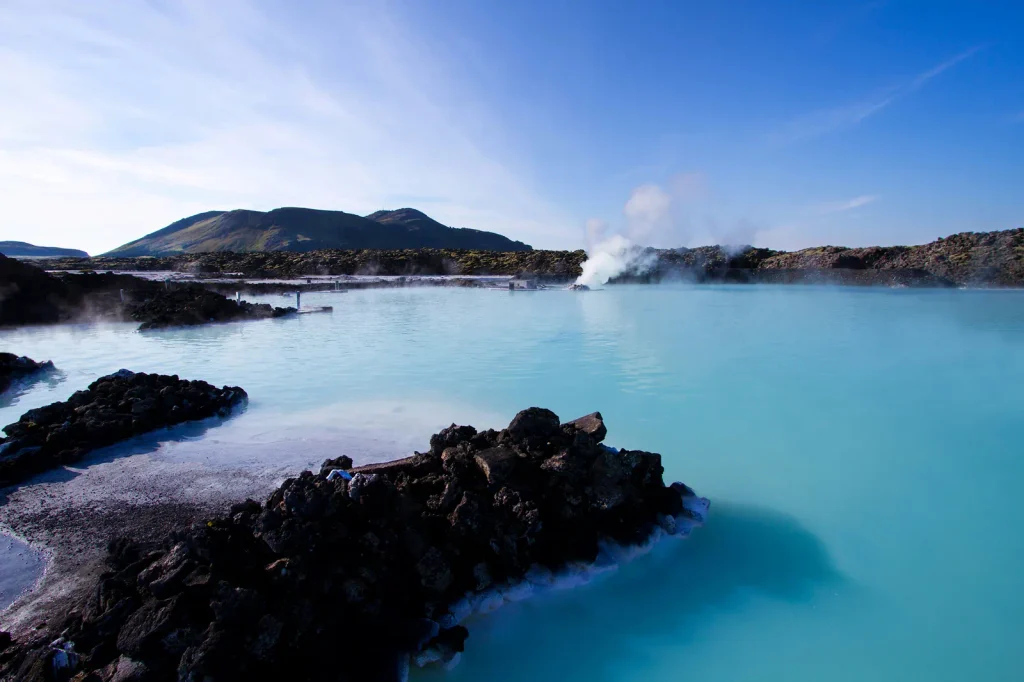
Geothermal bathing is one of the few Iceland experiences that genuinely doesn’t have a bad season. The water stays a near-constant warm temperature regardless of what’s happening outside, so a snowy December visit and a bright July one both deliver the same core experience — just with a different backdrop. If anything, colder months make the contrast between the warm water and cold air more striking, and soaking while snow falls around you is arguably the more memorable version of the experience.
Glacier Lagoons and Ice Caves
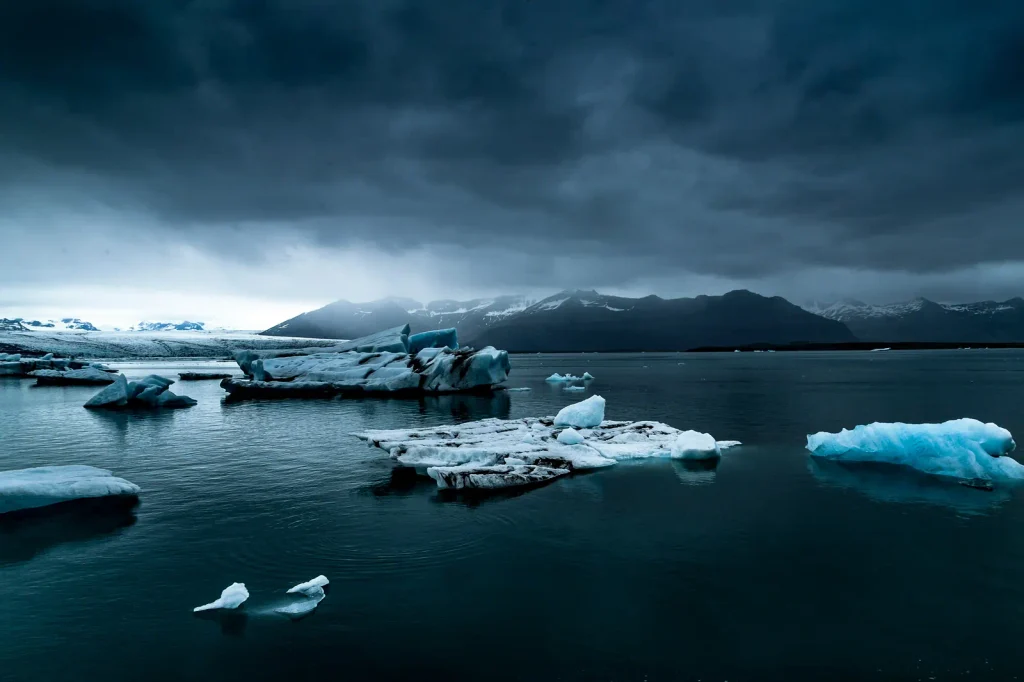
Jökulsárlón glacier lagoon is worth visiting in any season — icebergs calve and drift through it year-round, and the neighboring Diamond Beach, where ice chunks wash up on black sand, is equally striking in summer or winter. Natural ice-cave tours in Vatnajökull, however, are generally a winter activity, when guides can assess which caves are stable and safe to enter; outside that window, the caves are either inaccessible or too unstable for guided visits.
Is Iceland Expensive to Visit? How Season Affects Cost
Iceland is expensive by most travelers’ standards regardless of when you go. February, April, May, and October can offer lower prices than the peak summer months, although actual rates vary by accommodation, demand, and travel dates — treat this as a general seasonal pattern rather than fixed pricing data. Car rental prices tend to follow a similar seasonal pattern, and winter self-drive trips may also need a 4×4 and additional insurance, which can offset some of the savings from a lower base rental rate.
What to Pack for Iceland by Season
- Summer (Jun–Aug): Waterproof shell, warm mid-layer, sturdy walking shoes, sunglasses, an eye mask for the midnight sun.
- Winter (Nov–Mar): Insulated waterproof jacket, thermal base layers, waterproof boots with good grip, gloves, a headlamp for the short daylight hours.
- Shoulder season (Apr–May, Sep–Oct): Layer for both — waterproof shell over a warm mid-layer, with options to add or shed layers as weather shifts through the day.
Best Time to Visit Iceland by Travel Goal
| Your Goal | Best Months |
|---|---|
| Northern lights | Late Aug–late Apr (best: Sep, Oct, Feb, Mar) |
| Midnight sun / long days | May–Jul |
| Whale watching | Apr–Sep (summer generally strongest) |
| Puffins | May–Aug (peak: Jun–Jul) |
| Ice caves | Nov–Mar, conditions permitting |
| Full Ring Road / highland F-roads | Jun–Aug (Sep for road access, tighter daylight) |
| The Westfjords | Jun–Aug |
| Fewer crowds, workable weather | May, Sep |
| Lowest prices | Feb, Apr, May, Oct (rates vary) |
Frequently Asked Questions
How many days do you need in Iceland?
A week is enough to cover the south coast and Golden Circle comfortably; 10–14 days lets you add the north, the Westfjords, or a Highlands detour without rushing between stops.
Is it worth visiting Iceland in winter if you can’t drive the F-roads?
Yes — the south coast, Reykjavík, the Golden Circle, and most ice-cave and geothermal experiences remain accessible in winter. You’re mainly missing the Highlands and much of the Westfjords, which depend on the summer driving season regardless of your comfort behind the wheel.
Do you need a 4×4 to drive in Iceland?
Not necessarily for a summer south-coast trip on paved roads. F-roads require an appropriate 4WD/4×4 vehicle, and requirements vary by route — some F-roads need substantially more capable vehicles than others. For winter driving generally, requirements vary by rental company and route, and having a suitable vehicle is only part of driving safely; monitoring road and weather conditions matters just as much.