Best Time to Visit Hawaii: A Month-by-Month Guide
Fly into Honolulu on the same December morning as a family from Minnesota escaping the cold, and you’ll be standing in the exact same airport as someone who booked eight months ahead to watch humpback whales breach off Maui, and someone else who flew in specifically because Waimea Bay is throwing 30-foot faces this week. Hawaii doesn’t really have an off-season the way most destinations do — it has two separate peak seasons, several overlapping niche seasons stacked on top of them, and a rain map that changes completely depending on which side of an island you’re standing on.
That’s the part most “best time to visit” advice skips. The honest answer isn’t one window — it’s a handful of different answers depending on what you’re actually there for. It’s the same lesson that applies to a country like India, where the right month for a Kerala backwater trip and the right month for a Himalayan trek can be nearly opposite — Hawaii just packs that same complexity into a much smaller footprint.
The short version
If you just want warm, reliable weather without paying peak prices, April–May or September–October is the answer. Summer crowds have either not arrived yet or have already cleared out, winter holiday pricing hasn’t kicked in, and the islands are dry almost everywhere.
If you’re chasing something specific — whales, big surf, guaranteed sunshine for a wedding — the calculus changes, and it’s worth reading further before you book.
Why Hawaii has two peak seasons, not one
Most destinations have a single busy stretch. Hawaii has two, and they’re driven by completely different travelers. Summer (June–August) fills up with mainland families working around school breaks. The winter holidays (mid-December through early January) fill up with people fleeing cold weather back home — often called “snowbirds” in the islands’ own tourism data. Both periods are expensive. Both periods also happen to have genuinely excellent weather, which is exactly why they’re both busy — “peak” in Hawaii doesn’t mean “avoid,” it means “budget accordingly.”
Between those two peaks sit the shoulder months, which is where the real value lives. Hotels discount rooms because they’re squeezed between two high-demand stretches, not because anything’s wrong with the weather.
The windward/leeward split matters more than the month
Here’s the thing that trips up more first-time planners than anything else: which coast you’re on changes everything, sometimes more than which month you’re visiting.
Trade winds blow steadily from the northeast across the islands. Wherever that wind hits land first — the windward side — clouds pile up, rain falls, and everything stays green and lush. Keep going around to the other side of the same island — the leeward side — and the mountains have already wrung the moisture out of the air. It’s dry, sunny, and often a completely different climate, sometimes less than an hour’s drive away.
The Big Island shows this most dramatically. Hilo, on the windward east coast, is genuinely one of the rainiest cities in the entire United States. Kailua-Kona, on the leeward west side, stays warm and dry across almost the whole year. Between them, the island climbs through 11 of the world’s 13 recognized climate zones — tropical coastline at sea level, snow possible at the Mauna Kea summit. It’s a similar story to what plays out across the Philippines’ own island geography, where a single province like Palawan can have a rainy east coast and a dry west coast at the same time — proof that “one country, one climate” rarely holds up anywhere made of islands.The same pattern, quieter versions of it, plays out everywhere:
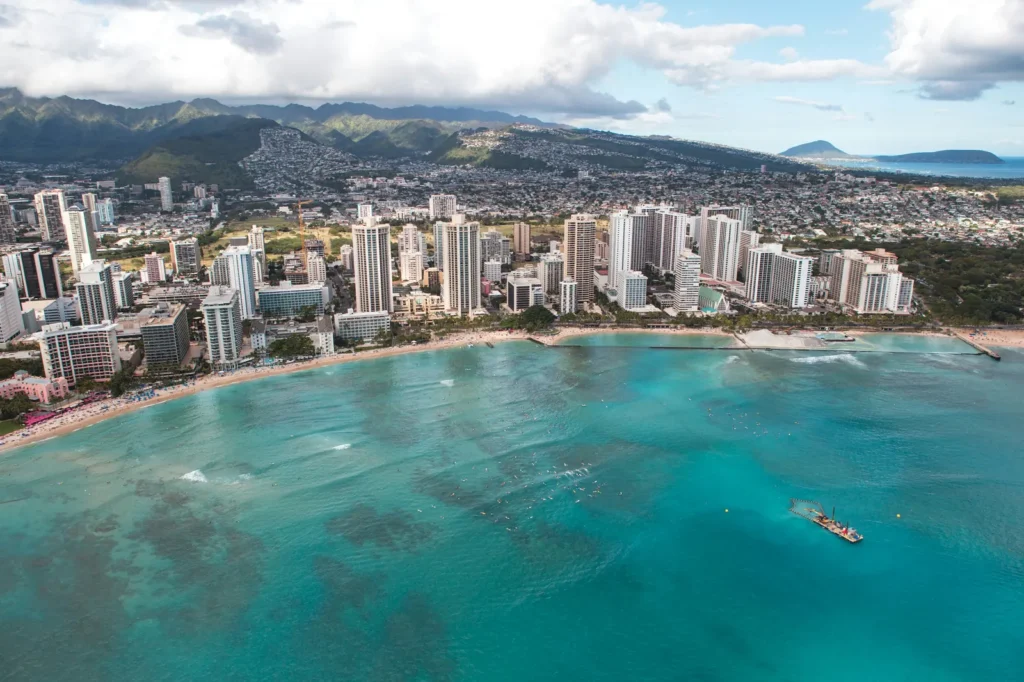
Oahu is the driest island overall, and the most forgiving for a first trip. Waikiki, Honolulu, and most of the tourist infrastructure sit on the leeward south shore, where prolonged bad weather is genuinely rare. The windward side — Kailua, Kaneohe — still gets its share of rain and is worth visiting for exactly that reason: it’s greener, quieter, and feels like a different island entirely, twenty minutes from the high-rises.
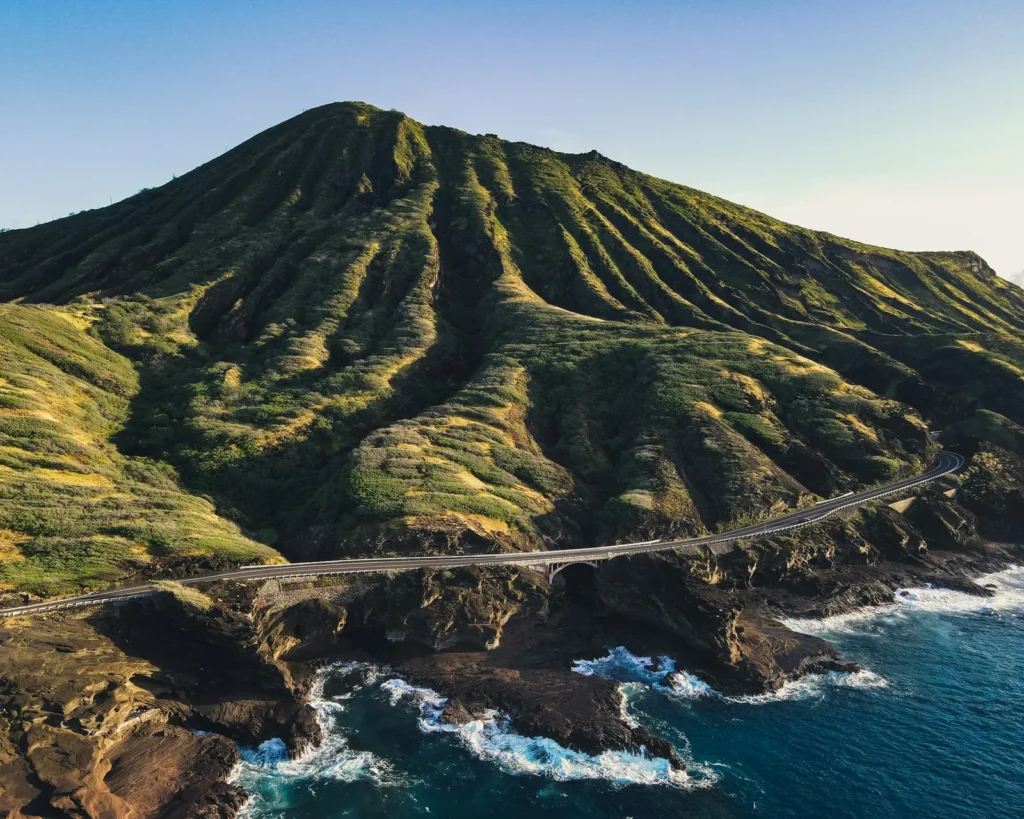
Maui’s South Shore towns — Kihei, Wailea — stay sunny and dry through most of the year, which is part of why they’ve become the island’s resort corridor. Head north or up toward Haleakalā and the picture changes fast; the summit sits high enough to occasionally see frost, even snow, while beachgoers thirty minutes away are working on a tan.
Kauai is the wettest island by a wide margin, and not by a small amount — Mount Waiʻaleʻale, near the island’s center, is regularly cited among the wettest spots on Earth. But that’s a very specific interior location, not the whole island. The south coast around Poipu and the west side near Kekaha stay comparatively dry and sunny most of the year, which is exactly why nearly all of Kauai’s resort development clusters there rather than near the wet interior everyone photographs for its waterfalls.
Sea-level temperatures barely move throughout the year — roughly 78–85°F in winter, 85–90°F in summer, statewide. So the real question isn’t “what will the temperature be.” It’s “which coast am I booking.” It’s a version of the same coast-by-coast question that drives trip planning in Costa Rica, where the Pacific and Caribbean sides can be in opposite seasons at the same time.
Ocean conditions follow a related but separate logic worth knowing if snorkeling or diving is part of the plan. Calmer water generally means clearer water, so the same summer months that flatten the North Shore’s surf also tend to sharpen underwater visibility along Oahu’s north and west coasts — sites that get pounded by winter swell become genuinely swimmable and clear once summer arrives. It’s a neat inversion of the surf calendar: winter belongs to the wave-watchers, summer belongs to the snorkelers, on the very same stretches of coastline.
A hula festival that quietly controls Big Island hotel pricing
There’s a week every spring most mainland travelers have never heard of, but anyone booking Hilo needs to know about it. The Merrie Monarch Festival — Hawaii’s most prestigious hula competition, running the week after Easter — fills essentially every hotel room in Hilo, sometimes a year or more in advance. The 2027 edition runs March 28 through April 3.
It’s worth understanding why this matters even if you have zero interest in attending. Hilo simply doesn’t have the hotel inventory Waikiki or Kona does — most of its rooms sit along a short stretch near Banyan Drive, split between a handful of properties like the Grand Naniloa and the Hilo Hawaiian. When a festival this popular lands on a supply that small, “sold out” isn’t an exaggeration; it’s the default state for that week, often locked in a full year ahead by repeat attendees. If your Big Island itinerary includes Hilo and happens to fall near Easter, check the festival dates before you assume rooms will be available — and if hula, parades, and Hawaiian cultural arts genuinely interest you, this is one of the most authentic events in the state, not a tourist recreation of one.
The haze nobody mentions until you’re standing in it
Here’s something that rarely makes it onto a packing list: vog. Short for “volcanic smog,” it’s the hazy air that drifts downwind from Kīlauea whenever the volcano is venting sulfur dioxide — which is to say, almost always, eruption or no eruption. Even during quiet stretches between fountaining episodes, Kīlauea can still release over a thousand tonnes of sulfur dioxide a day, and that’s enough to visibly flatten a view or mute a sunset depending on which way the wind is blowing.
Geography decides who sees it. Trade winds usually push vog southwest, so it tends to pile up along the Big Island’s leeward Kona coast — Kailua-Kona, Kealakekua, the resort strip through South Kona — even on days when the summit itself sits under a clear sky. When trade winds go quiet, which happens more often in winter, vog can spread further: across the whole Big Island, occasionally as far as Maui or even Honolulu, over 200 miles from the source.
For the vast majority of healthy travelers, this is a mild annoyance, not a reason to reconsider a trip — hazier photos, maybe some eye or throat irritation on a heavy day. For anyone traveling with asthma, older family members, or young children, it’s worth a genuine look at current conditions before committing to a Big Island itinerary, particularly one centered on the Kona coast. The state’s Interagency Vog Dashboard tracks real-time conditions if you want to check before you book rather than after you land.
Hawaii’s winter carries two specific draws that don’t exist the rest of the year, and they happen to overlap almost perfectly.
Humpback whales arrive as early as late October, with sightings building through November and December before hitting full activity in January through March. Maui, the Kohala Coast, Kauai, and Oahu’s leeward and southeast shores are the strongest viewing grounds. The second half of January tends to be the smart window — the holiday-week crowds have thinned out, fares typically drop 15–20% from the Christmas peak, and whale activity is still near its best.
At almost exactly the same time, Oahu’s North Shore wakes up. Winter swells — mid-December through early February is the most reliable stretch — turn Pipeline, Waimea Bay, and Sunset Beach into some of the most dramatic surf on the planet, with wave faces regularly reaching 25 to 60+ feet on the biggest days. Maui’s Peʻahi (“Jaws”) runs on a similar timeline for experienced riders.
Come summer, this entire picture flips. The North Shore goes flat and calm. The South Shore — Waikiki, Ala Moana Bowls — picks up smaller, friendlier waves better suited to beginners and casual snorkeling. If watching monster waves from the sand matters to you, winter isn’t optional. If you’d rather swim than spectate, summer is the easier season.
One safety note worth taking seriously: watching from shore on the biggest days is not risk-free. Shore-break injuries happen most winters at Waimea Bay and Sunset Beach — to spectators, not just surfers. Ehukai Beach Park is the safer, marked viewing spot if you want to watch Pipeline up close.
The season nobody advertises
Hurricane season runs June through November, with risk concentrated more heavily in August and September. It’s worth saying plainly rather than burying it: direct hurricane hits on Hawaii are genuinely uncommon, thanks to ocean currents and geography that mostly steer storms away from the islands. Most summer trips happen without any disruption at all.
But “uncommon” isn’t “never.” Tropical storms and near-misses do occur, and when they do, they can ground inter-island flights and cancel boat tours with only a few days’ notice. If your dates are locked in and your plans depend on things that can’t easily be rescheduled — a wedding, a tightly booked multi-island itinerary — building in a little slack during late summer is sensible planning, not paranoia. It’s the same honest trade-off we lay out for Japan’s typhoon season: genuinely low odds of disruption, but not zero, and worth knowing about rather than discovering mid-trip.
What it actually costs, by season
The numbers move more than people expect. A round-trip flight running $400–700 in shoulder season can climb past $800–1,000+ during summer or the winter holidays — and a week-long trip that costs $1,000–1,800 per person in a cheaper month can top $2,500+ per person at the peak of the year.
Whale season adds its own layer on top of already-elevated winter pricing, though that late-January window mentioned earlier is a genuine way to soften the hit. September tends to offer the year’s best airfare deals — it falls right after summer demand drops off and before winter holiday demand builds. February is often competitive too, for travelers not tied to whale-watching timing specifically.
| Month | Statewide Temp | Rain/Hurricane Risk | Whales/Surf | Best For |
|---|---|---|---|---|
| January | 65–80°F | Moderate, wettest winter month | Whale season peak begins; big surf peak | Whales + big waves, premium pricing |
| February | 65–80°F | Moderate | Whale peak; big surf continues | Best airfare deals of the year |
| March | 67–81°F | Easing | Whale season winding down; surf tapering | Value before spring break |
| April | 69–83°F | Low | — | Shoulder-season value, warm & dry |
| May | 71–85°F | Low | South shore surf building | Best all-around value month |
| June | 74–87°F | Low, hurricane season begins | South shore surf season | Peak summer begins, book early |
| July | 75–88°F | Low | South shore surf | Reliable warm weather, high prices |
| August | 76–90°F | Low, elevated hurricane risk | South shore surf | Hottest month, watch storm tracks |
| September | 75–89°F | Low, elevated hurricane risk | — | Cheapest airfare, post-summer value |
| October | 73–87°F | Rising | Early whale sightings, North Shore surf begins | Great value, hurricane risk easing |
| November | 70–84°F | Rising | Whale season begins; big surf builds | Value before holiday rush |
| December | 67–81°F | Moderate-high | Whale sightings build; big surf peak | Holidays, premium pricing, book 6mo+ ahead |
Temperatures shown as approximate statewide low–high range; individual islands and windward/leeward coasts vary significantly, as detailed above. Whale and surf timing vary year to year — treat as planning guides, not guarantees.
A few things people usually ask
Is hurricane season actually dangerous to plan around?
Not really, for most travelers — direct hits are rare, and summer remains one of the most popular and trouble-free times to visit. It’s worth knowing about, not worth avoiding entirely.
Which island has the best weather?
There’s no single winner — it depends entirely on which coast. Kona, Kihei, and Waikiki all stay reliably dry; Hilo and Kauai’s north shore are lush and beautiful but genuinely wet.
Do whale watching and good weather conflict?
Barely — whale season overlaps with a stretch of winter that’s otherwise pleasant statewide. The real trade-off is cost and crowds, not weather quality.
What’s the single cheapest month?
September, most years — right after summer demand tapers and before winter holiday demand builds back up.
Is vog something I should actually worry about?
For most healthy travelers, no — it’s more of a photo-quality and mild-irritation issue than a health emergency. It concentrates most heavily on the Big Island’s Kona coast, so if you have respiratory sensitivities, it’s worth checking current conditions specifically for that side of the island before booking.
Do I need to plan around the Merrie Monarch Festival even if I’m not going to it?
If your itinerary includes Hilo and lands near Easter, yes — check the dates regardless of interest, since hotel availability in Hilo specifically can disappear a year ahead of the festival.
Weather patterns, prices, and event dates can change. Always verify current conditions and details with official sources before booking your trip. See our Disclaimer for more information.