Best Time to Visit Spain: Weather, Regions & Festival Guide
In January, skiers are carving down the slopes of the Sierra Nevada while a two-and-a-half-hour flight away, the Canary Islands sit at a comfortable 68°F (20°C) with people swimming. In July, Seville can hit 104°F (40°C) at the same time San Sebastián, 400 miles north on the Atlantic coast, stays a cool, damp 75°F (24°C). Those aren’t outlier days — they’re what a normal year looks like in a country stretched across five distinct climate zones that never move in sync. Picking “the best time to visit Spain” only makes sense once you know which Spain you’re actually visiting.
Best time to visit Spain: Late spring (April–June) and early fall (September–October) are the best overall window — mild temperatures across most of the mainland, before the summer heat peaks and after the coldest Atlantic rains ease off. But the right month depends heavily on region: winter works for the Canary Islands, summer is the only realistic window for northern beach towns, and Andalusia is best avoided entirely in July and August unless you can handle sustained triple-digit heat.
Quick Answer: Best Time to Visit Spain by Priority
- Best overall: April–June or September–October (mild everywhere except the far south, fewer crowds than peak summer)
- Best for budget travel: November–March, excluding Christmas/New Year (lowest hotel rates, thinnest crowds, but coastal towns and Andalusian heat relief go with it)
- Best for beaches on the mainland/Balearics: June–September (warm sea temperatures, though July–August bring the biggest crowds and prices)
- Best for winter sun: November–March in the Canary Islands (year-round mild climate, the only part of Spain where winter isn’t “off season”)
- Best for avoiding extreme heat: Skip Andalusia’s interior (Seville, Córdoba) in July–August entirely; the northern coast stays comfortable
- Worst for most travelers: Late July through August in Madrid, Seville, and the interior — dangerous heat plus many small businesses and restaurants closed for the month
When Is the Best Time to Visit Spain Overall?
The best time to visit most of mainland Spain is April through June or September through October, when temperatures across Madrid, Barcelona, and the coasts sit in the comfortable 60s–70s°F (16–24°C) without the extreme heat of high summer or the damp chill of deep winter. These shoulder-season windows also avoid the two things that most complicate a Spain trip: the July–August heat spike in the interior and south, and the country’s partial August shutdown (more on that below). Spain’s regional variation is wide enough, though, that “overall” only gets you so far — the sections below break down what’s actually happening in each part of the country.
When Is the Best Time to Visit Madrid and Central Spain?
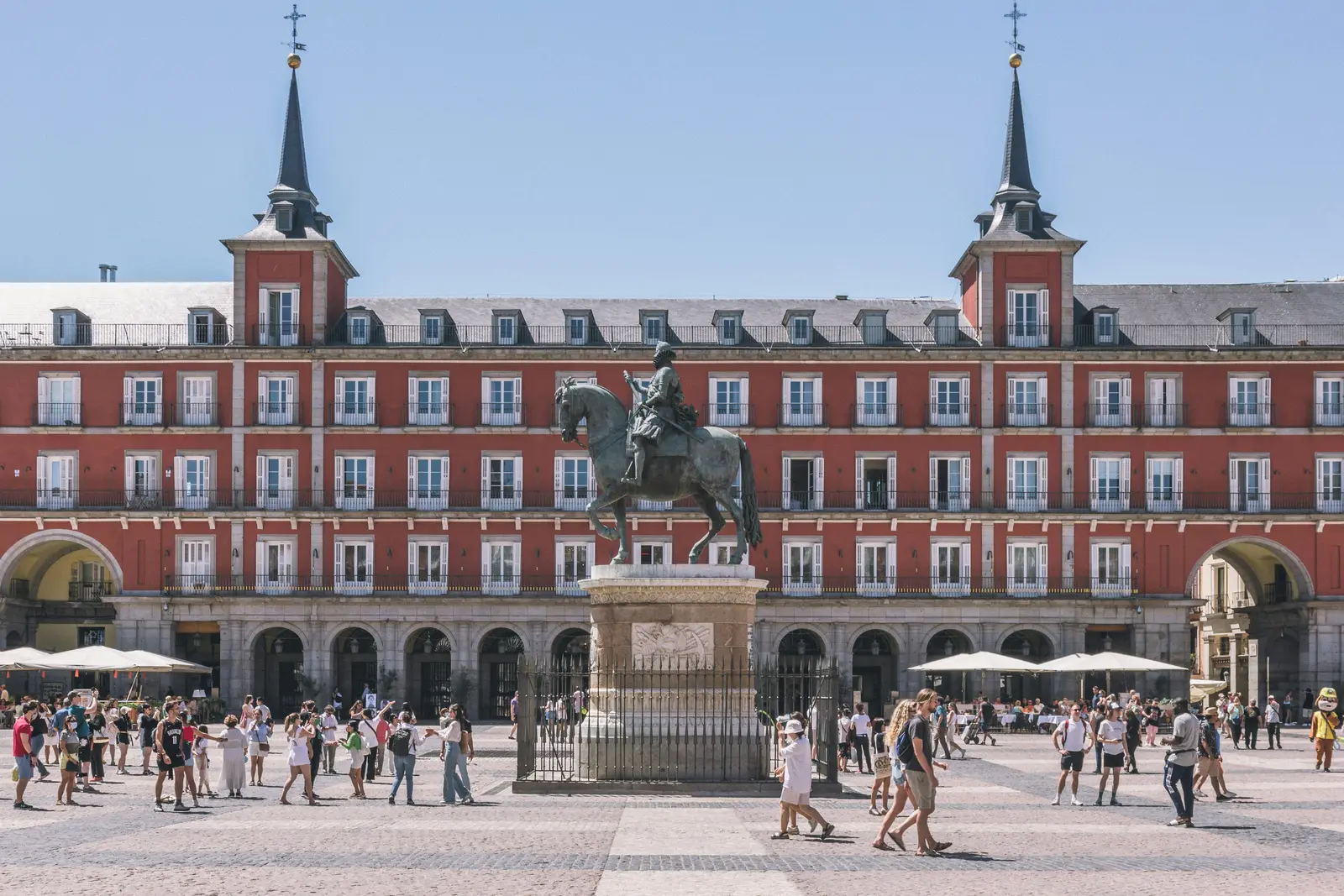
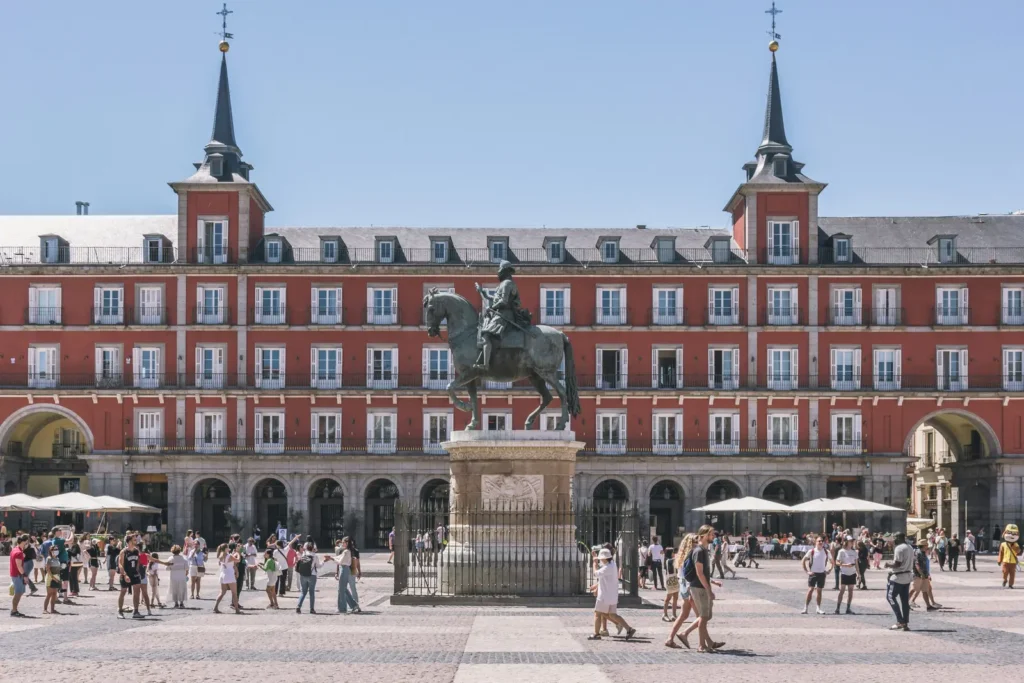
The best time to visit Madrid is April, May, September, or October, avoiding both its brutal summer highs and its cold, dry winter nights. Madrid sits on a high central plateau (2,188 ft / 667 m elevation), which gives it one of Spain’s most extreme temperature swings: summer days regularly hit 91–92°F (33°C) in July and August, while winter nights drop to a raw 33°F (0.5°C) in January, occasionally with light snow. Because Madrid is landlocked, there’s no coastal breeze to soften either extreme — locals describe it as “nine months of winter, three months of hell,” which is an exaggeration but not by much. Spring brings the city’s biggest festival, San Isidro (mid-May), along with pleasant 63–73°F (17–23°C) days. Late September through October cools gradually and clears out the summer crowds without yet bringing winter’s cold snaps.
When Is the Best Time to Visit Barcelona and the Mediterranean Coast?
The best time to visit Barcelona and the Mediterranean coast (Valencia, Costa Blanca, Costa Brava) is May, June, or September, when the sea has warmed enough to swim but the summer crush of tourists hasn’t peaked. Barcelona’s coastal position moderates its climate compared to Madrid’s — winters are milder (highs around 55–57°F/13–14°C in January) and summers, while hot, don’t hit the same extremes (highs around 81–84°F/27–29°C in July and August, versus Madrid’s low 90s). July and August bring the warmest, most reliable beach weather but also the highest hotel prices and the most crowded Sagrada Família lines of the year. If you’re mainly here for the beach rather than the architecture, late June through early September gives the warmest sea temperatures; if you’re mainly here for the city, April–June and September–October are more comfortable for walking.

When Is the Best Time to Visit Andalusia (Seville, Córdoba, Granada)?
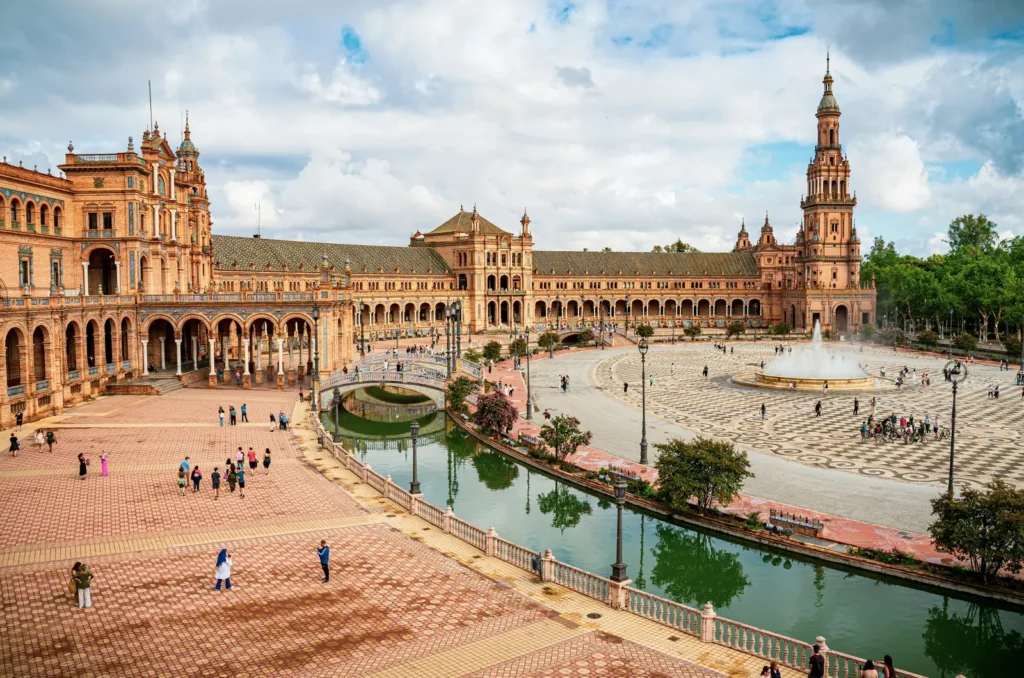
The best time to visit Andalusia is March–May or October–November — never July or August, when Seville and Córdoba are regularly ranked among the hottest cities in Europe. Seville’s average July high is around 96°F (36°C), but temperatures above 104°F (40°C) happen multiple times most summers, and the city has recorded highs above 116°F (47°C). This isn’t a coastal region — Seville sits inland, shielded from any cooling sea breeze by the Sierra Morena mountains, and warm air pushing up from North Africa makes the heat worse. Spring is the single best window: Seville’s famous Feria de Abril (April Fair) and Semana Santa (Holy Week, dates shift with Easter) both fall in this period, when daytime highs are a much more manageable 70–79°F (21–26°C). Granada, at higher elevation near the Sierra Nevada, runs a few degrees cooler than Seville year-round and is one of the only places in mainland Spain where you can ski and see palm trees on the same day.

When Is the Best Time to Visit Northern Spain (Basque Country, Galicia, Asturias)?
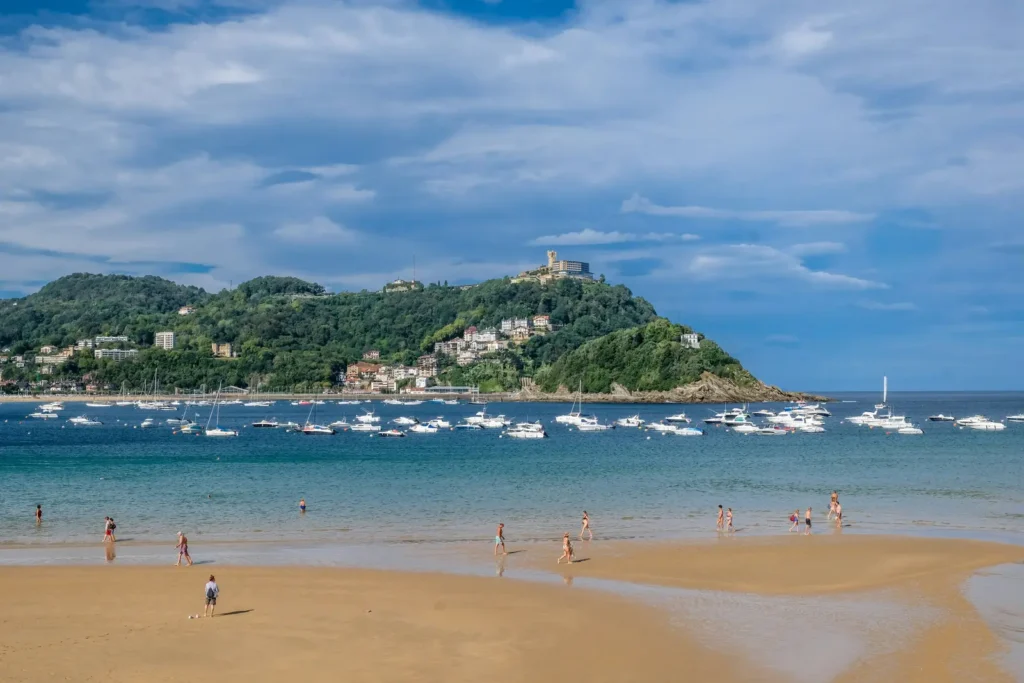
The best time to visit Green Spain — the Basque Country, Galicia, and Asturias along the Atlantic coast — is June through September, the only stretch of the year reliably free of the region’s frequent rain. San Sebastián averages over 1,600mm (63 in) of rain annually, making it one of the wettest cities in Spain, with the heaviest rain concentrated from October through May. Even in summer, temperatures stay moderate rather than hot — San Sebastián’s August high averages around 76°F (24°C), noticeably cooler than Barcelona or Madrid at the same time of year. That makes this region Spain’s natural escape from the interior’s summer heat: while Seville bakes, San Sebastián, Bilbao, and Santander stay comfortable, green, and (relatively) dry. Outside of June–September, expect real rain gear, not just an umbrella.
When Is the Best Time to Visit the Canary Islands?
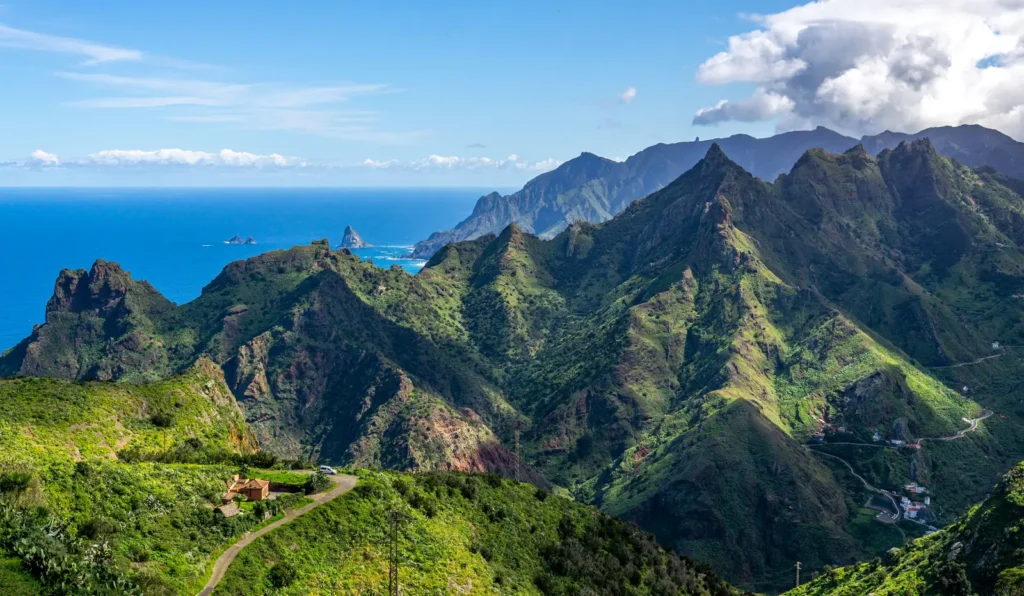
The Canary Islands are the one part of Spain where “best time to visit” barely changes by season — temperatures stay within an 18–26°C (64–79°F) band year-round, earning Tenerife the nickname “the island of eternal spring.” That makes winter (November–March) the actual sweet spot for most travelers, not because the weather improves, but because it’s the only time Canary Islands weather is dramatically better than everywhere else in Spain and most of Europe. January highs average around 68–70°F (20–21°C) — cooler than summer, but still beach-viable, and a stark contrast to Madrid’s near-freezing nights or northern Europe’s winter. Trade winds and the cool Canary Current keep the islands from ever getting uncomfortably hot, even in August. The north side of each island (Tenerife especially) is cloudier and greener; the south side is drier and sunnier, which is why nearly all the big beach resorts cluster there.
When Is the Best Time to Visit the Balearic Islands (Mallorca, Ibiza, Menorca)?
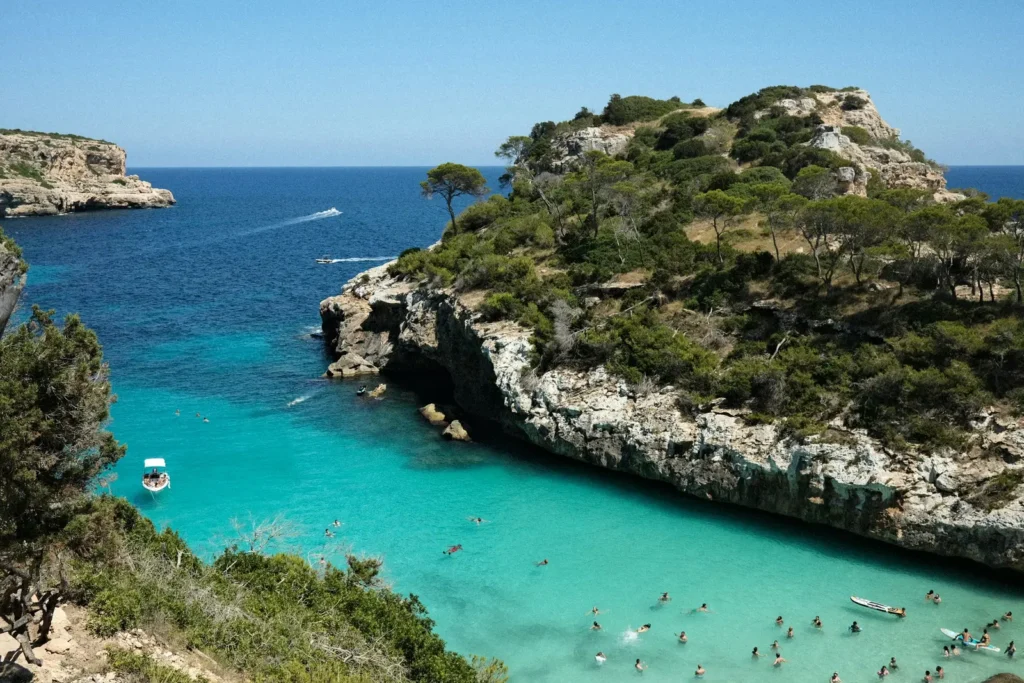
The best time to visit the Balearic Islands is May–June or September, which gets you warm, swimmable Mediterranean water without July and August’s peak crowds and prices. Mallorca’s climate runs mild and dry overall (annual average around 64°F/18°C), with a hot, rain-free summer and a cool, wet winter concentrated between October and December — the wettest month, October, averages 58mm of rain versus July’s essentially rain-free 5mm. Ibiza follows a similar pattern but leans more heavily into its nightlife calendar, which runs roughly June through September; outside that window, much of the island’s club scene shuts down entirely, so the “best time” here depends as much on what you’re visiting for as on the weather. Menorca, the quietest of the three main islands, is worth targeting for June or September specifically if you want its beaches without Mallorca or Ibiza-level crowds.
Spain by Month: Regional Comparison
| Month | Madrid | Barcelona | Andalusia | North Coast | Canary Islands | Balearics |
|---|---|---|---|---|---|---|
| Jan | Cold, dry (50°F/10°C) | Mild, wet (54°F/12°C) | Mild (61°F/16°C) | Cool, wettest season | Best month — mild (68°F/20°C) | Coldest, wettest |
| Feb | Cold, dry | Mild | Mild, comfortable | Cool, wet | Excellent | Cold, wet |
| Mar | Mild, windy | Mild, some rain | Warming, less rain | Cool, still wet | Very good | Cool, drying out |
| Apr | Pleasant (66°F/19°C) | Pleasant | Ideal (Semana Santa) | Improving | Very good | Improving |
| May | Warm, best month | Warm, ideal | Ideal (Feria de Abril) | Improving, still cool | Very good | Warming, good value |
| Jun | Hot, dry | Warm, ideal for beach | Getting very hot | Best window begins | Consistently good | Warm, ideal |
| Jul | Very hot (91°F/33°C) | Hot (84°F/29°C) | Extreme heat, avoid | Best month, mild | Consistently good | Hot, peak crowds |
| Aug | Very hot, partial shutdown | Hot, crowded | Extreme heat, avoid | Best month, busiest | Consistently good | Hot, peak crowds/prices |
| Sep | Cooling, pleasant | Warm, ideal | Still hot, improving | Best window ends | Consistently good | Warm, ideal |
| Oct | Mild, best month | Mild, pleasant | Ideal, cooling fast | Cooling, rain returns | Very good | Cooling, rainiest month |
| Nov | Cool, rain increases | Cool, wetter | Mild, comfortable | Cold, very wet | Very good, winter sun begins | Cool, wet |
| Dec | Cold, dry | Mild, some rain | Mild | Cold, wettest | Very good | Cold, wet |
The August Shutdown: What Every Visitor Needs to Know
One thing most “best time to visit Spain” guides skip entirely: a real share of the country closes for part of August, and it can catch visitors off guard if they’re not expecting it. Around 18% of Spanish businesses close during August, according to business consultancy Grant Thornton — mostly small, independent shops, local cafés, and admin offices rather than supermarket chains or restaurants in tourist zones. Spain’s biggest cities have historically lost as much as 80% of their local population over the summer as residents head to the coast, a tradition dating back decades. You’ll see handwritten signs on shuttered storefronts reading “Cerrado por vacaciones — volvemos el [date]” (“Closed for holidays — we’re back on [date]”). August 15th itself (the Assumption of the Virgin) is a national public holiday when even large chains typically close.
The practical takeaway: this mostly affects inland, non-touristy neighborhoods and small independent businesses — the restaurant next to your hotel in central Madrid or Barcelona will very likely be open, but the family-run tapas bar three streets back, or an admin office you need for anything official, may not be. Coastal and island destinations barely notice the shutdown at all — August is their busiest month, not a quiet one.
Spain’s Signature Festivals: When They Fall and What to Expect
| Festival | When | Where | What it is |
|---|---|---|---|
| Las Fallas | Mid-March | Valencia | Giant sculptures burned in massive bonfires; loud, smoky, and packed |
| Semana Santa | Late March–April (moves with Easter) | Nationwide, especially Seville | Elaborate religious processions with hooded penitents and floats |
| Feria de Abril | 2 weeks after Semana Santa | Seville | Flamenco dresses, horse parades, all-night dancing in themed tents |
| San Isidro | Mid-May | Madrid | The city’s patron saint festival — bullfighting season, concerts, street parties |
| San Fermín | July 6–14 | Pamplona | The Running of the Bulls — nine days of bull runs, fireworks, and bullfights |
| La Tomatina | Last Wednesday of August | Buñol (near Valencia) | An hour-long, ticketed tomato-throwing fight — book well ahead |
Note: dates for Semana Santa and Feria de Abril shift year to year since they’re tied to the Easter calendar — always confirm the current year’s exact dates before booking.
Quick Match: Which Region Fits Your Trip
- Want warm weather guaranteed, whatever the month? Canary Islands — it’s the only part of Spain where winter isn’t a compromise.
- Traveling in July or August and want a real vacation, not a heat endurance test? Head north to the Basque Country, Galicia, or Asturias — this is their peak season, not their off-season.
- Chasing festivals? Plan around San Fermín (July, Pamplona), Semana Santa or Feria de Abril (spring, Seville), or Las Fallas (March, Valencia) — these dates should anchor your whole itinerary, not just a day of it.
- On a tight budget and don’t mind cooler weather? November through March (outside Christmas week) brings the lowest prices almost everywhere except the Canaries, where winter is actually peak season and priced accordingly.
- Want one trip that covers multiple regions? May, June, or September are the only windows where Madrid, Barcelona, Andalusia, and the north coast are all simultaneously pleasant — outside that, you’re always trading off heat in the south for rain in the north, or the reverse.
Planning Beyond Spain
If Spain is one stop on a longer Mediterranean or European trip, its climate patterns overlap closely with Italy and Greece — all three share the same broad shoulder-season logic (spring and fall over peak summer), though Spain’s Atlantic north and the Canary Islands give it climate options neither Italy nor Greece really have. Travelers combining Spain with Portugal can generally use the same trip window, since the Iberian Peninsula’s inland heat and coastal moderation follow similar patterns on both sides of the border.