Best Time to Visit Vietnam: A Region-by-Region Guide
In late September, the rice terraces above Sapa turn gold and ready for harvest — one of the most photographed sights in northern Vietnam. That same week, the central coast around Hoi An and Da Nang is heading into its wettest, most typhoon-exposed stretch of the year. Two hours further south, Ho Chi Minh City is in the middle of the Mekong Delta’s rainy season, though the rain there mostly falls in short afternoon bursts rather than the multi-day central-coast downpours.
Vietnam runs more than 1,000 miles from its Chinese border to the tip of the Mekong Delta — roughly the distance from Maine to Florida — narrowing to about 30 miles wide at its thinnest point. Three weather systems fit inside that ribbon, and they don’t take turns. They run simultaneously, out of phase with one another.
Which means the month on your ticket doesn’t buy you a season. It buys you one region’s season, and the other two get whatever they happen to be having that week.
Definition Block: February through April is the strongest countrywide window for Vietnam, with dry conditions in all three regions at once. Northern Vietnam is at its best from September to November, central Vietnam from February to May, and southern Vietnam from December to April.
Quick Answer: Best Time by What You’re Doing
- Best overall compromise for a north-to-south trip: February–April — the north is dry and mild, the center is past typhoon season, and the south is still in its dry season before the pre-monsoon heat spikes in late April.
- Best for Halong Bay and Sapa specifically: September–November, when northern skies are clearest and Sapa’s terraces are at their most photogenic.
- Best for Hoi An, Hue, and the central coast: February–May, avoiding both the June–August heat and the September–December typhoon season.
- Best for Ho Chi Minh City and the Mekong Delta: December–April, the region’s dry season.
- Worst window for a first-time multi-region trip: October–November — not because the weather is bad everywhere, but because the central coast’s typhoon risk peaks exactly when the north is at its most beautiful, forcing the hardest trade-off of the year.
Why Does Vietnam Have Three Different Best Seasons?
Vietnam’s climate splits into three separate systems rather than one climate with regional variation, so the same month produces genuinely different weather in each third of the country.
- The north (Hanoi, Halong Bay, Sapa) has four real seasons — a cool, sometimes chilly winter; a hot, humid summer; and shoulder seasons in spring and autumn that most visitors find the most comfortable.
- The center (Hue, Da Nang, Hoi An) runs on a two-season tropical pattern that’s roughly the inverse of what most travelers expect: dry from around January to August, then wet — often severely so — from September through December, with typhoon risk concentrated in October and November.
- The south (Ho Chi Minh City, the Mekong Delta) has a straightforward dry season (December–April) and wet season (May–November), with rain typically arriving as short, heavy afternoon downpours rather than settling in for days.
The practical consequence: “rainy season” means something different depending on where you’re standing. A trip planned around avoiding the rainy season in Hanoi could land you in the wettest weeks of the year in Hoi An, or the reverse.
When Is the Best Time to Visit Northern Vietnam?
The best time for Hanoi, Halong Bay, and Sapa is September to November or March to April, when the region sees its clearest skies and most comfortable temperatures.
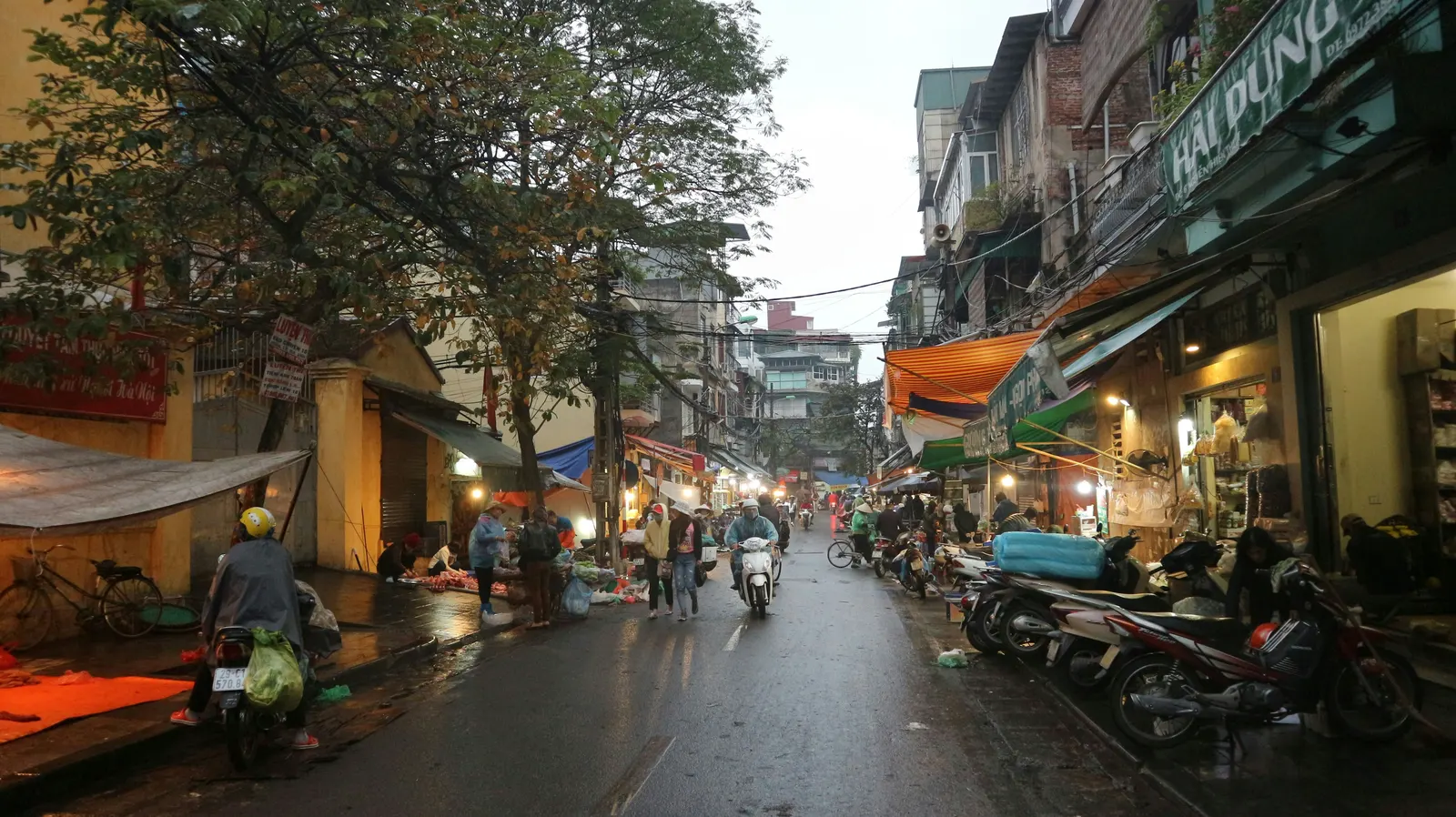
Hanoi’s climate splits sharply by season. January is the coolest month, with highs around 20°C (68°F) and lows near 14°C (57°F) — cool enough that a light jacket is worth packing, especially for early mornings in the Old Quarter. January and February are the driest months, each typically recording under 30mm of rain, though skies stay grey and drizzly rather than sunny. Heat peaks in June, when highs regularly reach 32–33°C (90–92°F) and occasionally push past 35°C. Rainfall peaks slightly later: August is the wettest month, averaging roughly 300mm, close to a fifth of Hanoi’s annual total of about 1,700mm. By late September the humidity breaks and the city settles into its most pleasant stretch, running through to early December — this is also the window locals consistently point to as the best time to walk the Old Quarter or sit outside at a bia hoi (sidewalk beer) corner.
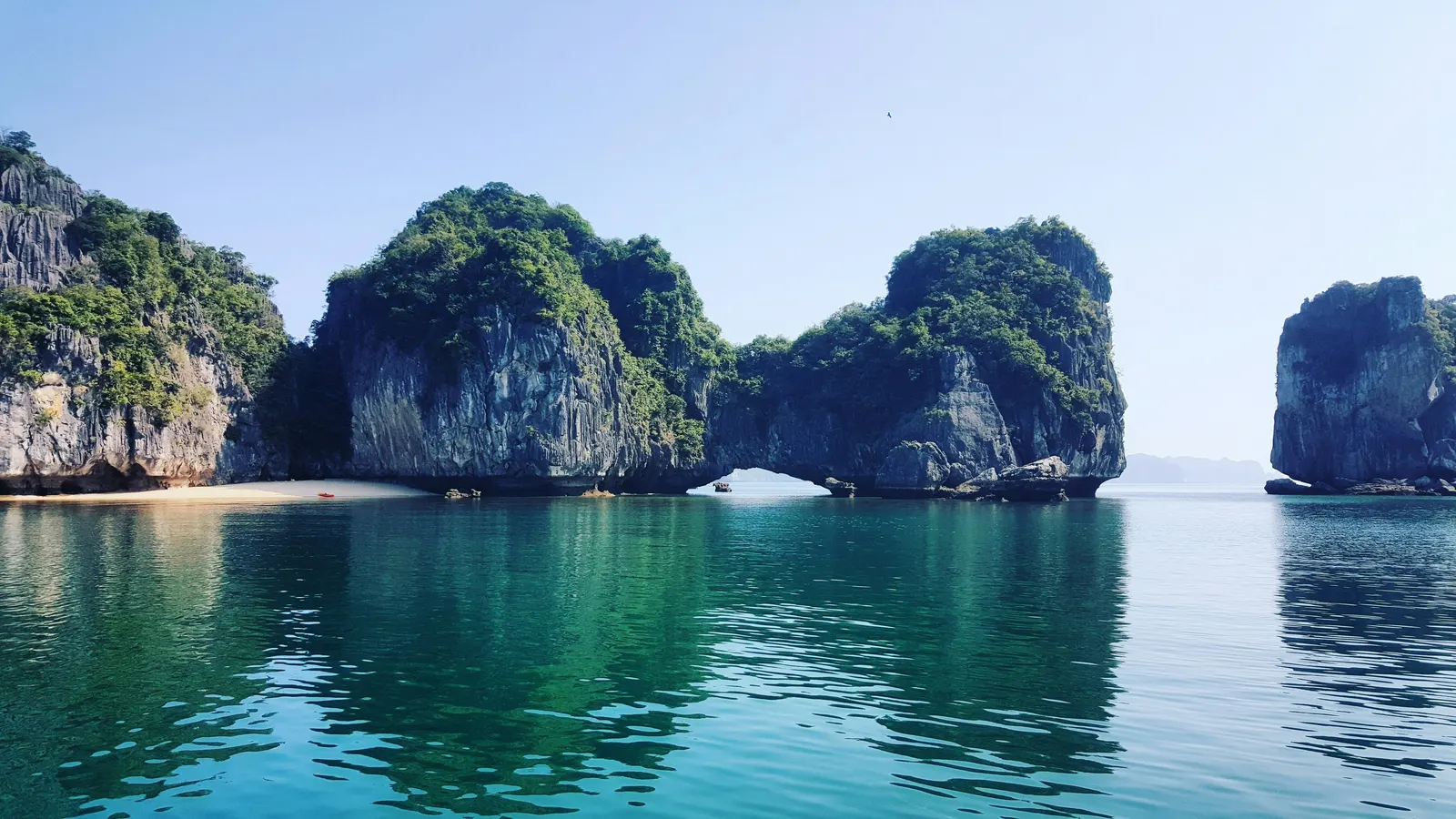
Halong Bay’s weather is worth treating separately from Hanoi’s, even though they’re only a few hours apart by road. Winter fog (December–February) can reduce visibility on the bay to a few hundred meters — atmospheric for photos of solitary boats emerging from the mist, but genuinely limiting if the point of your visit is seeing the full sweep of limestone karsts. That visibility clears in spring and, especially, autumn: late September through November is when professional photographers specifically time their Halong Bay trips, since calm water and clear air let the islands stack into the distance instead of fading into haze. Summer (May–August) brings the bay’s own typhoon risk on top of the heat, and cruises do get cancelled or rerouted with short notice in those months.
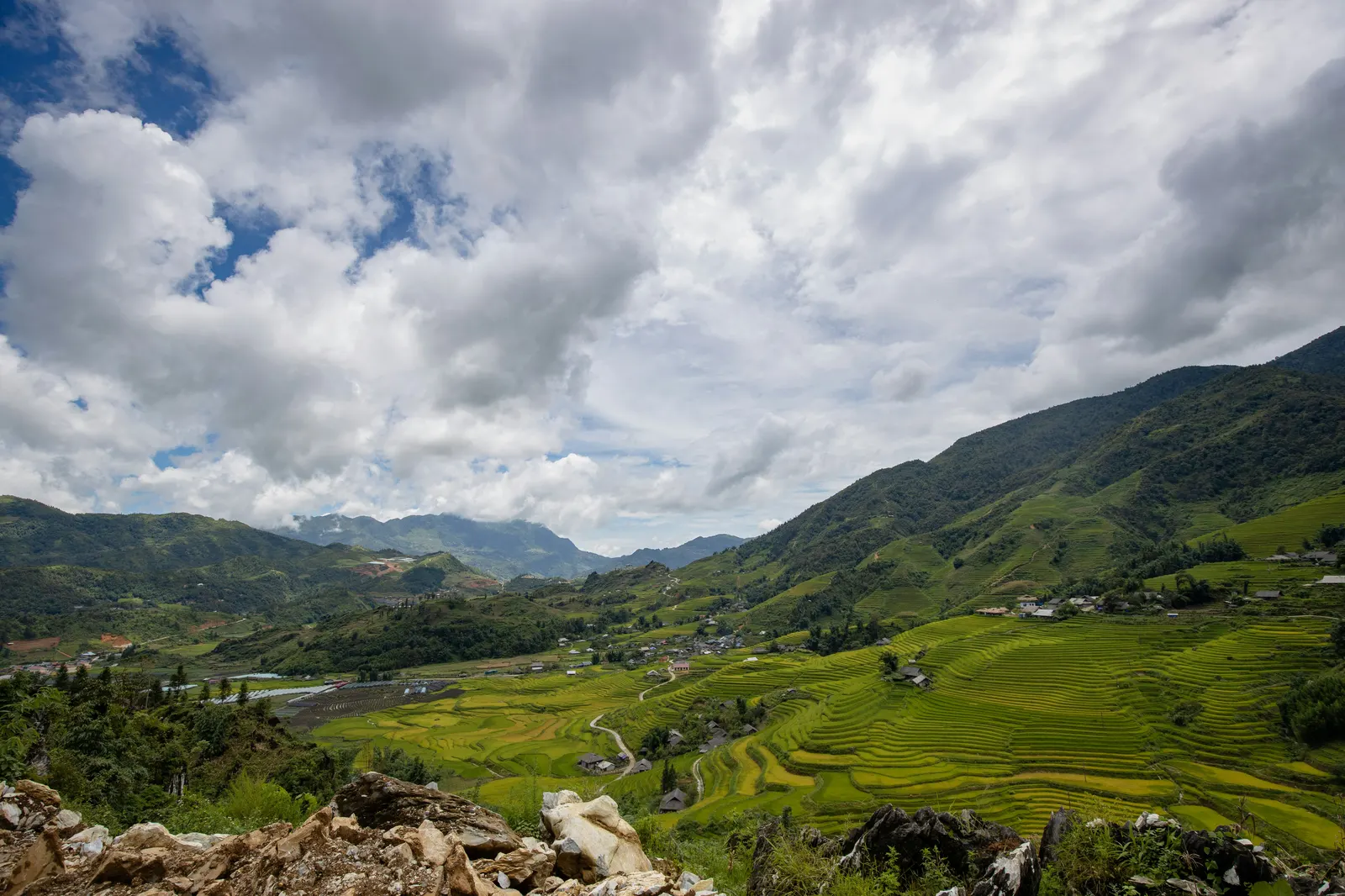
Sapa runs cooler and wetter than the lowlands, given its elevation in the Hoang Lien mountains. The terraced rice fields have two distinct visual windows: the flooded, mirror-like paddies of May–June, right after planting, and the golden, ready-to-harvest terraces of September, widely considered the single best month for rice-terrace photography in the country. Winter in Sapa (December–February) can bring genuinely cold temperatures — occasionally near freezing overnight — and even rare light snow at higher elevations, which surprises visitors who associate Vietnam with year-round heat.
When Is the Best Time to Visit Central Vietnam?
The best time for Hue, Da Nang, and Hoi An is February to May, after the wet season ends and before the peak summer heat and crowds set in.
Central Vietnam’s seasonal pattern is the one most likely to catch first-time visitors off guard, because it runs opposite to the “summer is dry season” assumption that holds across much of Southeast Asia — including in neighbouring Thailand’s three-season calendar. The dry season here runs roughly January through August, with the hottest, sunniest stretch from May to August, when temperatures regularly exceed 35°C (95°F) and the sea is at its calmest for swimming.
From September through December, the pattern flips. Rainfall spikes sharply — Hue alone can average 300–500mm of rain in October, and Da Nang and Hoi An see roughly 250–400mm, figures that outstrip what many temperate cities receive across several months combined. This is also typhoon season for the whole central coast, with October and November carrying the highest storm risk.
The risk isn’t theoretical, and it isn’t limited to storms that hit the central coast directly. Typhoon Damrey made landfall in Khanh Hoa province, on the south-central coast, in the early hours of 4 November 2017 — the strongest storm to strike southern Vietnam in 16 years. Interacting with a cold front pushing down from the north, it dumped torrential rain across the entire central region, hundreds of miles from the landfall point. By the following day, residents and tourists in Hoi An were being moved through the Ancient Town’s flooded streets by boat. If a Vietnam trip has any flexibility in its dates, steering clear of the central coast in October and November is the single most concrete piece of advice in this guide.
Even outside the worst storm weeks, the shift from dry to wet season affects more than just Hoi An. Ba Na Hills, the hilltop resort and cable-car complex above Da Nang, sees more frequent cloud cover and closures for high winds once the wet season sets in, and the Marble Mountains’ cave temples are less appealing to explore in a downpour than under the region’s clear spring skies.
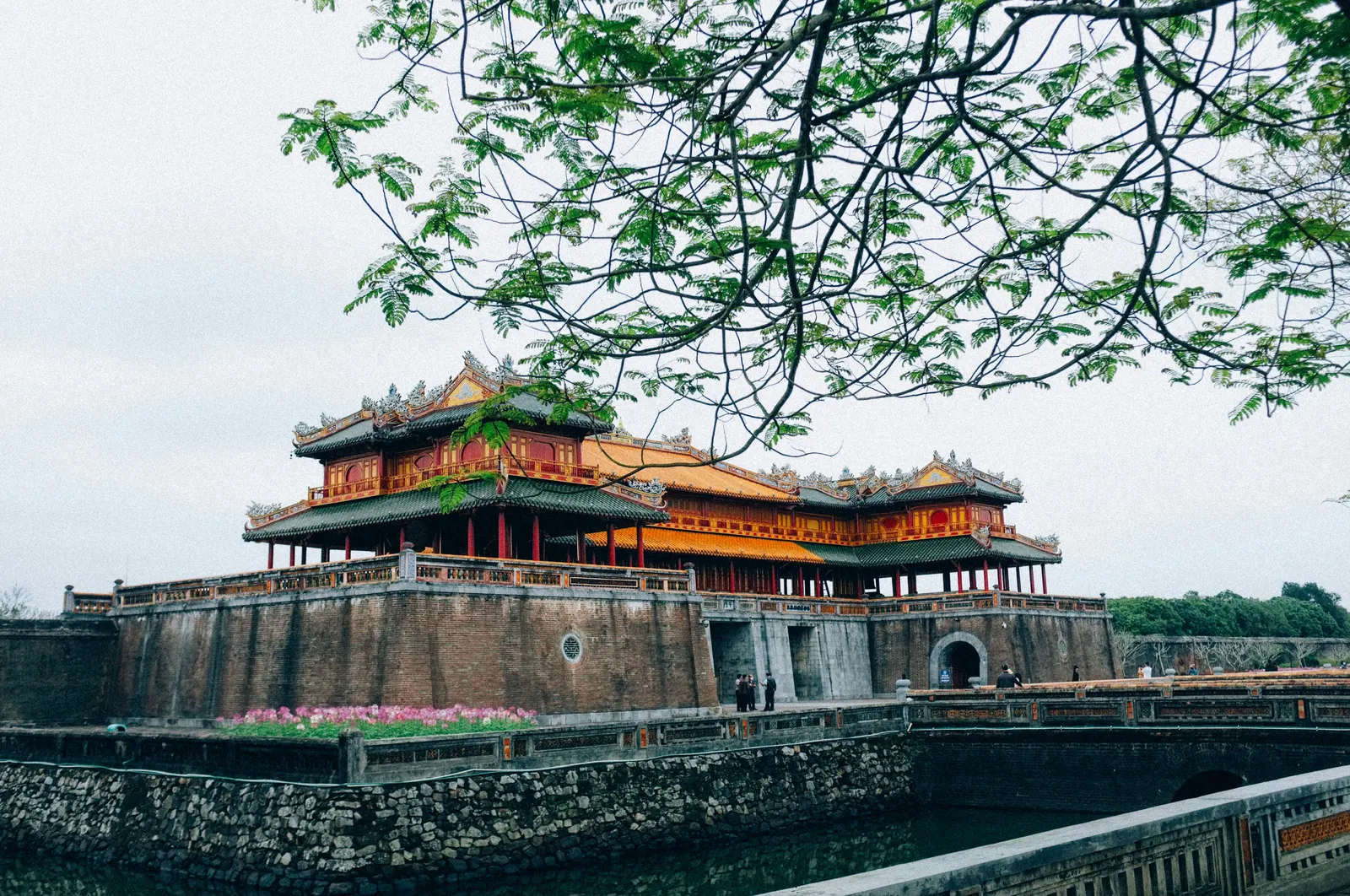
Hoi An Ancient Town is atmospheric in any weather, but the experience changes a lot with the season. February through May offers the town at its most walkable: warm but not oppressive, with the Thu Bon River calm enough for the lantern-boat rides the town is known for. During the September–December wet stretch, the river rises into the streets of the Ancient Town most years — sometimes treated as a novelty by visitors wading through ankle-deep water past glowing lanterns, but it does close ground-floor shops and restaurants for days at a time.

When Is the Best Time to Visit Southern Vietnam?
The best time for Ho Chi Minh City and the Mekong Delta is December to April, the region’s dry season and the most comfortable stretch for both city sightseeing and delta boat trips.
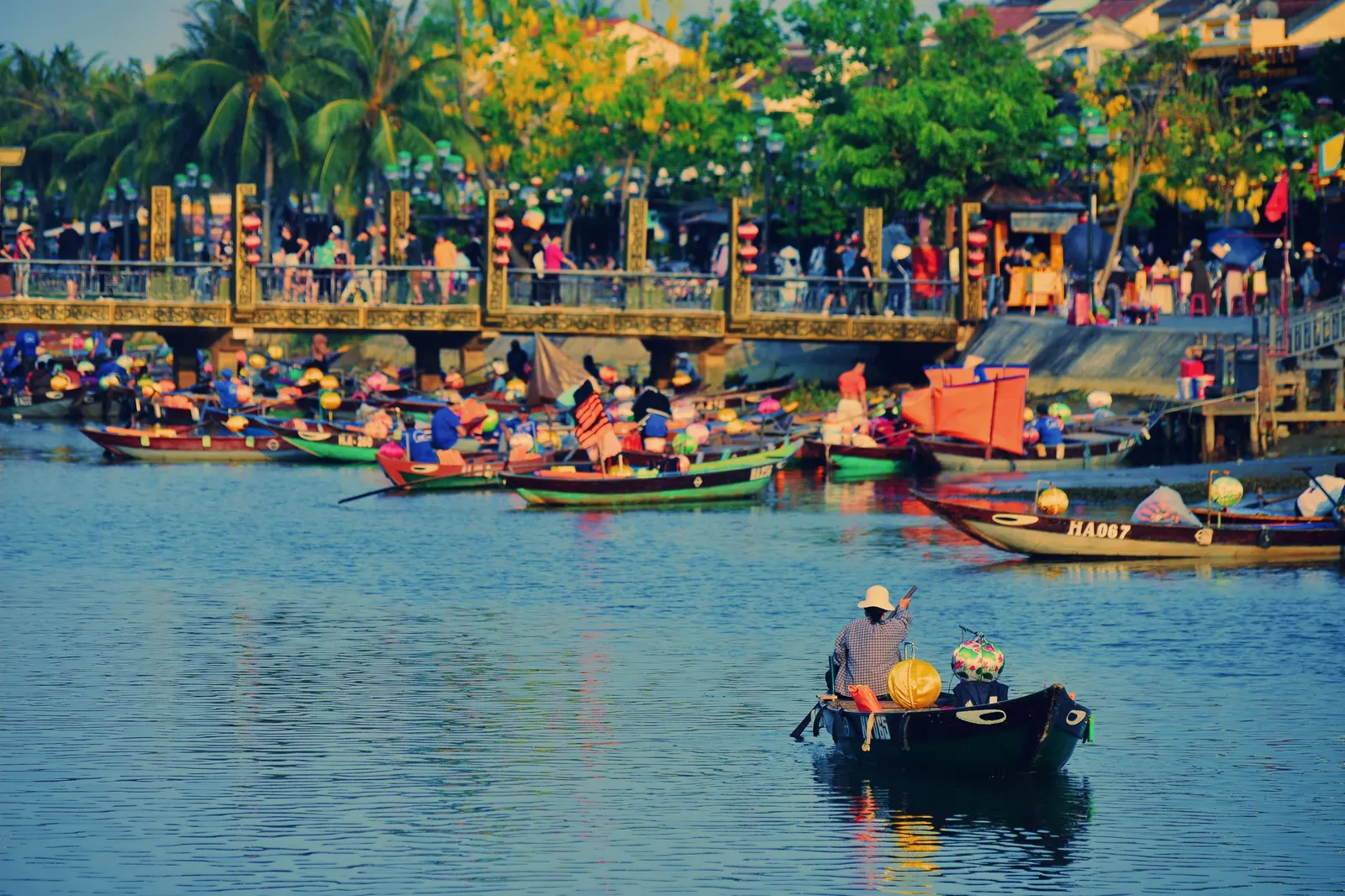
The south runs on the simplest pattern of the three regions: a dry season from December through April and a wet season from May through November. Unlike the multi-day downpours further north and in the center, southern rain typically arrives as intense but short afternoon showers, often over within an hour, which makes the wet season here far more manageable than the label suggests. Rainfall peaks in September, the region’s wettest month, then tapers steadily through October and November. December and January are the most comfortable months overall, with lower humidity and daytime highs around 28–30°C (82–86°F); by late March and April, temperatures climb toward the low-to-mid 30s°C and pre-monsoon humidity builds noticeably.
The Mekong Delta is best visited in the dry season as well, both for comfort and for access — some of the smaller canal routes become harder to navigate by boat when water levels shift with the rains, and the region’s floating markets are easiest to reach and photograph on calm, dry mornings. That said, the delta is arguably at its most visually striking in the early wet season (May–July), when the rice paddies are at their most saturated green — a trade-off worth considering if lush scenery matters more to you than dry, easy travel days.
When Is the Best Time to Visit Phu Quoc?
The best time to visit Phu Quoc is November through April, when the seas are calm and clear for snorkeling and the island’s western beaches are at their most swimmable.
Phu Quoc, Vietnam’s largest island and its most popular beach destination, sits in the Gulf of Thailand off the southern coast and doesn’t quite follow the same calendar as Ho Chi Minh City or the Mekong Delta, even though it’s administratively part of the south. Its dry season starts about a month earlier than the mainland’s, and its rainy season — while still centered on the May–October stretch — brings its heaviest rainfall in July, with monthly totals that can exceed 400mm.
Within that November–April window, daytime temperatures sit around 27–32°C (81–90°F). December through February is peak season, so book accommodation well ahead if you’re travelling then; April and late October function as useful shoulder months, with decent weather and noticeably fewer crowds. Visiting during the May–October wet season isn’t a write-off — rain tends to fall in concentrated afternoon bursts rather than all-day soakers, and the island is at its greenest and quietest — but rough seas on the western coast can affect ferry schedules and some boat-based day trips.
What Is Vietnam’s Weather Like Month by Month?
Every month is good somewhere in Vietnam and difficult somewhere else, so a single monthly calendar doesn’t work. This table compares all three regions side by side.
| Month | North (Hanoi / Halong Bay / Sapa) | Center (Hue / Da Nang / Hoi An) | South (Ho Chi Minh City / Mekong Delta) |
|---|---|---|---|
| January | Cool, driest month, occasionally chilly | Dry season, mild and pleasant | Dry, warm, comfortable |
| February | Cool, dry but drizzly, Tet season | Dry, warming up | Dry, warm, Tet season |
| March | Mild, clearing skies | Dry, warm, good conditions | Dry, hot, low humidity |
| April | Warm, comfortable | Dry, hot, great beach weather | Hottest month, dry |
| May | Hot, rain increasing | Hot, dry, peak beach season | Rainy season begins |
| June | Hottest month, humid, heavy rain | Hot, dry, very sunny | Wet, short afternoon showers |
| July | Hot, heavy rain | Hot, dry | Wet, short afternoon showers |
| August | Hot, wettest month | Hot, dry, ending soon | Wet, short afternoon showers |
| September | Clearing, best rice-terrace month | Wet season begins | Wettest month of the year |
| October | Cool, dry, excellent visibility | Wettest month, typhoon risk | Still wet, rain tapering off |
| November | Cool, dry, clear skies | Very wet, typhoon risk | Last wet month, drying out |
| December | Cold, foggy mornings on Halong Bay | Rain easing, cooling down | Dry season, comfortable, low humidity |
When Is Tet, and How Does It Affect Travel?
Tet, Vietnam’s Lunar New Year, falls on a different date each year — generally between late January and late February — and disrupts travel nationwide regardless of regional climate, so it’s worth planning around independently of the weather patterns above.
In the days surrounding Tet, many family-run restaurants, small shops, and some smaller hotels close for anywhere from a few days to a week as staff travel home to their families. This affects the street-food stalls and independent guesthouses that make up much of Vietnam’s everyday travel experience far more than it affects large international hotel chains, which mostly stay open. Domestic flights and trains sell out weeks in advance and prices spike accordingly, since Tet is the single largest domestic travel period in the country, comparable in scale to the Thanksgiving and Christmas rush in the US.
On the upside, cities fill with flower markets — Hanoi’s peach-blossom stalls and Ho Chi Minh City’s kumquat trees are worth seeing even if you’re not shopping — and the atmosphere in the days just before Tet is genuinely festive, with fireworks in major cities on New Year’s Eve. The practical takeaway: check the exact Tet dates for your travel year before booking, and expect reduced services for the days immediately surrounding it even if the rest of your trip is unaffected.
Which Other Vietnamese Festivals Are Worth Timing a Trip Around?
Beyond Tet, three festivals are worth building an itinerary around, and two of them fall in months you might otherwise skip.
- Hoi An Full Moon Lantern Festival — held monthly on the 14th day of the lunar month, when the Ancient Town switches off its electric lighting in favour of lanterns alone. Because it recurs every month, you can catch it in any season.
- Da Nang International Fireworks Festival — runs across several weekends in early summer, right in the middle of central Vietnam’s hot, dry stretch. It’s one of the few genuine reasons to accept June heat on the central coast.
- Mid-Autumn Festival (Tet Trung Thu) — falls on the 15th day of the eighth lunar month, usually in September or early October. Hoi An and Hanoi’s Old Quarter are the standout places to see it, with lion dances and mooncake stalls.
How Does Season Affect Prices and Crowds in Vietnam?
Vietnam doesn’t have the extreme peak/off-peak price swings of some destinations, but season still moves the needle in ways worth planning around.
- Halong Bay cruises book up well ahead for the September–November high-visibility window, especially weekends; the best-rated boats can sell out weeks in advance during this stretch.
- Phu Quoc sees its highest hotel rates and fullest flights from mid-December through February, when domestic and international dry-season travelers overlap — booking a month or more ahead is worth it if you have specific accommodation in mind.
- Hoi An and Hue are least crowded, and often cheaper on accommodation, during their wet season (September–December) — a reasonable trade-off for travelers focused on the Ancient Town’s atmosphere rather than beach time, provided the trip has flexibility around storm days.
- Tet week is the one period that spikes prices nationwide rather than regionally, since it’s the country’s own peak domestic travel holiday rather than a foreign-tourist high season.
Which Region Should You Visit, and When?
Single-region trips should simply follow that region’s own best window; multi-region trips come down to two workable compromise months, February–April or September–October, each with a different weak link.
If you’re visiting one region only, there’s no need to compromise at all. A Halong Bay and Sapa trip in October, or a Hoi An and Hue trip in March, can each hit close to ideal conditions.
If you’re doing a multi-region trip — the more common plan, since Hanoi, Da Nang/Hoi An, and Ho Chi Minh City form a natural north-to-south route — you’re inevitably giving something up, since no single window is ideal for all three regions at once. Two windows come closest:
February–April. The north is past its coldest weeks and hasn’t hit summer heat; the center is dry and warm; the south is still dry but heating up toward its April peak. This is the most commonly recommended compromise for first-time multi-region trips, and it routes you through dry conditions nearly everywhere.
September–October. The north is at its most scenic, with the rice harvest and the clearest skies of the year, and the south is finishing its wet season with rain tapering off. The catch is the center: this window sits right at the start of central Vietnam’s typhoon season, so a Hoi An, Hue, or Da Nang leg carries real weather risk. If you travel then, build the flexibility into that portion of the itinerary specifically rather than the trip as a whole.
For a full north-to-south trip, October and November demand the hardest trade-off of the year: the central coast’s typhoon risk is at its highest in exactly the months when the north is at its best. There’s no arrangement of those two facts that makes everyone happy.
If your trip is beach- and city-focused — skipping Sapa and the far north’s mountain scenery in favour of Hoi An’s beaches, Phu Quoc, and the cities — the calculus shifts. December through February works well: it’s dry season in the south and on Phu Quoc, the central coast’s wet season is winding down, and even a shorter Hanoi add-on is manageable in cool, dry winter weather if you pack layers. Travelers combining Vietnam with a longer Southeast Asia loop often pair it with the Philippines’ dry-season months, which overlap neatly with this window.
Which Vietnamese Landmarks Are Worth Timing Your Trip Around?
- Hanoi Old Quarter — best explored on foot in the cooler months (October–April), when walking the narrow streets for hours is comfortable rather than draining.
- Halong Bay (UNESCO World Heritage Site) — clearest and most photogenic September through November; foggiest December through February.
- Hue Imperial City, the former seat of the Nguyen Dynasty — visit outside the September–December wet season, since parts of the citadel grounds can flood.
- Hoi An Ancient Town (UNESCO World Heritage Site) — worth timing around the monthly Full Moon Lantern Festival in any season, though February–May gives you the best odds of dry streets.
- Cu Chi Tunnels and the Mekong Delta, near Ho Chi Minh City — best visited in the dry season (December–April), when the ground is firm underfoot and delta boat routes are most reliably navigable.
For how Vietnam’s timing compares with the rest of the region, see our full index of best-time-to-visit guides.
Frequently Asked Questions
Is there a single best month to visit all of Vietnam?
Not really. February through April is the closest compromise, but even then the central coast is warming toward its hot season while the north is still mild. Every month involves a trade-off somewhere in the country.
Should I avoid Vietnam entirely during typhoon season?
No. Typhoon season, roughly September through December, specifically affects the central coast. Northern Vietnam is at its best during this window, and southern Vietnam’s wet season is winding down by November.
Is Vietnam expensive to visit during peak season?
Peak season — roughly December to February in the north and south, and Tet nationwide — does bring higher hotel and flight prices, most sharply around the Tet holiday itself.
Does Phu Quoc follow the same seasons as the rest of southern Vietnam?
Close, but not identical. Phu Quoc’s dry season runs November through April, starting about a month earlier than the mainland south’s December–April dry season, and its wettest month is typically July rather than September.
How many days do you need for a north-to-south Vietnam trip?
Ten to fourteen days is the usual minimum for Hanoi, the central coast, and Ho Chi Minh City with a Halong Bay or Mekong Delta add-on. Adding Sapa or Phu Quoc realistically pushes it toward two-and-a-half to three weeks.
Does Vietnam’s weather vary much year to year?
The broad seasonal pattern is reliable, but the start and end of central Vietnam’s wet season can shift by two or three weeks, and typhoon activity varies considerably between years. Check a forecast in the fortnight before travel rather than relying on monthly averages alone.