Best Time to Visit Turkey
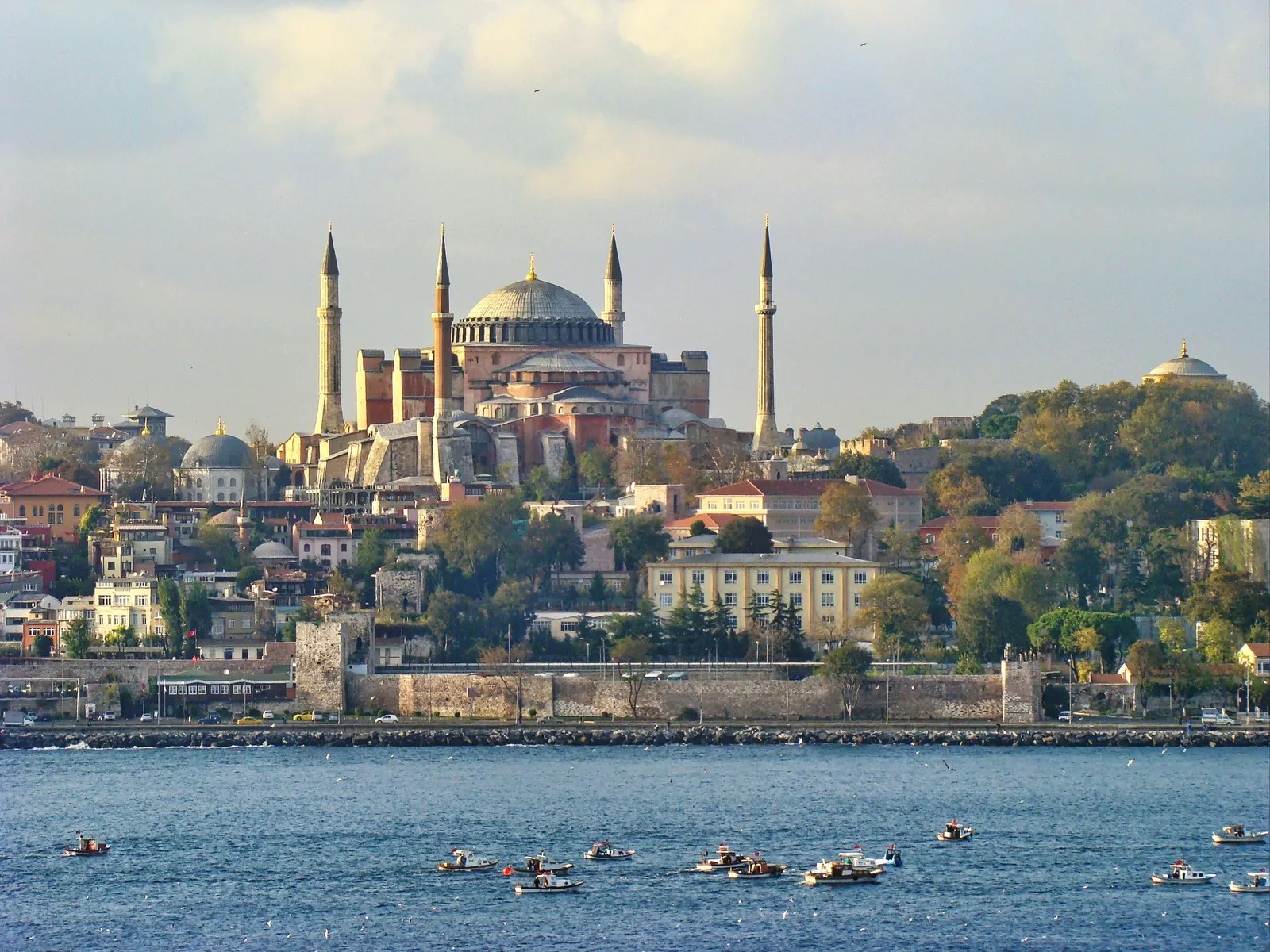
Turkey doesn’t have one climate — it has four major travel regions with genuinely different weather patterns, and the “best time” answer changes depending on which one you’re asking about. Istanbul sits on the Bosphorus, catching a temperate, rainy version of Mediterranean weather. Cappadocia, a short flight inland on the high Anatolian plateau, swings from near-freezing in January to a hot, dry summer, with a hot-air-balloon season that lives or dies on calm dawn winds. The Aegean interior around Ephesus and Pamukkale runs hot and dry for a full five months. And the Turquoise Coast around Antalya and Kalkan keeps its beach season going into October, well after the ruins inland have started to cool off.
The short version: late April to May, and again mid-September through October, come closest to working well across all four regions at once. But the honest answer depends on which of those four regions you’re actually going to see — and how many of them you’re trying to fit into one trip.
Quick Answer: Best Time to Visit Turkey by Goal
- Best overall (Istanbul + Cappadocia + coast in one trip): Late April–May or mid-September–October
- Best for Cappadocia hot-air-balloon odds: April through October, with June–September the most reliable stretch
- Best for the Turquoise Coast beaches: June through September, extending into early October
- Best for Istanbul sightseeing without summer crowds: April–May or September–October
- Best for lower prices and thinner crowds everywhere: November–February (accept a non-flying or cold Cappadocia, and a coast too cold to swim)
- Least favorable month for a multi-region trip: January (cold and wet in Istanbul, Cappadocia’s least reliable balloon weather, the coast at its coldest)
When Is the Best Time to Visit Istanbul?
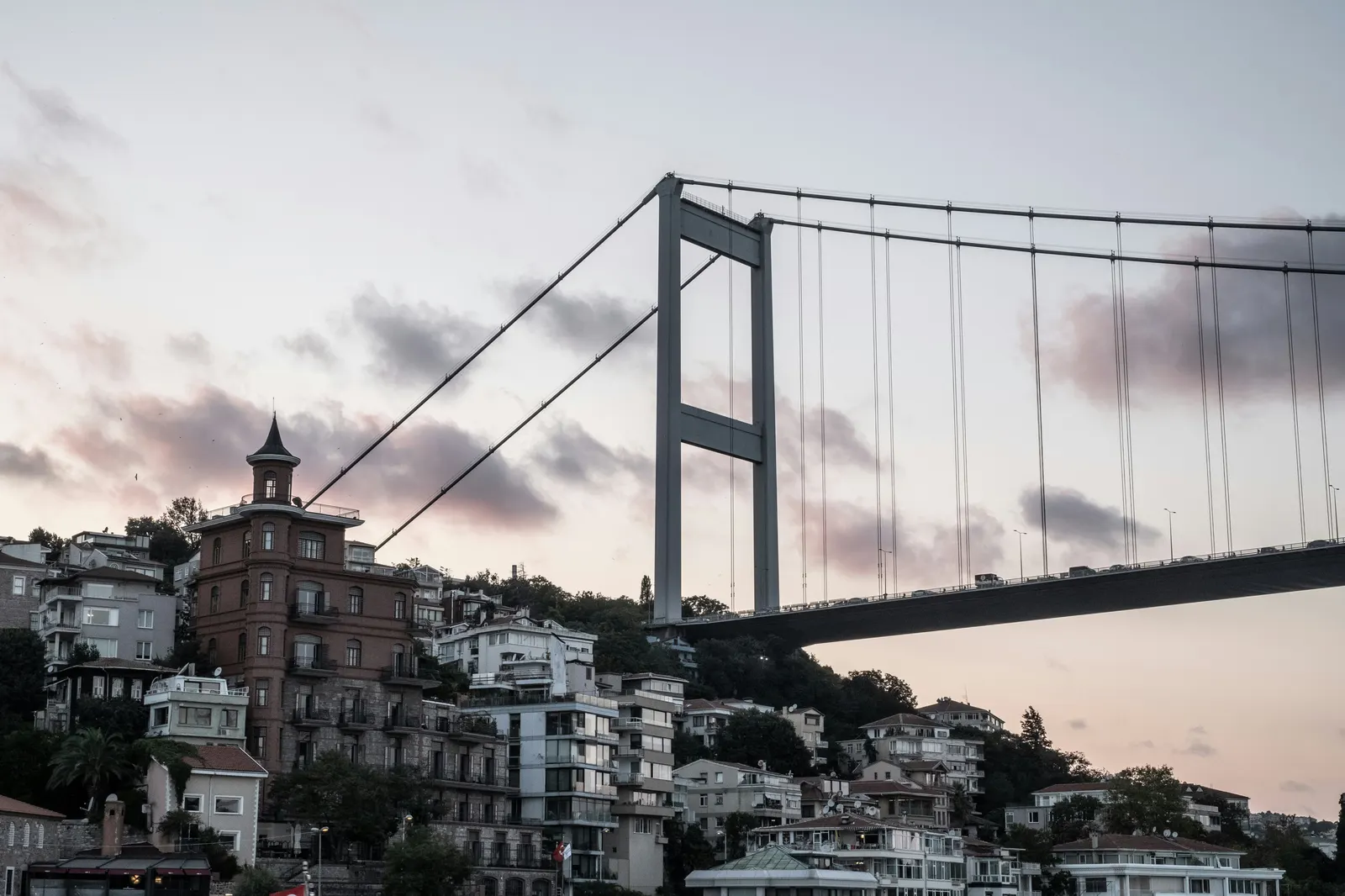
The best time to visit Istanbul is April–May or September–October, when the city sits in the 60s–70s°F (15–23°C) without the humidity of peak summer or the rain of deep winter. Early June and November are decent extensions of that window if your dates don’t line up exactly.
Istanbul’s climate is temperate and genuinely four-season. Its average temperature runs around 14°C (57°F) across the year, with the coldest weeks falling in January and February — both average around 5–6°C (41–43°F) — and August typically the warmest month by overall average at 23–24°C (73–75°F), even though July tends to post the year’s single hottest days. That’s a narrower range than most of Turkey, but it comes with real winter rain: the city averages around 690mm of precipitation a year, most of it concentrated between December and February, with January typically bringing the most rainy days of any month even though December can edge it out on total rainfall.
Spring (April–June) is when Istanbul is at its best. Tulips bloom in Emirgan Park and Sultanahmet Square in April, temperatures climb from the mid-60s into the mid-70s°F, and the Bosphorus ferry rides are genuinely pleasant rather than something to endure. May in particular brings warm, sunny days averaging 19–23°C (66–73°F) — ideal for the walking-heavy itinerary Istanbul demands.
Summer (June–August) is Istanbul’s hottest and most humid stretch. July tends to bring the year’s hottest individual days, with highs reaching around 28°C (82°F) and humidity that can feel oppressive, especially in the dense stone-and-tile Old City where there’s little shade between the Blue Mosque, Hagia Sophia, and Topkapi Palace. It’s also cruise-ship season on the Bosphorus, so the major sites are at their most crowded.
Autumn (September–November) rivals spring as the better-kept-secret season. The Poyraz — a cooling wind off the Black Sea — takes the edge off early autumn heat, and by October the crowds from both cruise season and the European summer-holiday calendar have thinned out considerably.
Winter (December–March) is Istanbul’s coldest, wettest, and least crowded window. The cool season runs from late November to late March, with average daily highs below 55°F (13°C). It’s not brutal by European standards, but you’ll want a real coat, and the Bosphorus in a January drizzle is a different city than the one in the tourism photos.
When Is the Best Time to Visit Cappadocia for Hot-Air Ballooning?

The best time for Cappadocia’s hot-air-balloon flights is April through October, when dawn wind speeds are most consistently calm enough for pilots to fly. November is still possible but noticeably less reliable, and balloons technically operate year-round — reliability just isn’t the same thing as availability.
Much of Cappadocia sits on the high Anatolian plateau, which gives the region a semi-arid climate with much wider daily and seasonal swings than the coast. Typical daytime temperatures run from around freezing in January up through the low-20s°C (about 70°F) in July and August, dropping back into the single digits Celsius by November and December, and nights are consistently well colder than the daytime highs at any time of year.
Balloon flights are grounded by rain, fog, snow, and — most often — wind, since balloons can’t be flown safely in gusty conditions and pilots make the call fresh each morning at each of the region’s launch sites. The flying season technically runs all year, but April through October is the strongest overall window, and even within the quieter winter months a good number of days are still flyable — they just tend to cluster into good and bad stretches rather than alternating evenly, and January–February are consistently the least reliable months for flying.
Planning note: because cancellations happen in every season and rebooking a sold-out day isn’t something you can count on, book your balloon flight for your first morning in Cappadocia, not your last. That gives you a buffer of extra sunrises to try again if day one gets scrubbed for wind.
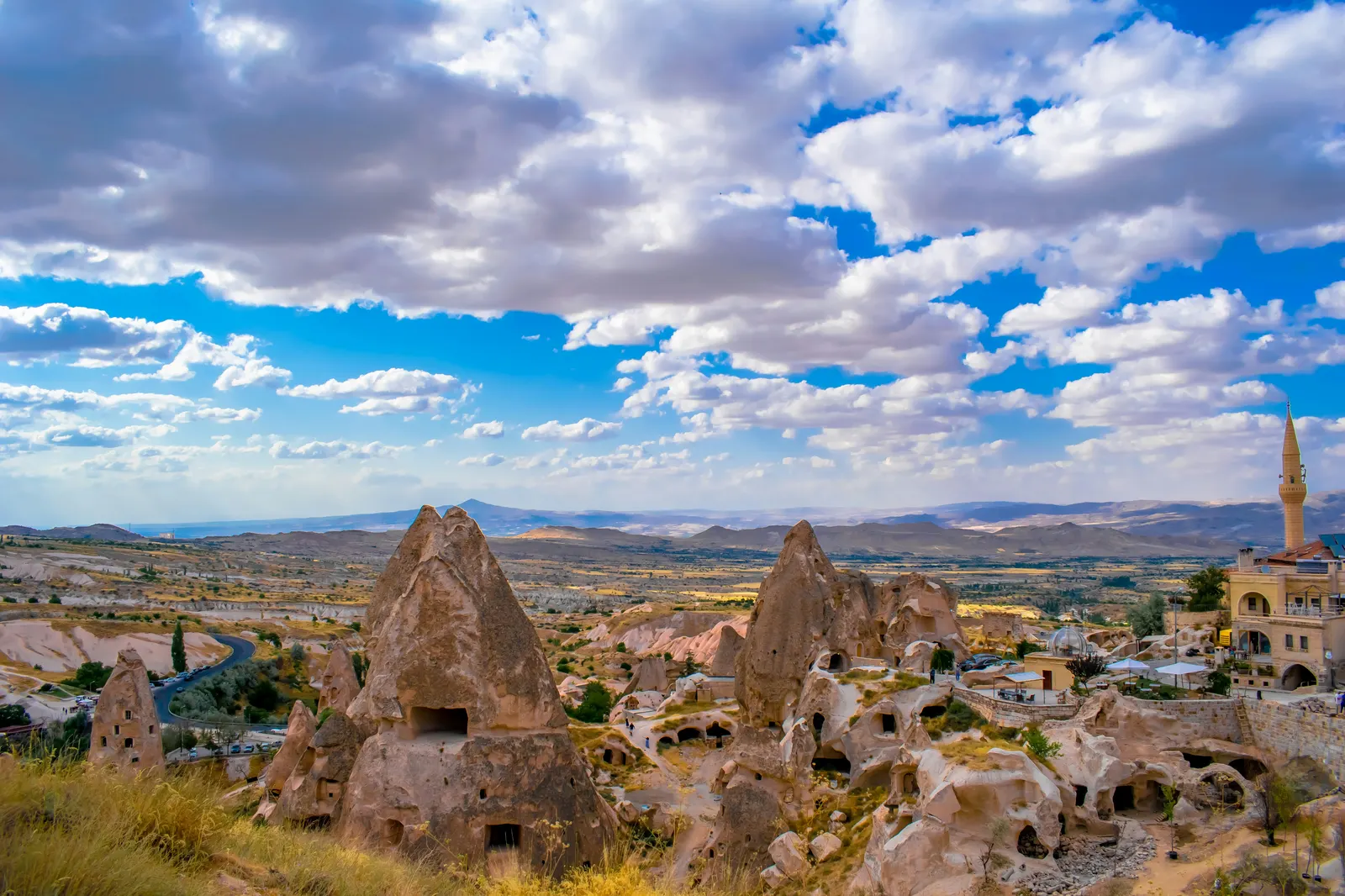
Outside the balloon question, Cappadocia’s ground-level sightseeing — the fairy chimneys, cave dwellings, and underground cities around Göreme — is comfortable nearly year-round, with May, June, September, and October offering the best combination of mild daytime temperatures and manageable crowds. July and August bring the year’s heat peak but also its most reliable flying conditions, which is the central trade-off of visiting Cappadocia in any season: better weather for looking at the landscape from the ground usually means hotter weather for flying over it, and vice versa.
When Is the Best Time to Visit Ephesus and Pamukkale?
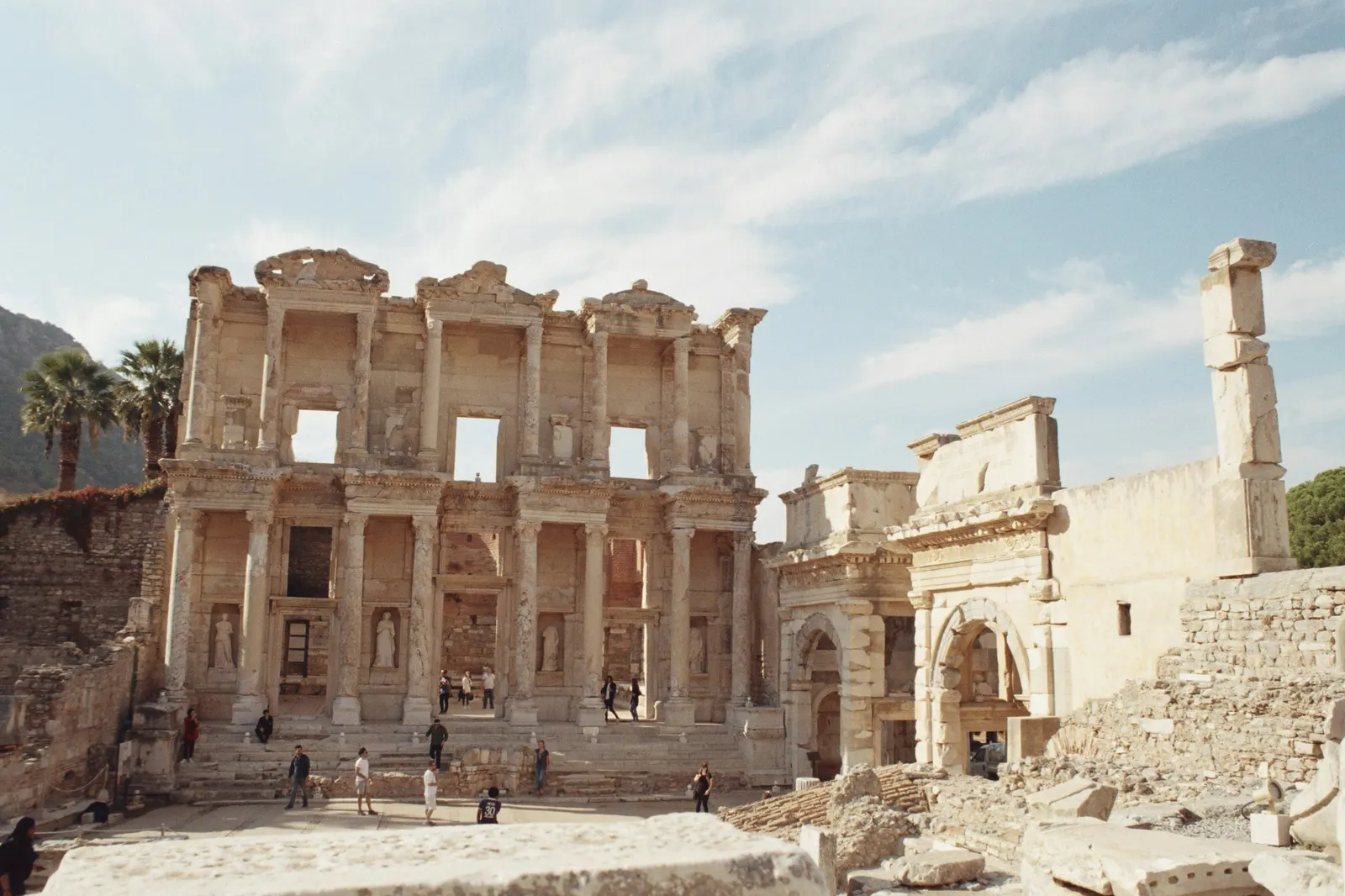
The best time to visit Ephesus and Pamukkale is mid-April through early June, or mid-September through mid-November, avoiding the shadeless heat of July and August.
Both sites are in western Turkey — Ephesus near the coastal town of Selçuk, Pamukkale farther inland near Denizli — and both run hot and dry in summer, wetter and milder in winter, with spring and autumn the comfortable middle ground. In Selçuk, summer temperatures in July and August average around 29°C with highs reaching 35°C or more — in line with the Ephesus ruins themselves, where June through August highs average around 30–31°C (86–88°F), with mid-August the hottest stretch. At the ruins, that heat has nowhere to hide: the white marble of the Curetes Way and Library of Celsus reflects the sun back at you across a site with almost no shade.
Spring (mid-April–early June) is the standout window for both sites. March and April see the Ephesus ruins far less crowded, with afternoon highs around 20°C (68°F) — warm enough for a full day on foot without wilting. At Pamukkale, this window has historically overlapped with a local tourism and culture festival in mid-May (confirm current-year dates before planning around it), and the white travertine terraces, which visitors cross barefoot in the areas open to walking, are far more comfortable underfoot before the summer sun heats the surface.
Summer (June–August) is the season to avoid if you can. Temperatures regularly push past 35°C (95°F), and the shadeless terraces at Pamukkale can feel punishing underfoot in direct midday sun. If summer is your only option, arrive at both sites at opening time and plan to retreat indoors or to shade by late morning.
Autumn (mid-September–mid-November) is the strong secondary option, with pleasant highs, the year’s lightest rainfall, and noticeably thinner crowds than summer. By October, temperatures at Ephesus settle into the high teens to low 20s°C — comfortable, unhurried sightseeing weather.
Winter (December–February) is mild rather than cold by inland-Turkey standards — Pamukkale’s January average sits around 5°C, with lows occasionally dropping just below freezing — but this is also the wettest stretch of the year for both sites, and January’s rainy days can turn a ruins visit into a soggy one.
When Is the Best Time to Visit the Turquoise Coast?
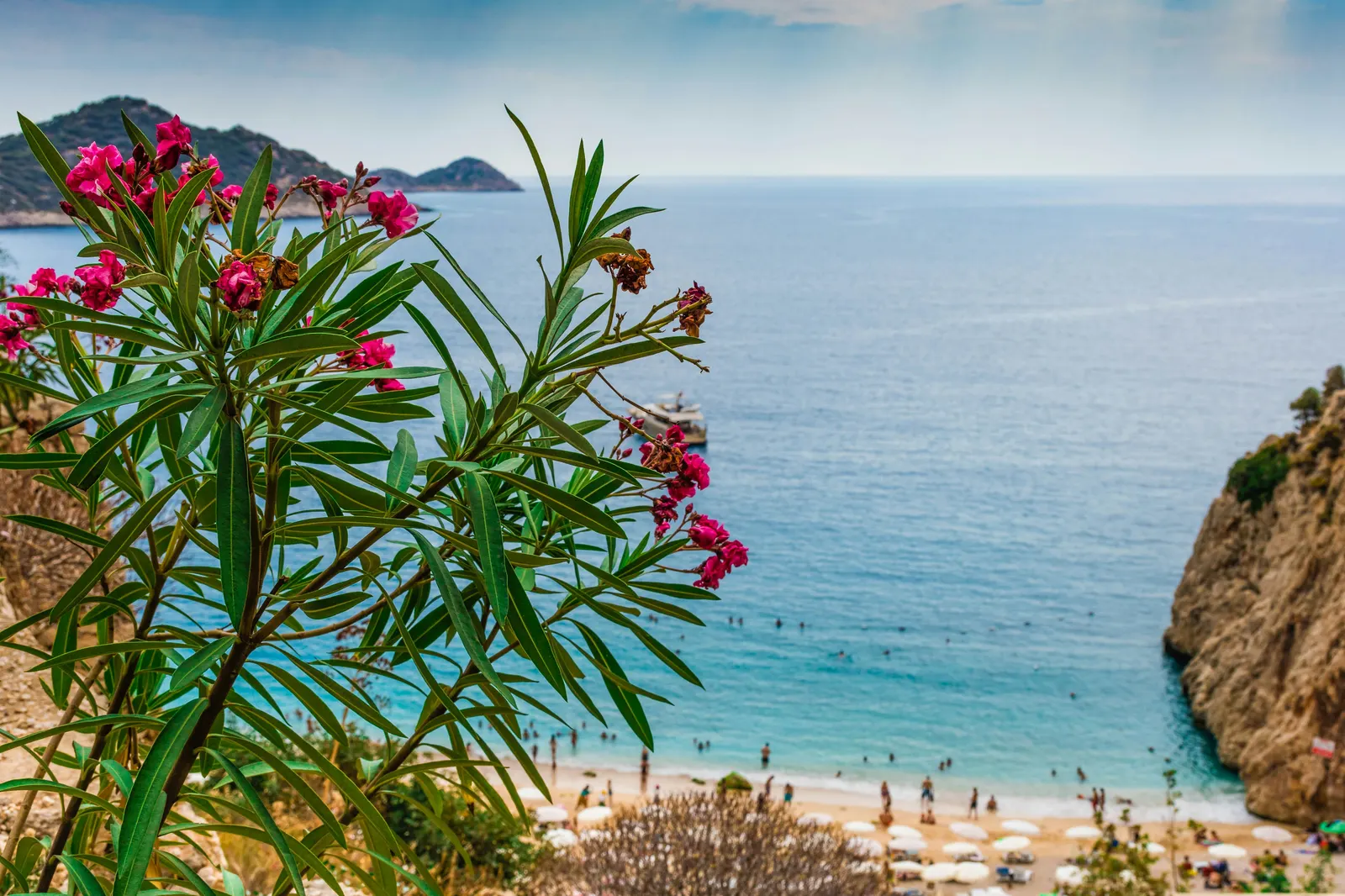
The best time to visit Turkey’s Turquoise Coast — Antalya, Kaş, Kalkan, and the Lycian coastline between them — is mid-May through September, with June offering one of the best balances of warm-but-not-scorching air, swimmable seas, and manageable crowds. It’s a similar seasonal rhythm to Greece’s Aegean islands just across the water, though Turkey’s coast tends to stay swimmable a few weeks longer into autumn.
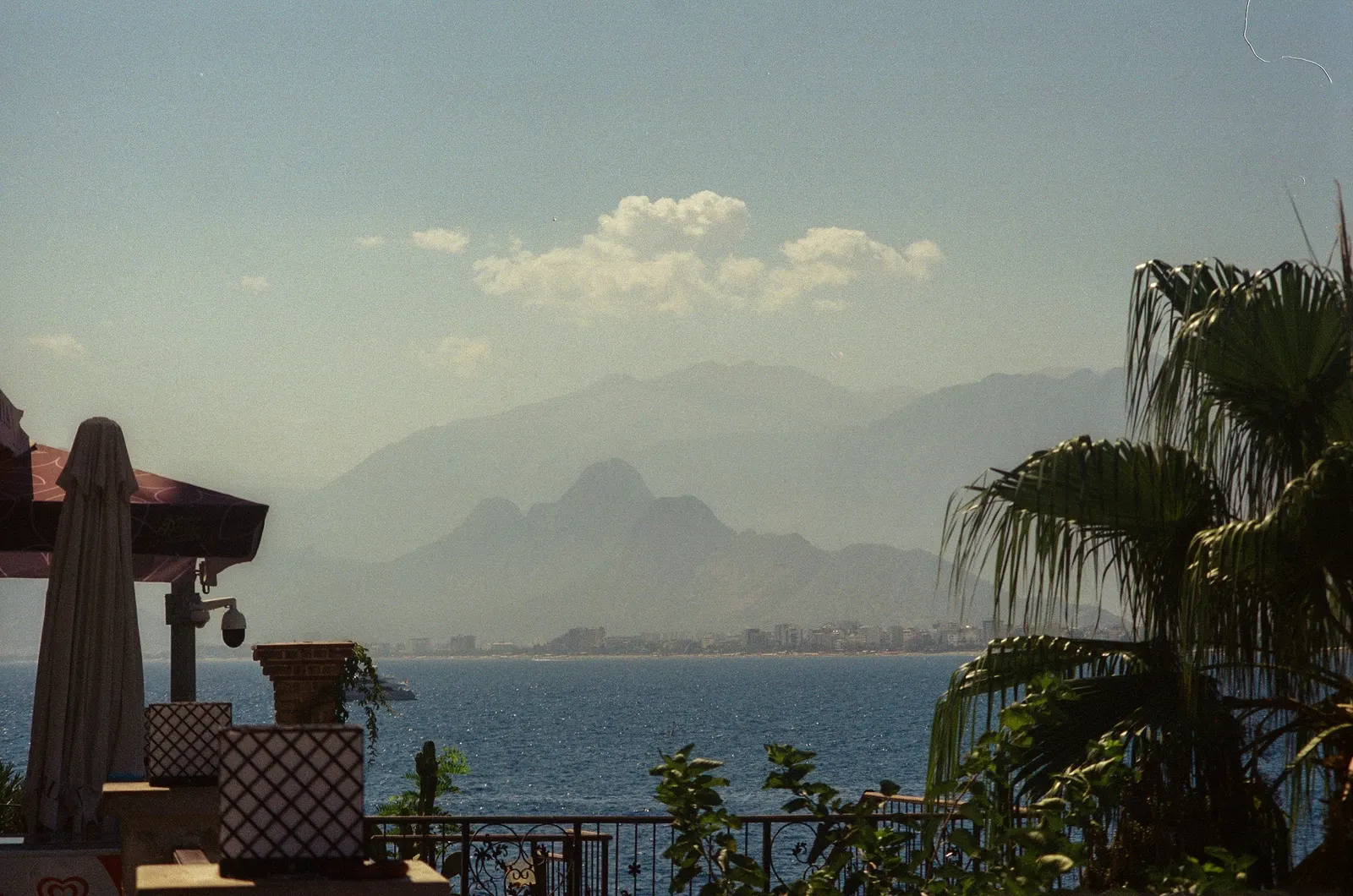
Antalya anchors the eastern end of this coast, backed by the Taurus Mountains, and its climate data makes the seasonal trade-offs unusually clear. June is Antalya’s best-rated month for a beach trip, with daytime highs around 31°C, sea temperatures around 25°C — pleasant for swimming without a wetsuit — and rain uncommon. The two hottest months actually make for a slightly less comfortable trip despite equally reliable sun: July highs climb toward 37°C, with heat becoming a genuine factor for anything beyond lying by the water, and August isn’t much cooler at around 34°C.
Shoulder season tells a different story depending on what you’re after. March brings rising air temperatures around 18°C and thinner crowds, but the sea is still only around 18°C — swimmable for the hardy, not for everyone. May is the better spring pick: air temperatures in the 15–26°C range, a sea that’s warmed to around 21°C, and low rain risk, giving you a genuine head start on the season before June’s peak crowds arrive.
Further west and quieter, the Kaş–Kalkan stretch of coastline follows a similar seasonal pattern with slightly more room to breathe. April to June brings comfortable temperatures in the low-to-high 20s°C with minimal rainfall — good for active sightseeing and hiking before the crowds and full summer heat arrive. July and August are hot, with highs commonly reaching the low-to-mid 30s°C and occasional spikes higher; September and October stay warm while easing off that peak. By November, temperatures dip toward the low teens Celsius and rain becomes more frequent, closing out the swimming season for all but the most committed. Spring is also when wildflowers cover the hillsides along the Lycian Way hiking trail, before summer heat makes its exposed, shadeless sections much harder going.
If hiking matters more than swimming to you: the Lycian Way — the long-distance trail linking ancient ruins like Xanthos, Tlos, and Patara along the coastal cliffs — is at its best in spring and again in autumn, when summer’s heat would otherwise make the exposed sections genuinely hazardous.
Turkey Weather by Region: Month-by-Month Comparison
| Month | Istanbul | Cappadocia | Ephesus / Pamukkale | Antalya / Turquoise Coast |
|---|---|---|---|---|
| Jan | Cold and wet, among the rainiest months | Coldest, least reliable for balloons | Mild but rainy | Coolest, wettest |
| Feb | Among the coldest months | Still least reliable for flying | Cool, rain tapering | Mild, still rainy |
| Mar | Rising, occasional showers | Improving, still cold and breezy | Pleasant, ruins uncrowded | Warming, sea still cold (~18°C) |
| Apr | Tulip season, mild | Good flying odds begin | Excellent — best window starts | Warming fast, thin crowds |
| May | Warm, sunny, ideal | Reliable flying | Peak spring window | Excellent, sea ~21°C |
| Jun | Warm, humid, peak begins | Reliable, hot days | Hot; still workable early June | Best balance of heat, sea & crowds |
| Jul | Hottest single days, humid | Most reliable flying, hot ground temps | Peak heat, shadeless and harsh | Hottest; excellent swimming, tougher sightseeing |
| Aug | Warmest by average, humid | Most reliable flying, hot ground temps | Peak heat continues | Very hot; excellent swimming, tougher sightseeing |
| Sep | Cooling, less humid | Reliable, comfortable | Cooling, crowds thinning | Warm, sea still swimmable |
| Oct | Mild, fewer crowds | Reliable, cooling | Excellent — autumn window | Still warm, season winding down |
| Nov | Cool, rain increasing | Flying odds dropping, still possible | Cool, tail of good window | Cooling fast, rain increasing |
| Dec | Cold, wet | Cold, low flying odds | Cold, wettest stretch begins | Cold, quiet season |
Best Time to Visit Turkey by Travel Goal
| Your Priority | Best Months | Why |
|---|---|---|
| First-time trip covering Istanbul, Cappadocia & coast | Late April–May or mid-September–October | All four regions are near their best in either window; balloon odds are strong and Aegean heat hasn’t peaked (spring) or has broken (autumn) |
| Hot-air balloon flight is the priority | April–October overall, June–September most reliable | Widest flyable window is April–October; calmer dawn winds cluster most consistently in the summer stretch |
| Beach-first trip on the Turquoise Coast | June or September | Warm sea, manageable heat, avoids the July–August crowd and price peak |
| Budget-conscious, crowds don’t matter | November–February | Among the lowest prices of the year across the board; accept cold coast and unreliable ballooning |
| Hiking the Lycian Way | April–May or October | Cool enough for exposed cliff trails; summer heat makes the same sections hazardous |
| Ephesus and Pamukkale without the heat | Late September–October | Ruins uncrowded, terraces comfortable underfoot, rain still minimal |
Is Ramadan a Good Time to Visit Turkey?
Ramadan itself doesn’t close Turkey to visitors — it’s a majority-Muslim but officially secular country, and most tourist sites, transport, and hotels operate normally throughout. What changes is daytime dining: many local restaurants outside heavily touristed areas reduce hours or close until sunset (iftar), when the fast breaks and the streets around mosques and squares fill with food stalls and a genuinely festive atmosphere worth experiencing at least once. It’s a similar rhythm to what we describe in our Morocco travel guide, another majority-Muslim destination where Ramadan shifts daily routines without closing the country to visitors.
Because the Islamic calendar is lunar, Ramadan shifts roughly 11 days earlier each year, so it can fall anywhere across the calendar over a multi-year cycle — check the current year’s dates before you plan around it, since the same month described here as “ideal” could overlap with Ramadan in one year and not the next. The holiday immediately following Ramadan, Eid al-Fitr (Şeker Bayramı in Turkish), is a major domestic holiday when Turkish families travel heavily — expect higher demand and fuller sites at coastal and historic destinations during that specific window, independent of the weather-driven advice elsewhere in this guide.
Turkey’s Historical and Cultural Sites: When to See Them
Hagia Sophia and the Blue Mosque (Istanbul): Both are functioning mosques as well as monuments, so visitor access can be restricted around the five daily prayer times, and non-Muslim visitors should dress modestly. Early morning, right at opening, is consistently the quietest window regardless of season.
Topkapi Palace and the Basilica Cistern (Istanbul): The palace’s interior rooms and the underground cistern both offer relief from the sun, making them a reasonable stop on a hot midsummer afternoon when the exposed outdoor sites are punishing.
Göreme Open-Air Museum and the underground cities (Cappadocia): Sheltered from the wind that grounds hot-air balloons, this makes a useful alternative plan for a morning when your flight gets cancelled — though as an outdoor and partly underground site it still has its own weather to work around in heavy rain or snow.
The Library of Celsus and the wider Ephesus site: Best experienced at opening time year-round, both to beat the tour-bus groups arriving from cruise ships in Kuşadası and, in summer, to beat the heat radiating off the marble by mid-morning.
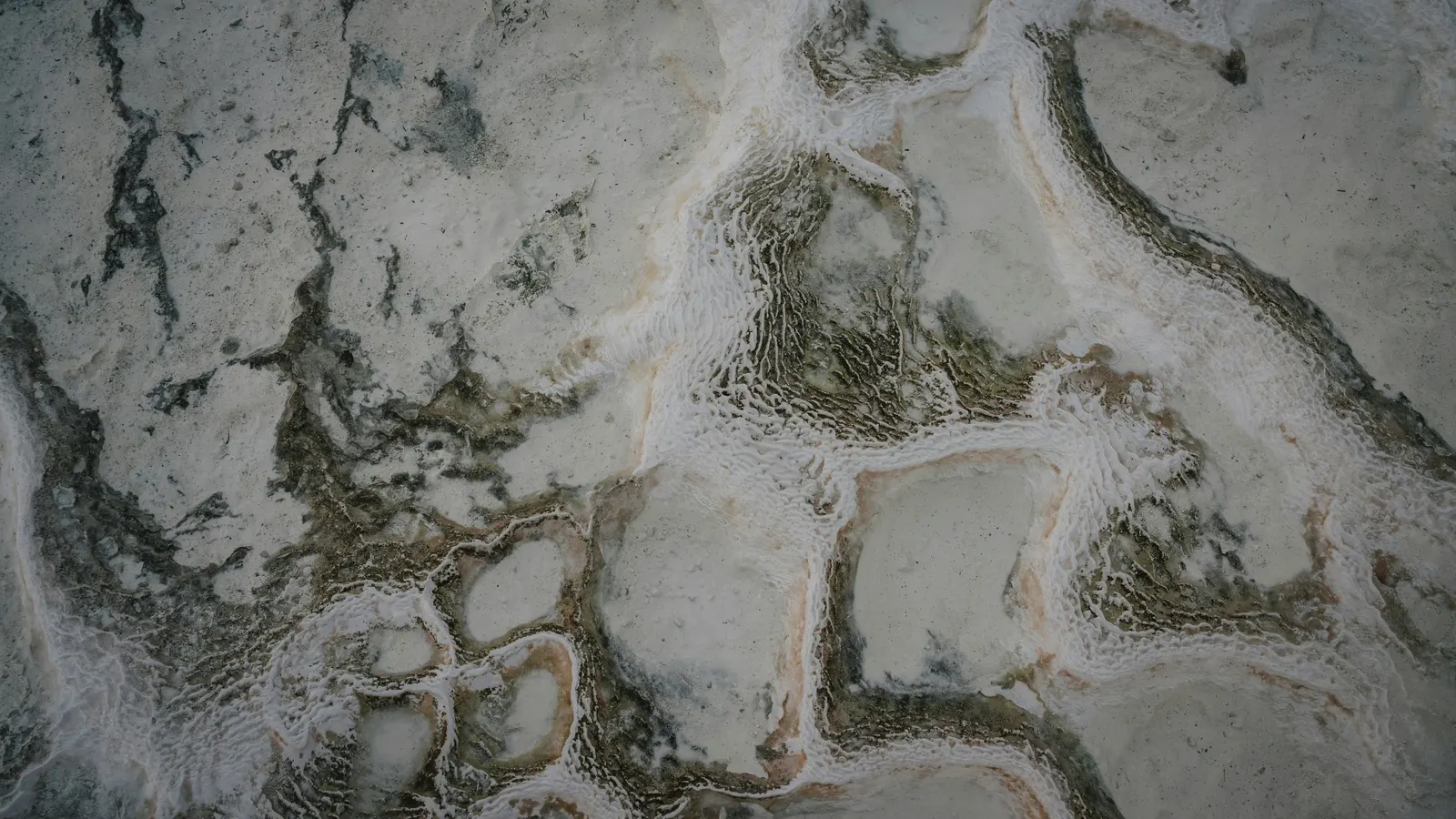
Pamukkale’s travertines and Hierapolis: Visitors cross the terraces barefoot in the areas open to walking, which makes summer’s surface heat a real consideration; spring and autumn visits are markedly more comfortable underfoot, not just in the air temperature.
Planning a longer Eastern Mediterranean trip? Our guides to Greece and Croatia cover neighboring coastlines with their own distinct wind, ferry, and festival seasons worth planning around.