
Best Time to Visit New Zealand: A Month-by-Month Guide
In July, while Queenstown’s ski fields are opening for the season and Southern Alps peaks are locked under fresh snow, Auckland — under two hours north by plane — is having an ordinary mild winter, still swimmable enough that locals don’t think twice about it. That gap is the whole story of planning a New Zealand trip: the two islands aren’t running on the same clock, and treating them as one climate leads to the wrong dates more often than the right ones.
This guide splits the country the way the weather actually splits it — island by island, then activity by activity — so the dates you pick match what you’re going there to do. If a broader South Pacific trip is part of the plan, Bora Bora runs on the opposite logic entirely — one warm climate year-round, with cyclone season as the only real variable.
Quick Answer: Best Time by What You Want
- Best overall (first-time visitors, good weather odds both islands): late December to March
- Best for skiing/snowboarding: July and August (South Island fields at their most reliable)
- Best for hiking the Great Walks: late October to April (official Great Walks season)
- Best for fewer crowds with still-good weather: March–April or October–November (shoulder seasons)
- Best for budget travel: June and July, outside the ski towns
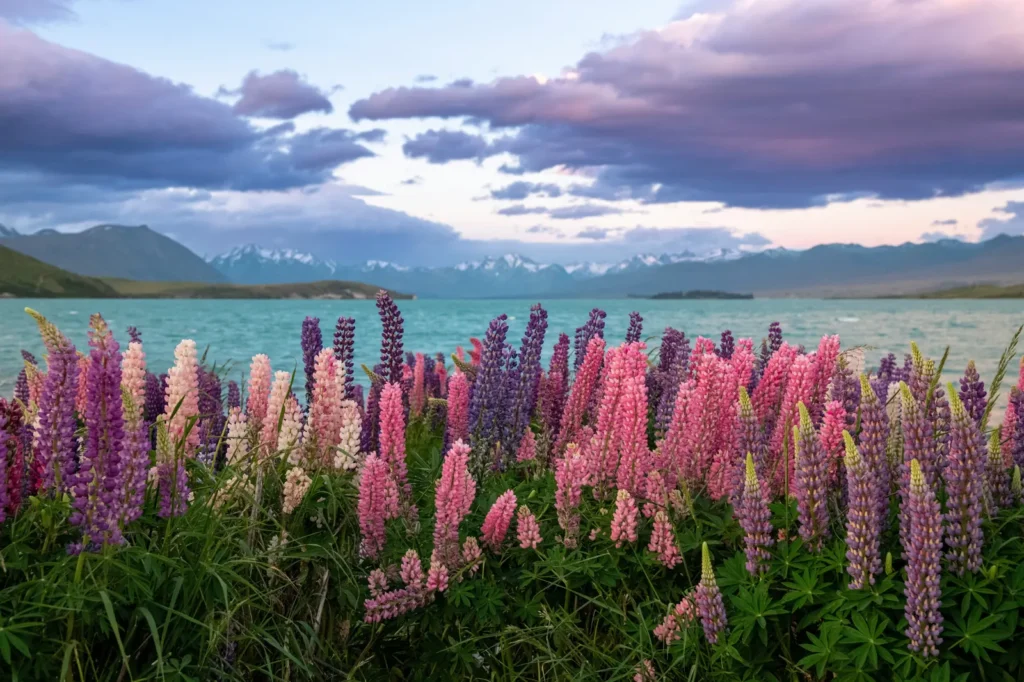
- Best for wildflowers and lupins (Lake Tekapo): late November to mid-December
- Worst combination to plan around: expecting South Island summer clarity in Milford Sound — it rains there more in summer than winter (more on that below)
Why “New Zealand Weather” Isn’t One Thing
New Zealand runs about 1,600 km (1,000 miles) north to south, and the climate shifts noticeably along that stretch. The far north of the North Island sits in a subtropical zone with mild “winterless” winters, while inland and southern parts of the South Island can drop to -10°C (14°F) in a cold snap. As a general rule, temperatures decrease the further south you travel, and the South Island’s interior and mountains behave more like a continental climate than the coastal, maritime North.
That means the honest answer to “when should I go” depends on which island — or which activity — you’re planning around. It’s the same regional-dependency that shapes trip planning in Peru, where coast, mountains, and jungle each keep their own separate calendar.
North Island Climate: Auckland as the Benchmark
Auckland is the most useful reference point for North Island weather since most international flights land there and it’s broadly representative of the northern half of the island (Northland runs slightly warmer, Wellington slightly cooler and windier).
| Month | Avg High | Avg Low | Rainfall | Notes |
|---|---|---|---|---|
| January | 23°C / 74°F | 17°C / 63°F | ~34mm | Warmest, driest window |
| February | 23–25°C / 74–77°F | 17–18°C / 63–64°F | ~73mm | Warmest month overall |
| March | 22°C / 72°F | 16°C / 61°F | ~75mm | Driest month, still warm |
| April | 19°C / 66°F | 15°C / 59°F | ~91mm | Mild, rain increasing |
| May | 17°C / 63°F | 13°C / 55°F | ~110mm | Cooling, wetter |
| June | 15°C / 59°F | 11°C / 52°F | ~120mm | Coldest stretch begins |
| July | 15°C / 59°F | 11°C / 52°F | ~121mm | Wettest month |
| August | 16°C / 61°F | 11°C / 52°F | ~110mm | Still cool and damp |
| September | 17°C / 63°F | 12°C / 54°F | ~95mm | Spring begins |
| October | 19°C / 66°F | 13°C / 55°F | ~90mm | Warming, unpredictable |
| November | 20°C / 68°F | 15°C / 59°F | ~80mm | Good shoulder month |
| December | 22°C / 72°F | 16°C / 61°F | ~70mm | Summer begins, busier |
Auckland’s winter (June–August) is mild by most standards — daytime highs still sit around 15°C (59°F) — but it’s the wettest and cloudiest stretch of the year, and it’s the least sunny period too, with sunshine hours dropping to under 4 hours a day in June. If you’re only visiting the North Island and want dependable outdoor weather, December through March is the safest bet; if you’re flexible and want fewer crowds, November holds up nearly as well and costs less.
Wellington: A Different Kind of North Island Weather
Wellington sits on Cook Strait, the channel separating the two islands, and its weather doesn’t follow Auckland’s script at all. It’s consistently ranked among the windiest capital cities in the world — the strait funnels wind straight through the harbour — and that wind matters more to how a day feels than the temperature does. Wellington’s seasonal swing is narrow (average highs run from about 12°C/54°F in July to 19°C/66°F in February), so unlike Auckland, there isn’t really a bad season temperature-wise. What changes is the wind and rain pattern: March and April tend to bring the calmest, most settled stretches of the year, which is why locals often name autumn — not summer — as Wellington’s best window, especially once the summer school-holiday crowds clear out in mid-March.
Nelson and Abel Tasman: The Sunniest Corner of the Country
At the top of the South Island, Nelson holds the title of New Zealand’s sunniest region, and Abel Tasman National Park right next door benefits from the same microclimate — golden-sand coves and some of the calmest coastal weather in the country. November through April covers the warm-water swimming window, but Abel Tasman is genuinely a year-round destination: several tour operators and long-time visitors rate winter as the most weather-stable time to walk the Coast Track, since Nelson’s winters bring clear, windless days even though the water’s too cold for swimming. If beach time matters, go in summer; if you’d rather have the trail to yourself, winter here is a legitimate option in a way it isn’t in most of the South Island.
South Island Climate: Queenstown as the Benchmark
The South Island runs a much wider temperature swing than the North, and Queenstown — sitting inland at altitude, surrounded by the Southern Alps — illustrates that well.
| Month | Avg High | Avg Low | Rainfall | Notes |
|---|---|---|---|---|
| January | 22–23°C / 72–73°F | 10–11°C / 50–52°F | ~60mm | Warmest, longest days |
| February | 22–23°C / 72–73°F | 10–11°C / 50–52°F | ~55mm | Peak summer |
| March | 19°C / 66°F | 7°C / 45°F | ~50mm | Driest month, mild days |
| April | 15°C / 59°F | 4°C / 39°F | ~55mm | Autumn colour, cooling fast |
| May | 11°C / 52°F | 1°C / 34°F | ~60mm | Frosty mornings begin |
| June | 8°C / 46°F | -1°C / 30°F | ~30mm | Ski season opens |
| July | 4–8°C / 39–46°F | -2 to -3°C / 27–28°F | ~30mm | Coldest month |
| August | 9°C / 48°F | -1°C / 30°F | ~40mm | Peak ski conditions |
| September | 12°C / 54°F | 1°C / 34°F | ~50mm | Spring skiing, unstable weather |
| October | 15°C / 59°F | 3°C / 37°F | ~90mm | Wettest month |
| November | 18°C / 64°F | 6°C / 43°F | ~65mm | Warming, fewer crowds |
| December | 20°C / 68°F | 8°C / 46°F | ~70mm | Summer arriving |
Notice how much colder Queenstown’s nights run compared to Auckland’s — sub-zero lows from May through September are normal, not exceptional. That’s the alpine-influenced South Island climate at work, and it’s the reason ski season and Great Walks season sit almost exactly opposite each other on the calendar.
Two Islands, Two Decisions: A Simple Framework
Rather than a single verdict, it helps to think of New Zealand as two separate weather decisions layered on top of each other:
If your trip is mostly North Island (Auckland, Bay of Islands, Rotorua, Wellington):
- Weather is forgiving most of the year — the real variable is rain, not cold.
- December–March gives you the best odds of dry, warm days.
- Winter (June–August) is mild enough to visit comfortably, just wetter and greyer.
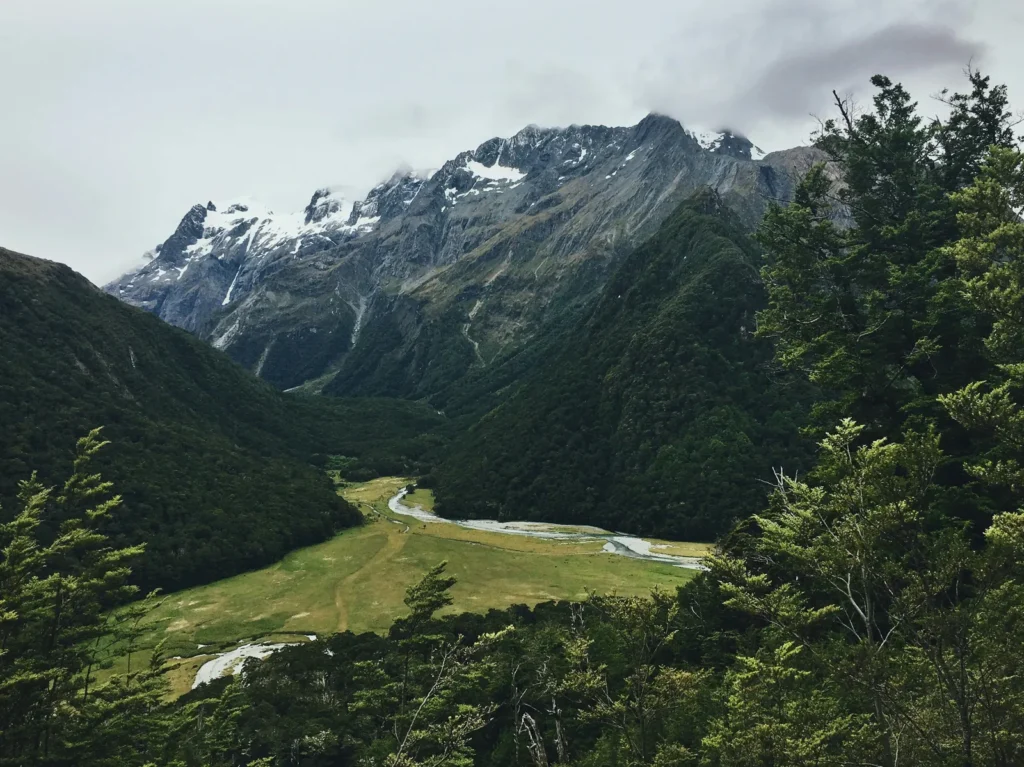
If your trip is mostly South Island (Queenstown, Fiordland, Mount Cook, Southern Lakes):
- Weather is the main variable, and the calendar splits cleanly by activity.
- Summer (December–February) for hiking, road trips, and lake activities.
- Winter (June–August) if skiing or snowboarding is the priority — this flips the “best time” answer entirely.
- Shoulder months (April–May, October–November) trade some weather reliability for noticeably thinner crowds and lower prices.
If your trip covers both islands (the most common itinerary), the honest recommendation is late spring to early autumn — November through April — since it’s the only window where both islands are reliably functioning near their best, without the ski-season price spike or the deep-winter cold snaps down south.
Ski Season vs. Great Walks Season
This is the clearest example of how the North/South split (and the summer/winter split) actually plays out for travelers with a specific goal in mind:
| Ski Season | Great Walks Season | |
|---|---|---|
| When | June–October (peak: July–August) | Late October–April |
| Where | Queenstown, Wānaka, Central Plateau (North Island) | South Island tracks mainly; some North Island options |
| What you get | Reliable snow, especially July–August | Warm-season access, huts open, tracks maintained |
| Trade-off | Cold nights, higher accommodation demand in ski towns | Busiest tracks need bookings months ahead |
If skiing and hiking are both on your list, they genuinely don’t fit into the same trip window — it’s worth picking one as the priority and planning the rest of the itinerary around it, rather than trying to force both into one visit.
The Milford Sound Exception (Read This Before You Book)
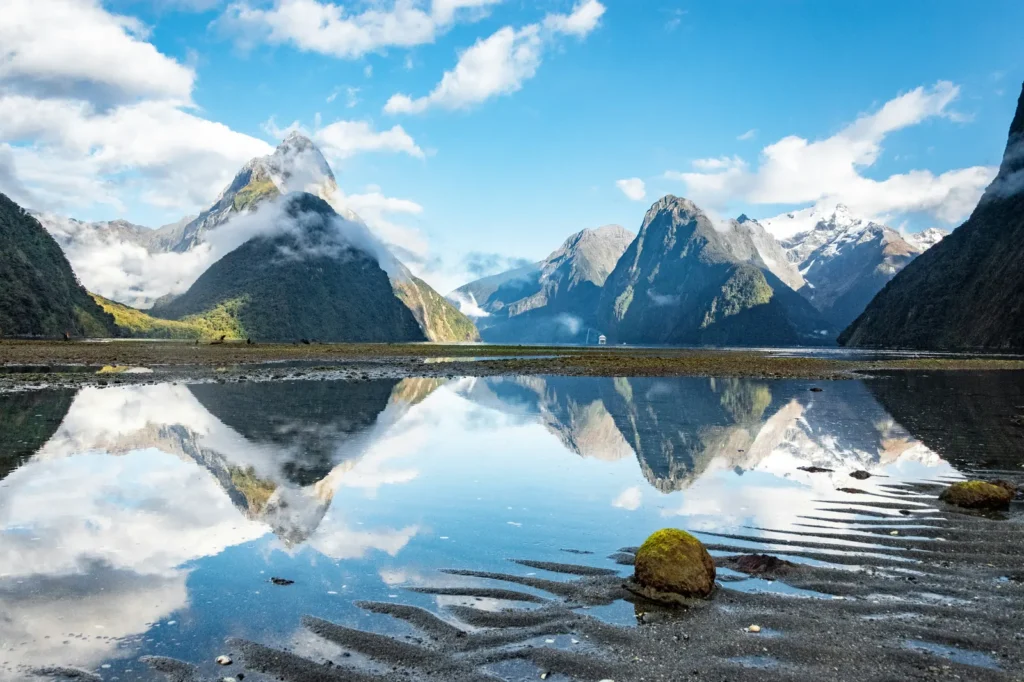
Here’s a detail that trips up a lot of trip planning: Milford Sound is one of the wettest inhabited places on Earth, with roughly 6,800mm (268 inches) of rain a year and rain falling on about 180–200 days annually. Counterintuitively, its wettest months are December and January — the exact months most visitors assume will be driest, since that’s peak New Zealand summer everywhere else.
This isn’t a reason to avoid Milford Sound in summer — locals and guides who work the fiord year-round generally point to February as the best single-month balance of relatively fewer rainy days, mild temperatures, and long daylight. But it does mean you shouldn’t build your whole South Island itinerary around “summer = guaranteed clear fiord views.” Pack a waterproof layer regardless of when you go, and consider that a rainy day at Milford Sound is often more dramatic than a dry one — the cliffs sprout dozens of temporary waterfalls that simply don’t exist without the rain.
Wine Country: Marlborough and Central Otago
New Zealand’s two flagship wine regions sit at opposite ends of the South Island and run on slightly different calendars. Marlborough, at the top of the island and famous for Sauvignon Blanc, harvests earlier — typically March into April — while Central Otago, home to some of the country’s best Pinot Noir, harvests later, generally from late April into June. In both regions, autumn (March–May) is considered the sweet spot: cellar doors are at their most active, vineyards are turning color, and the punishing summer crowds around Queenstown (which anchors Central Otago wine touring) have mostly thinned out. Summer still works well for Marlborough specifically, since it’s one of the sunnier, drier parts of the country and many cellar doors stay fully open and busy through December–February. Winter is quieter in both regions — some smaller Marlborough cellar doors reduce their hours or close between May and October, so it’s worth checking ahead if a winter wine trip is the plan.
Kaikoura and Christchurch: Whale Watching on the East Coast
Kaikōura, on the northeastern coast of the South Island, is one of the few places in the world where whale watching genuinely works year-round — a resident population of sperm whales sits close offshore thanks to a deep underwater canyon, with tour operators reporting sighting rates in the 90-plus percent range regardless of season. That said, the cast of supporting species changes through the year: humpback whales pass through on their migration from roughly June to August, and orca pods are more commonly reported from December to March. There’s genuinely no wrong season to add Kaikōura to a South Island itinerary — it’s more a question of which extra species you’d like a chance at seeing, layered on top of the sperm whales that are there regardless.
Christchurch, the main gateway to Kaikōura and the Canterbury Plains, tracks fairly closely with the general South Island pattern: warm, long days from December to February, crisp and increasingly frosty conditions through winter, and the Canterbury high country is a common side trip for those extending south toward Aoraki/Mount Cook.
Rotorua and the North Island’s Geothermal Region
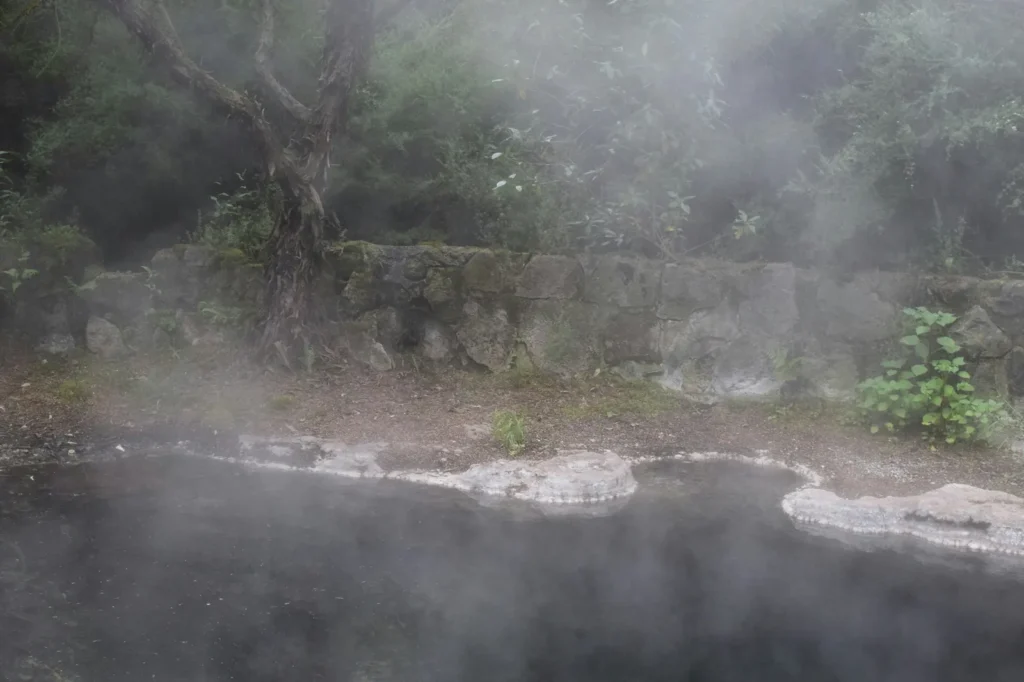
Rotorua’s geothermal attractions — mud pools, geysers, hot springs — are one of the few things in New Zealand that are genuinely weather-independent; steam and heat look dramatic whether it’s sunny or drizzling. This makes Rotorua a smart addition to a North Island itinerary during the shoulder or winter months, when other outdoor plans might be rained out.
Month-by-Month Summary
- December–February (Summer): Warmest, longest days, busiest and most expensive. Best all-round window for first-time visitors covering both islands. Peak Marlborough wine touring and Kaikōura orca season.
- March–May (Autumn): Mild days, cooling nights, wine harvest across Marlborough and Central Otago, Wellington’s calmest stretch. Good value, fewer crowds.
- June–August (Winter): Best for skiing in the South Island; mild but wet in the North Island. Humpback whales pass through Kaikōura. Cheapest accommodation outside ski towns.
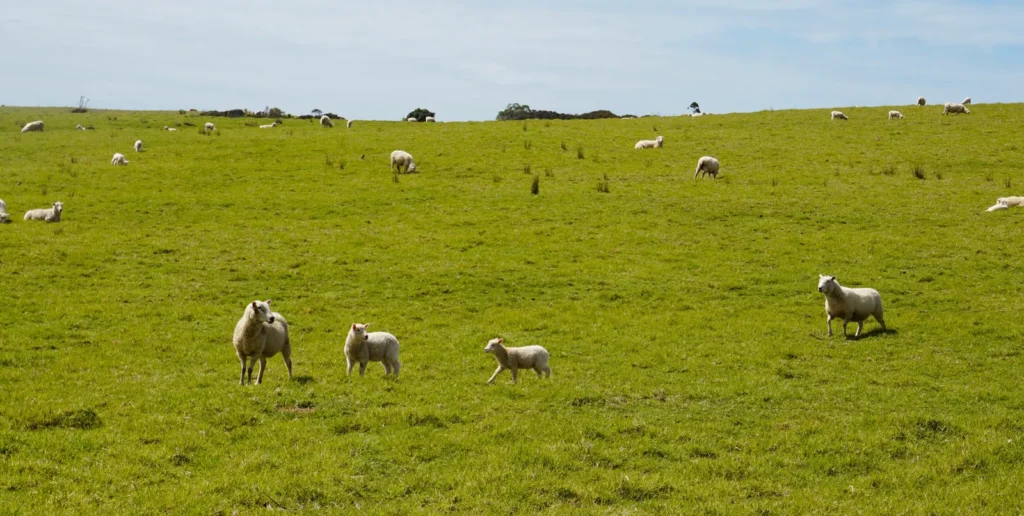
- September–November (Spring): Unpredictable weather but lambing season, wildflowers building toward the Tekapo lupin bloom, and Great Walks season reopening from late October.
Frequently Asked Questions
Do I need to choose between North and South Island weather when planning?
Not entirely — most itineraries cover both. The point is to know which island’s climate should drive your dates: if skiing or serious hiking matters most, let the South Island’s calendar decide; if you’re mainly after beaches, wine regions, and geothermal sights, the North Island’s milder year-round climate gives you more flexibility.
Is New Zealand’s winter worth visiting if I’m not skiing?
Yes, particularly in the North Island, where winter is mild rather than harsh. You’ll trade some sunshine hours for lower prices and thinner crowds at major sights. Nelson and Abel Tasman are a good winter pick too, since that region’s mild, sunny microclimate holds up better than most of the South Island through the colder months.
When do the Lake Tekapo lupins bloom?
Typically late November into mid-December, though exact timing shifts year to year with the season’s temperatures.
Is there a bad time to go whale watching in Kaikōura?
Not really — the resident sperm whale population is there year-round with consistently high sighting rates. Timing mainly affects which additional species (humpbacks in winter, orcas in summer) you might see alongside them.
When is the best time to visit New Zealand’s wine regions?
Autumn (March–May) hits both major regions well, coinciding with harvest in Marlborough (March–April) and Central Otago (late April–June). Summer works fine for Marlborough specifically, but Central Otago’s wine touring is bottlenecked by Queenstown’s summer crowds.
Is Wellington worth visiting outside of summer?
Yes — Wellington’s temperature range is narrow year-round, so the wind and rain matter more than the season. Many locals actually prefer March and April, once the wind eases and the summer crowds thin out.
Do I need to worry about cyclones or extreme weather?
New Zealand occasionally feels the remnants of tropical cyclones, mostly affecting the North Island’s east coast between January and March. These aren’t the norm, but it’s worth checking forecasts if traveling during that window, particularly for coastal Northland or Bay of Plenty plans.