Best Time to Visit the Philippines: A Month-by-Month Guide
If you can only pick one window for the Philippines, make it November through May, when the cooler, drier amihan season replaces the humid southwest monsoon across most of the country. That single window still glosses over what’s actually a nation of more than 7,000 islands: on any given week, Boracay can be sitting under clear amihan skies while, a short flight south, Mindanao’s east coast is catching rain from a completely different weather pattern. There’s no one Philippine climate — there’s an archipelago-wide patchwork, and the right month depends far more on which islands you’re visiting than on a single calendar recommendation.
Quick answer: The best time to visit the Philippines overall is between November and May, during the cooler, drier amihan season — with January to April offering the most reliable weather nationwide before the pre-monsoon heat builds. But the right month shifts depending on whether you’re headed to Boracay, Palawan, the rice terraces of Luzon, or a January festival in Cebu — which is exactly what this guide breaks down.
When Is the Best Time to Visit the Philippines?
The best overall window to visit the Philippines is November through May, when the northeast monsoon (amihan) brings cooler air, lower humidity, and far less rain than the rest of the year. Within that stretch, December through February is the most comfortable temperature-wise, while March through May gets hotter and drier but also busier and pricier. If you can only pick one month, February is the sweet spot most of the country agrees on — past the New Year crowds, before the April heat peaks, and reliably dry almost everywhere.
That said, “best” depends heavily on what you’re optimizing for. A surfer chasing swells wants a different month than a family wanting calm seas for snorkeling, and a budget traveler willing to gamble on rain can visit in July for a fraction of December’s prices.
Understanding the Philippines’ Climate: Amihan vs. Habagat
The Philippines runs on two monsoon systems, and understanding them is the single most useful thing you can know before booking. It’s a similar two-system setup to what shapes Thailand’s Andaman and Gulf coasts, just running on a north-south axis instead of an east-west one. The amihan (northeast monsoon, roughly November–May) brings cooler, drier air down from mainland Asia, while the habagat (southwest monsoon, roughly May/June–October) pulls in warm, moisture-heavy air that fuels the rainy season and most of the country’s typhoons.
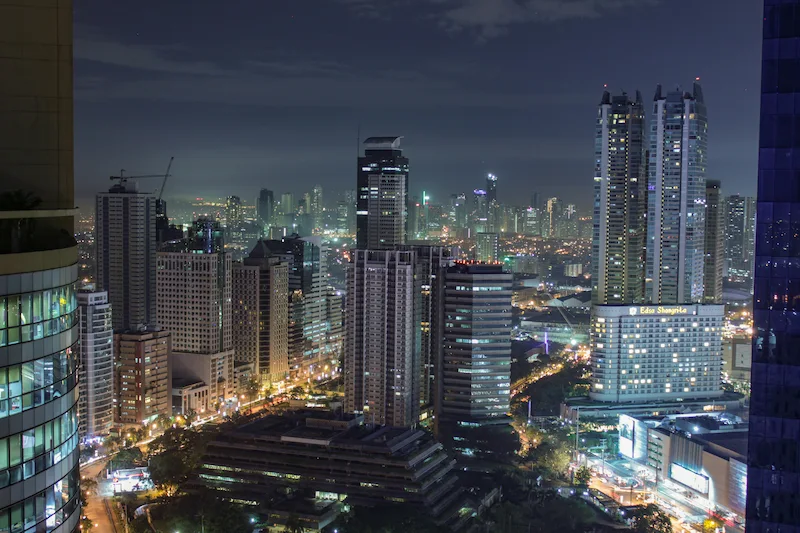
Example: In Manila, this split is stark — January sees minimal rainfall and comfortable humidity, while by July the city is receiving over ten times as much rain in a single month, with streets prone to flooding and traffic grinding to a halt during downpours.
Locally, Filipinos often describe three seasons instead of two: tag-init or tag-araw (hot season, March–May), tag-ulan (rainy season, June–November), and tag-lamig (cool season, December–February). All three framings are describing the same underlying monsoon pattern from slightly different angles — useful to know since you’ll see both used interchangeably across guidebooks and local sources.
One nationwide quirk worth knowing: because the Philippines is a long, mountainous archipelago, the same monsoon can produce opposite conditions on opposite coasts of the same island at the same time. That’s not a contradiction in the data — it’s the actual geography, and it’s why island-specific planning (below) matters more here than in most destinations.
Best Time to Visit Boracay
The best time to visit Boracay is during the Amihan season, roughly November through May, when calm winds keep White Beach’s famous turquoise water flat and swimmable. December and January are the most comfortable temperature-wise, while March through May run hotter but still dry. Avoid June through October if you want reliable beach weather — that’s Habagat season, bringing more rain, rougher seas, and the country’s typhoon risk.
Boracay’s shape works in your favor here: the island runs roughly north-south, so its two coastlines react oppositely to the seasonal wind shift. During Amihan, White Beach on the west side stays glassy and calm while Bulabog Beach on the east catches wind — which is exactly why Bulabog becomes the island’s kiteboarding hub through the dry months. During Habagat, the pattern flips, and Bulabog goes calm while White Beach gets choppier.
Worth knowing: a natural green algae bloom occasionally appears along parts of the coast during the peak dry months (roughly February–May) — a real but usually minor seasonal quirk, not a reason to avoid the island, but worth setting expectations rather than only promising postcard-perfect water year-round.
Best Time to Visit Palawan (El Nido, Coron & Puerto Princesa)
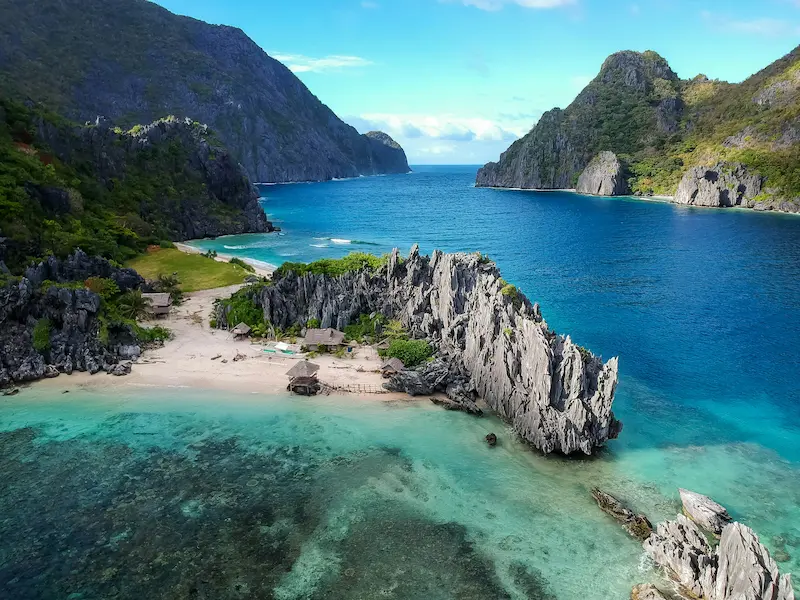
The best time to visit Palawan is during the dry season, roughly November/October through May, with February and March standing out as the calmest, least rainy stretch before the pre-summer heat sets in. The wet season runs roughly June through September/October, bringing heavier rain and rougher boat conditions for the island-hopping tours Palawan is famous for.
Palawan is long enough that its own geography splits the picture further. El Nido and Coron in the north don’t experience identical weather to Puerto Princesa, roughly 300km south, and the province’s eastern side tends to hold onto rain longer into the year than the west. If you’re visiting in October specifically, basing yourself on the west coast is the safer bet for drier conditions.
Question: Is the wet season really worth avoiding in Palawan? Not entirely — it depends on your priorities. Rain in Palawan rarely means all-day downpours; short, heavy bursts are more typical. In exchange for the gamble, hotel rates and tour prices drop noticeably, the famous lagoons and limestone karsts are far less crowded, and the surrounding landscape is at its greenest.
Worst Time to Visit the Philippines: Typhoon Season, Honestly
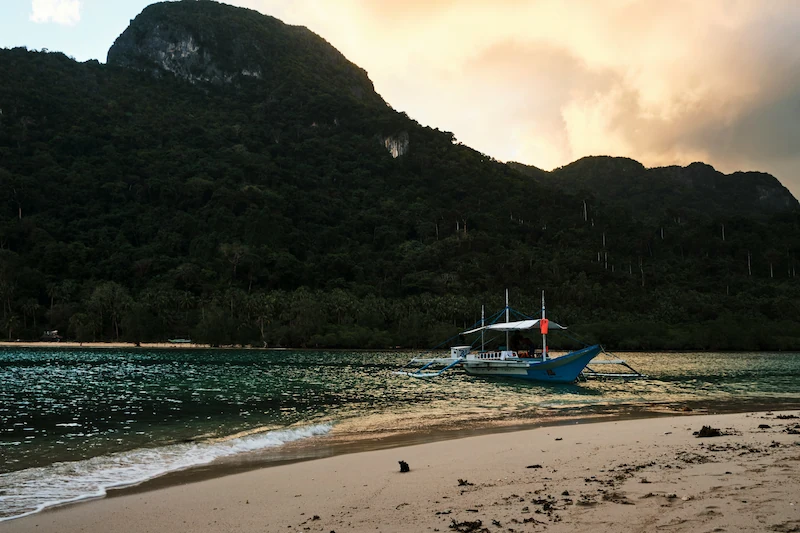
The honest worst-time answer is July through October, the peak of typhoon season nationwide, layered on top of the broader June–November rainy season. Many of these same storm systems track onward toward Japan later in the season, so the timing overlap is worth knowing if you’re weighing the two as destinations. This isn’t a minor caveat — typhoons can disrupt domestic flights, ferry crossings between islands, and multi-day boat tours with little notice, and some regions see genuinely heavy, sustained rainfall rather than the brief showers common earlier in the wet season.
This doesn’t mean the entire June–November window is a write-off. Early and shoulder months like June and late October often bring a workable mix: lower prices, thinner crowds, and weather that’s frequently better than its “rainy season” label suggests, as long as you stay flexible and keep an eye on forecasts. But if your trip depends on a fixed departure date, outdoor tours you can’t reschedule, or interisland travel with tight connections, July through September carries real risk that’s worth planning around rather than hoping to avoid.
Philippines Festivals Worth Timing Your Trip Around
If cultural events matter to your itinerary, a handful of major festivals cluster conveniently within the dry season:
- Sinulog Festival (Cebu City) — third Sunday of January annually; January 17, 2027. One of the country’s largest festivals, honoring the Santo Niño with parades, street dancing, and a nine-day lead-up of masses and celebrations.
- Ati-Atihan Festival (Kalibo, Aklan — near Boracay) — also the third Sunday of January; January 17, 2027. Often called the oldest Philippine festival, known for tribal-inspired costumes, soot-darkened body paint, and the “Hala Bira” street-dancing chant.
- Panagbenga Festival (Baguio City) — a month-long flower festival running through February, typically February 1–28, 2027. Set in Baguio’s cool mountain air, it’s a striking contrast to the tropical heat of the lowlands and islands.
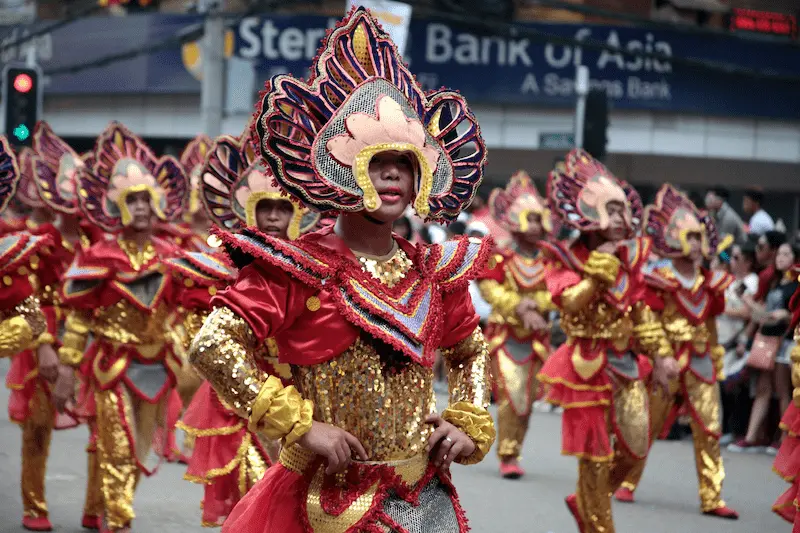
Example: If you’re building a January itinerary around Boracay, timing a few days in Kalibo for Ati-Atihan is a natural add-on — Kalibo’s airport is the standard gateway into Boracay, so the festival sits directly on your travel route rather than requiring a detour.
Philippines Weather and Travel Costs by Season
Pricing in the Philippines swings hard with the seasons, more so than many destinations, because so much of the country’s tourism infrastructure is concentrated in dry-season months.
- Peak season (December–April): flights and hotels typically run 30–50% higher than off-season rates, with the steepest surcharges around Christmas, New Year, Chinese New Year, and Holy Week/Easter — some destinations see prices triple during these specific weeks.
- Shoulder season (May, June, late October, November): a genuine sweet spot — prices drop 20–40% off peak while weather remains workable more often than not.
- Low season (June–October): the cheapest window nationwide, driven by rainy-season and typhoon-risk demand softening. Budget-conscious and flexible travelers can find real value here, accepting the trade-off in weather reliability.
| Month | Manila Temp | Rainfall Level | Boracay Conditions | Palawan Conditions | Best For |
|---|---|---|---|---|---|
| January | 23–31°C | Low | Calm, dry, cool breeze | Dry, comfortable | Festivals, all-round travel |
| February | 23–32°C | Very low | Ideal, driest stretch | Driest month | Best overall month |
| March | 24–33°C | Low | Hot, dry, busy | Dry, warming up | Beaches, diving |
| April | 25–35°C | Very low | Hottest, still dry | Hot, dry | Peak dry-season activities |
| May | 26–34°C | Rising | Transition, still mostly dry | Transition to wet | Late shoulder-season value |
| June | 25–33°C | Moderate–high | Habagat begins, rougher seas | Wet season starts | Budget travel, fewer crowds |
| July | 24–31°C | Very high | Rainy, typhoon risk | Wet, rough seas | Deep budget, indoor/city plans |
| August | 24–31°C | Very high | Rainy, typhoon risk | Wet, rough seas | Deep budget, indoor/city plans |
| September | 24–31°C | High | Rainy, typhoon risk | Wet, rough seas | Deep budget, indoor/city plans |
| October | 24–32°C | High, easing late-month | Wettest month, easing late | Wet, west coast drier | Late-month shoulder value |
| November | 24–31°C | Easing | Amihan returns | Dry season returns | Early dry-season value |
| December | 23–31°C | Low | Coolest month, dry, busy | Dry, peak season begins | Christmas travel, festive season |
Manila temperatures shown as approximate monthly low–high range. Boracay and Palawan columns describe general seasonal patterns; conditions can vary year to year and across specific islands within each region.
Weather patterns, prices, and event dates can change. Always verify current conditions and details with official sources before booking your trip. See our Disclaimer for more information.
Frequently Asked Questions
What is the cheapest time to visit the Philippines?
June through October is generally the cheapest, driven by lower demand during rainy season and typhoon risk. May and November offer a middle ground — noticeably discounted versus peak season while keeping better odds of workable weather.
Is it safe to visit the Philippines during typhoon season?
Millions of people travel through July–October without major disruption, but the risk is real, particularly for interisland flights, ferries, and multi-day boat tours. Building flexibility into your itinerary and monitoring forecasts (PAGASA is the official source) matters more during these months than at any other time of year.
Do Boracay and Palawan have the same best time to visit?
Broadly yes — both follow the same Amihan/Habagat pattern, with November–May as the dry, more reliable stretch for each. The main difference is regional nuance within Palawan specifically, where the eastern coast holds onto rain longer than the west.
When is the least crowded time to visit the Philippines?
The rainy season months (June–October) see the fewest tourists, along with the narrower shoulder windows in May and November. If crowds matter more to you than guaranteed sunshine, these are worth serious consideration.