Best Time to Visit Mauritius: Month-by-Month Weather, Costs & Cyclone Guide
The gap between Mauritius’s warmest month and its coolest is just 4.3°C (7.7°F) — smaller than the swing between morning and afternoon in most places. So “best time to visit” here was never really about temperature. It’s about choosing between calm seas and Indian Ocean cyclone season, and those two things follow entirely different calendars than you’d expect from a typical tropical island.
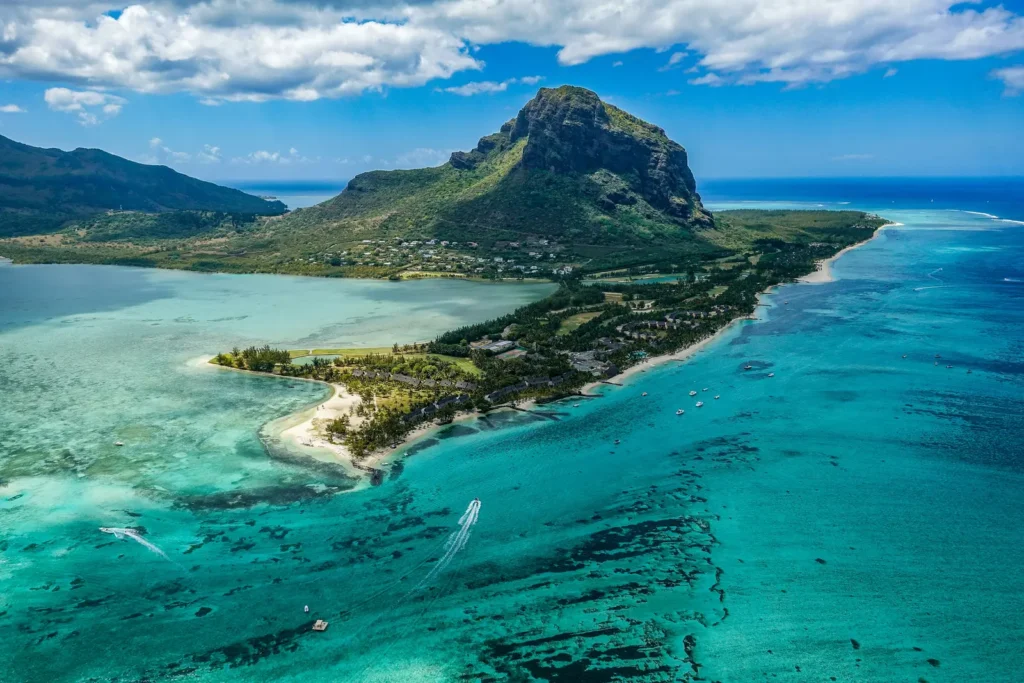
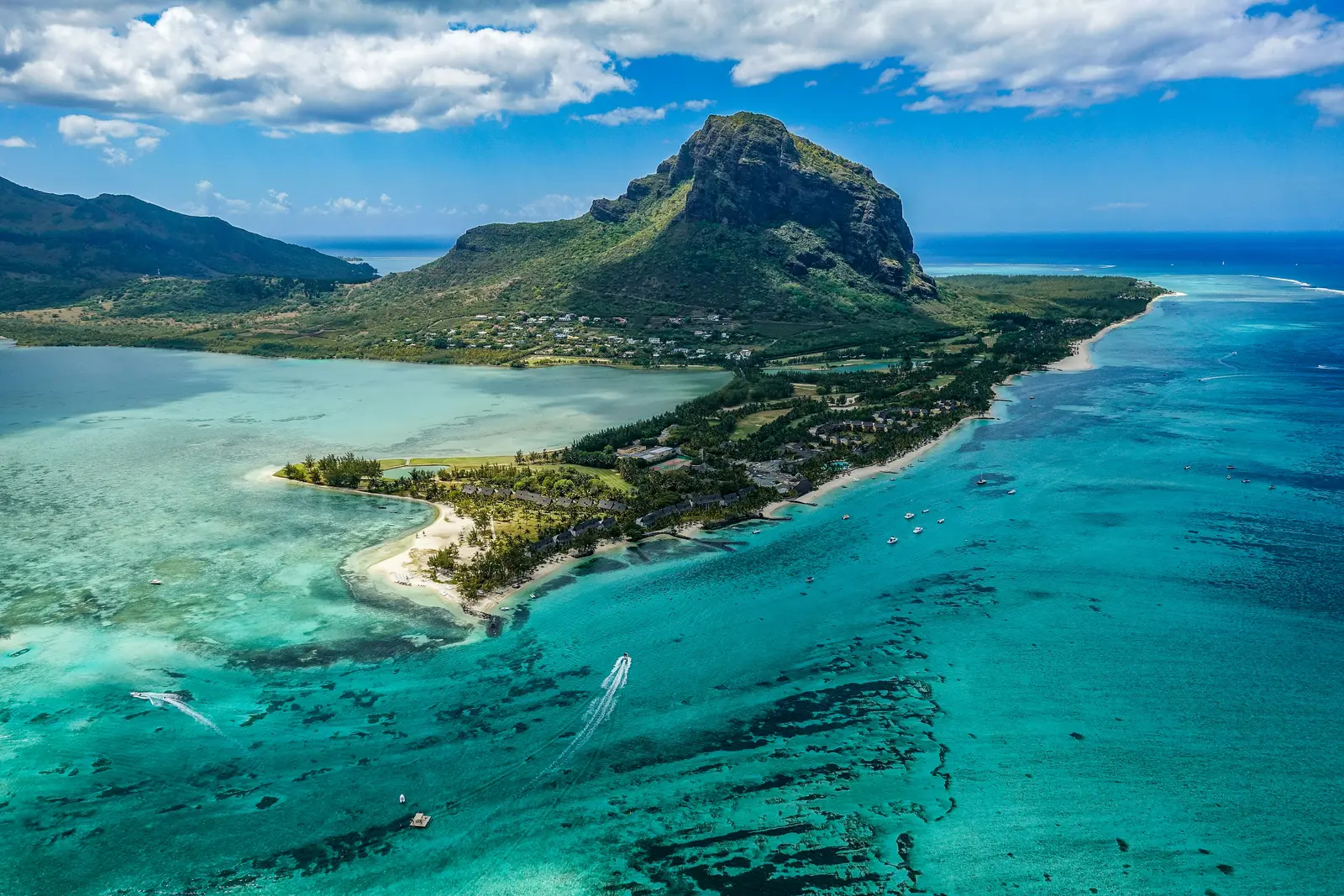
Mauritius is a volcanic island nation in the Indian Ocean, roughly 2,000 km off the southeast coast of Africa. Its climate splits into a cool, dry winter (June–September) and a warm, humid summer (November–April) that overlaps with the region’s official cyclone season.
Mauritius Runs on a 4°C Temperature Swing — Cyclone Risk Is What Actually Changes
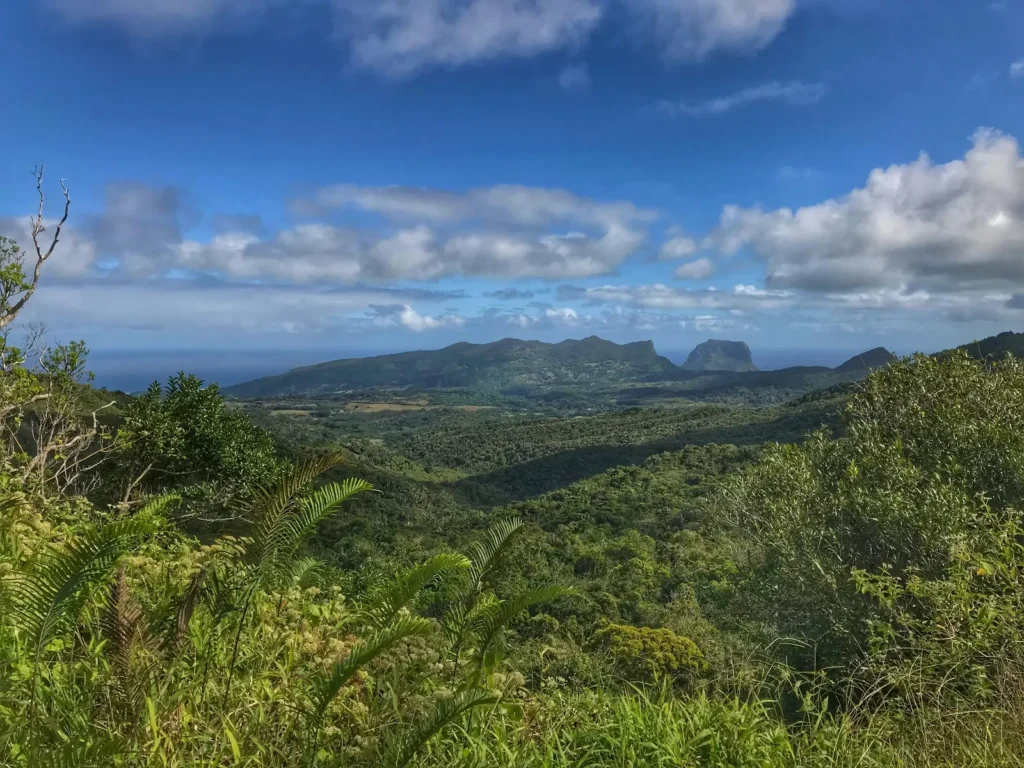
According to Mauritius’s own Meteorological Services, the mean summer temperature is 24.7°C and the mean winter temperature is 20.4°C — a difference of only 4.3°C across the entire year. January and February are the warmest months, with average daytime highs of 29.2°C, while July and August are the coolest, with average nighttime lows dropping to 16.4°C. Annual rainfall averages 2,010mm, with February and March the wettest months and October the driest. The interior highlands run 3–5°C cooler than the coast year-round, so Curepipe and the central plateau feel noticeably different from a beach at Flic-en-Flac even on the same afternoon.
| Season | Months | Mean Temp | Rainfall | What to Expect |
|---|---|---|---|---|
| Winter (dry) | Jun–Sep | 20.4°C avg; coolest Jul–Aug (16.4°C nighttime lows) | Lowest of the year; October is the driest month | Clearer skies, southeasterly trade winds, occasionally windy on the south/east coast |
| Transition | May & Oct | Shifting between seasons | Low, trending toward the summer rise | Strong balance of weather and value |
| Summer (wet) | Nov–Apr | 24.7°C avg; warmest Jan–Feb (29.2°C daytime highs) | Highest of the year; Feb–Mar wettest, 67% of annual rain falls in summer | Humid, short heavy downpours, official cyclone season overlaps this window |
Mauritius Month by Month, at a Glance
The seasonal table above is the honest big picture, but if you’re comparing Mauritius weather by month, here’s how each one shakes out based on the confirmed climate extremes and whale migration timing. The “typical crowd level” column is a general travel-planning read based on Mauritius’s known holiday and tourism patterns, not an official statistic:
| Month | Temp | Rain | Whales/Dolphins | Typical Crowd Level |
|---|---|---|---|---|
| January | Hot (warmest month, ~29°C days) | Rising toward peak | Sperm whales year-round | Peak holiday period — New Year |
| February | Hot (tied warmest) | Wettest month | Sperm whales year-round | Busier — Cavadee & Shivaratree cluster |
| March | Warm | Wettest (tied with Feb) | Sperm whales year-round | Moderate |
| April | Warm | Declining | Sperm whales year-round | Moderate |
| May | Mild, transitional | Low, still falling | Sperm whales year-round | Shoulder season |
| June | Cool, dry begins | Low | Humpback season begins | Moderate |
| July | Coolest (with Aug) | Low | Humpback season strong | Busier — European summer holidays |
| August | Coolest (with Jul) | Low | Humpback season strong | Busier — European summer holidays |
| September | Mild, dry | Low | Humpback season tapering | Shoulder season |
| October | Mild, warming | Driest month | Humpback season tail end | Shoulder season |
| November | Warm, more humid | Rising — cyclone season starts | Sperm whales year-round | Moderate |
| December | Hot, humid | Rising | Sperm whales year-round | Peak holiday period — Christmas/New Year |
Cyclone Season Runs November 15 to May 15 — What Travelers Need to Know
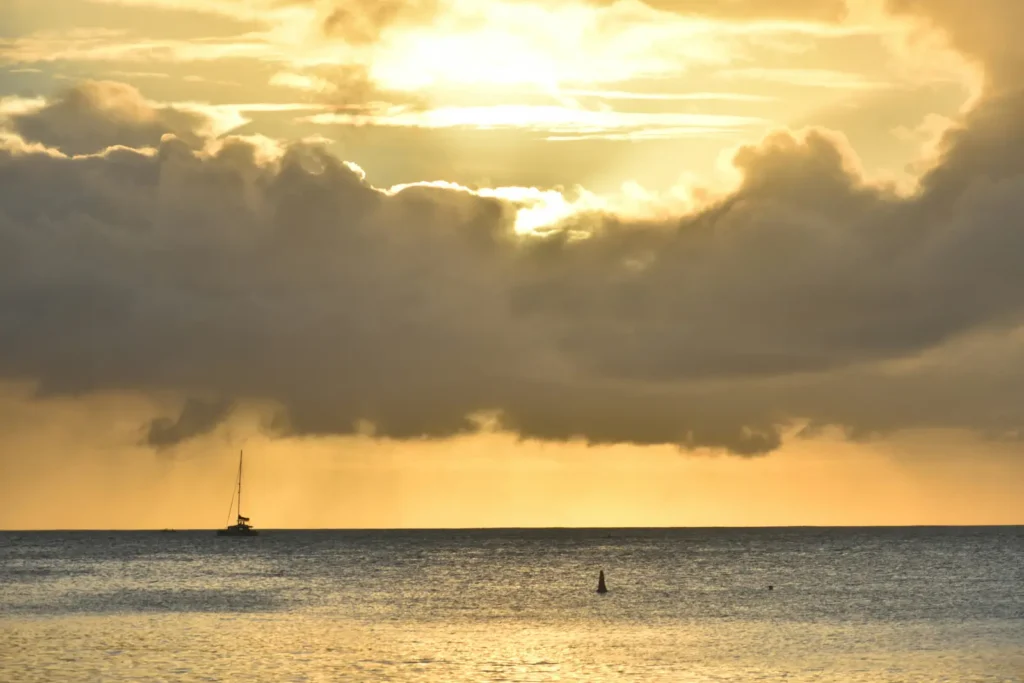
Mauritius’s official cyclone season runs from November 15 through May 15 (extended past the general Southwest Indian Ocean season’s April 30 cutoff specifically for Mauritius and the Seychelles), with the highest risk concentrated in January through March when storms form near the Inter-Tropical Convergence Zone north of the island. Being within cyclone season doesn’t mean a cyclone will affect your trip, but a specific storm can disrupt flights, boat excursions, and resort operations depending on its track — that’s not something you can predict or rule out in advance, which is why travel insurance with weather-disruption coverage is worth considering for any trip booked January through March.
Whale and Dolphin Season Follows Neither of Mauritius’s Two Seasons
Marine wildlife in Mauritius runs on its own calendar entirely separate from the wet/dry split. Sperm whales are year-round residents in the deep waters off the west coast and can be spotted any month, while humpback whales are generally seen from June through November as they migrate between Antarctic feeding grounds and warmer breeding waters, with July–September often considered the strongest stretch — which means peak humpback activity falls in the middle of Mauritius’s cooler, drier winter. Spinner and bottlenose dolphins are the most reliable sighting, gathering in Tamarin Bay on the west coast year-round and best seen on early-morning boat trips before the water gets choppy. Tamarin, Black River (Grande Rivière Noire), and Le Morne are the three departure points with the most consistent operators.
Cavadee, Maha Shivaratree, and a Festival Calendar Unlike Anywhere Else in the Indian Ocean
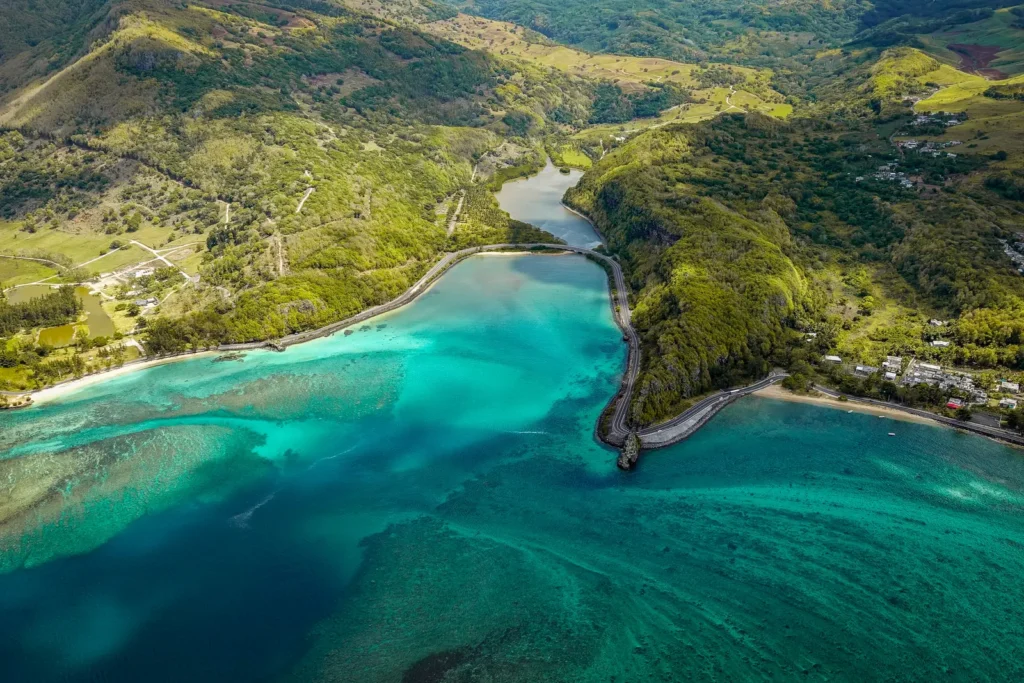
January and February are the most festival-dense stretch of the Mauritian calendar, driven by the island’s mixed Hindu, Muslim, Chinese, and Creole heritage. Thaipoosam Cavadee falls on February 1, 2026 (the same day as the Abolition of Slavery commemoration), when Tamil Hindu devotees complete ten days of fasting before processions featuring body piercings with skewers and hooks as an act of devotion — Triolet is the best village to witness it. Maha Shivaratree, one of the largest Hindu pilgrimages outside India, falls on February 15, 2026, when hundreds of thousands of white-clad devotees walk to the sacred lake at Grand Bassin. Chinese Spring Festival lands on February 17, 2026, and Divali falls on November 8, 2026, rounding out the calendar with dragon dances in Port Louis’s Chinatown and island-wide lights, respectively. These moon-dependent dates are set by Mauritius’s official public holiday calendar for the specific year, so they’ll shift on future calendars — always confirm against the current year’s list before booking around one.
| Festival | 2026 Date | What It Is |
|---|---|---|
| Thaipoosam Cavadee | Feb 1, 2026 | Tamil Hindu devotion festival with pierced processions; best in Triolet |
| Maha Shivaratree | Feb 15, 2026 | One of the largest Hindu pilgrimages outside India, at Grand Bassin |
| Chinese Spring Festival | Feb 17, 2026 | Dragon and lion dances in Port Louis’s Chinatown |
| Divali | Nov 8, 2026 | Island-wide festival of lights |
There Are No Direct Flights From the US — Here’s How That Changes Your Trip
Mauritius has no nonstop flights from the United States, Canada, or anywhere in the Americas, so US travelers need at least one connection, and getting there from North America typically takes 20–24 hours total door to door. From London, Air Mauritius and British Airways both fly direct in around 12 hours 45 minutes; from Paris, Air Mauritius and Air France cover the same direct route in about 12 hours. Travelers connecting through the Gulf can fly Emirates via Dubai (about 6 hours 40 minutes for the Dubai–Mauritius leg), while those routing via South Africa get the shortest final leg — Johannesburg to Mauritius is only about 4 hours direct on Air Mauritius, South African Airways, or FlySafair. Most itineraries from the US end up as a domestic-to-international flight followed by a long-haul flight into Mauritius, so it’s worth building in a buffer — or planning an overnight stop at the connecting hub — rather than assuming a tight same-day connection will hold.
What a Week in Mauritius Actually Costs, From Guesthouse to Private Villa
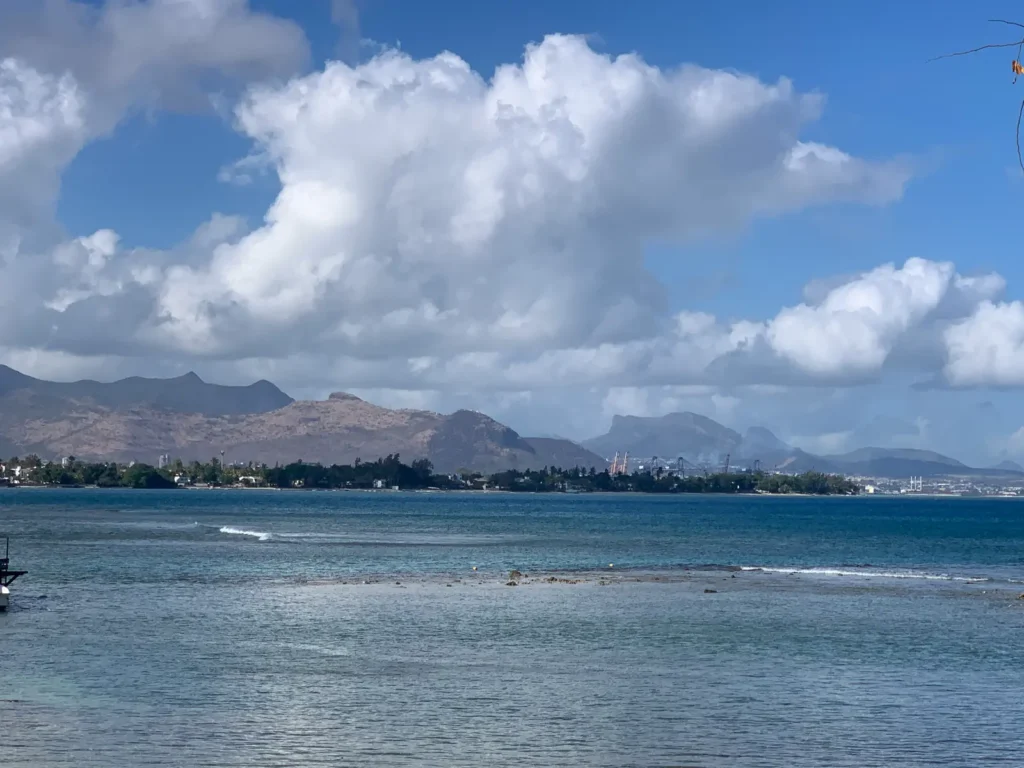
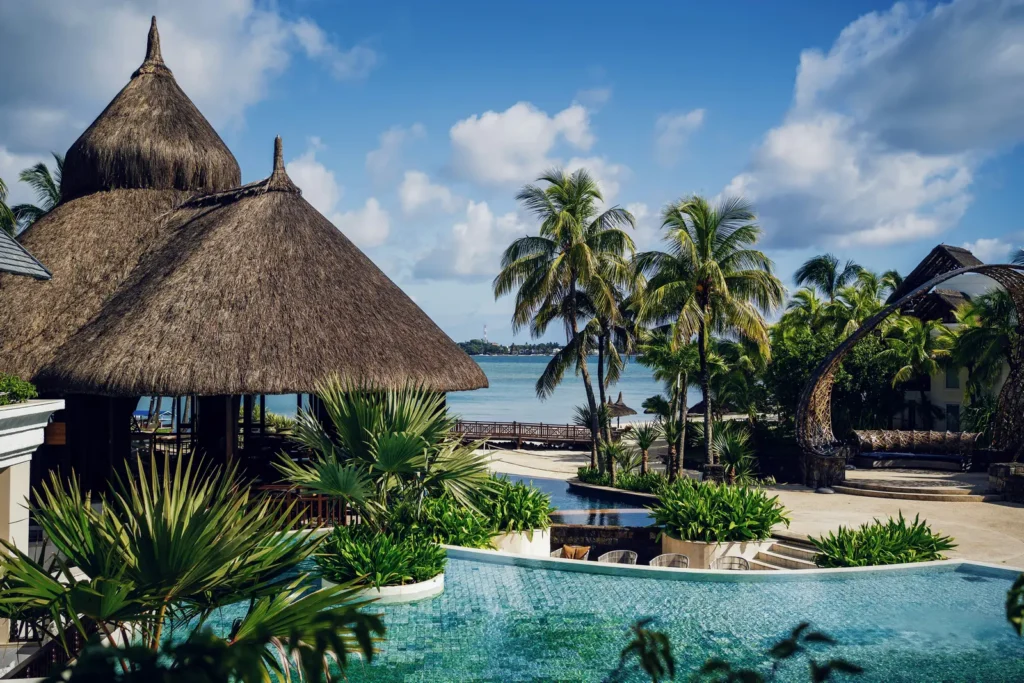
Mauritius has an unusually wide accommodation spread for an Indian Ocean destination — genuine budget guesthouses exist alongside five-star resorts. Budget guesthouses, mostly small three-to-five-room properties rather than hostels (hostel-style dorms barely exist on the island), can sometimes be found around $25–$50 a night, particularly outside peak periods, and often include a pool. Mid-range hotels — think InterContinental Balaclava, Radisson Blu Azuri, or SO/ Sofitel — typically run $250–$400 a night. Five-star resorts scale from about $400 up past $600 for well-known chains like Constance Belle Mare Plage, while the island’s ultra-luxury tier — Four Seasons at Anahita, One&Only Le Saint Géran — regularly runs $1,300–$1,700 a night in peak season. All of these figures shift substantially by season, exact dates, booking window, and room type, so treat them as a starting reference rather than a quote.
| Tier | Example Properties | Nightly Rate |
|---|---|---|
| Budget guesthouse | Small 3–5 room properties, Flic-en-Flac / Mont Choisy | $25–$50 |
| Mid-range hotel | InterContinental Balaclava, Radisson Blu Azuri, SO/ Sofitel | $250–$400 |
| 5-star resort | Constance Belle Mare Plage, Sugar Beach | $400–$600+ |
| Ultra-luxury | Four Seasons Anahita, One&Only Le Saint Géran | $1,300–$1,700+ |
One thing worth knowing before you overspend on a beachfront resort: Mauritius doesn’t have private beaches in the conventional sense — the public has rights of access to the foreshore, including the area between the high- and low-water marks, under the country’s Beach Authority Act. That said, the land above the high-water mark, including much of what a resort occupies, can be leased or privately held, so “public beach access” doesn’t mean free run of a resort’s grounds — it means you can walk and use the sand itself. Staying inland or in a cheaper coastal town and beach-hopping by rental car is still a legitimate way to reach a lot of the same coastline for a fraction of the resort cost.
Chamarel’s Seven Colored Earths Don’t Care What Season It Is
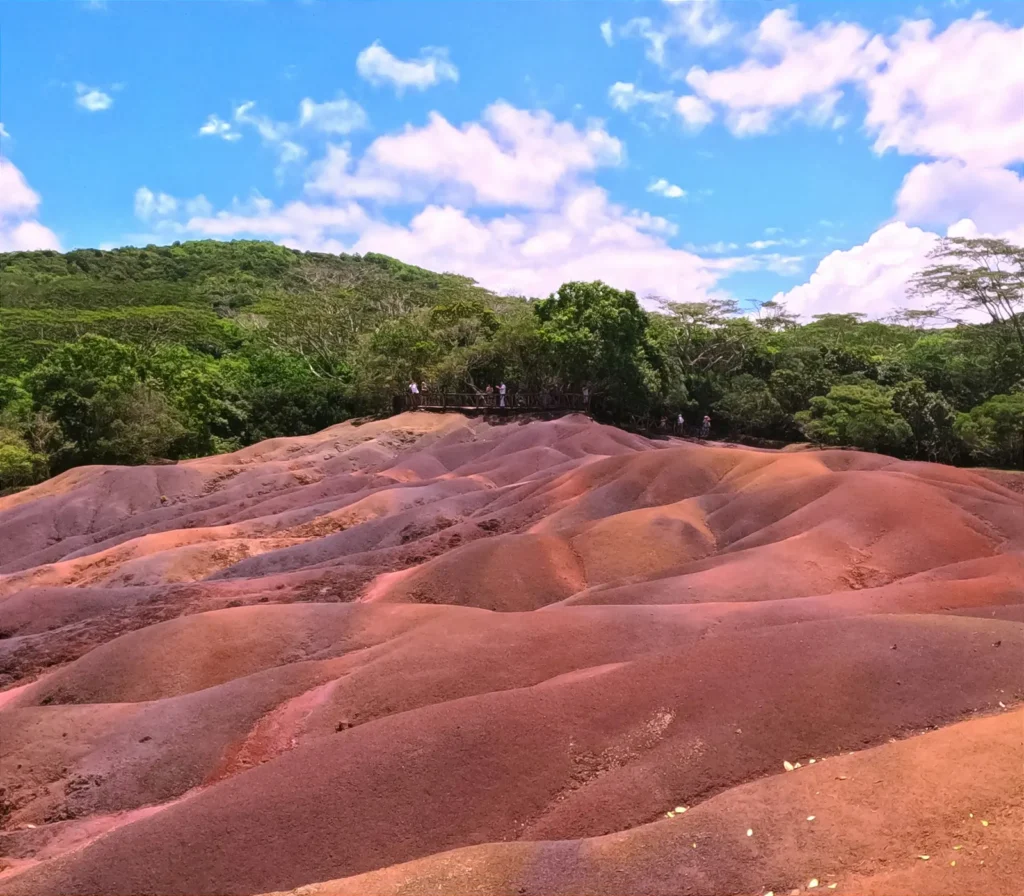
Unlike a beach day or a whale-watching trip, the Seven Coloured Earths at Chamarel stay a viable attraction year-round, even if the visitor experience shifts with the weather. The dunes — striped in roughly seven distinct shades of red, brown, violet, green, blue, purple, and yellow — formed from volcanic rock that cooled and weathered into iron- and aluminum-rich clay layers, and the geological formation itself doesn’t depend on the season; rain can still affect visibility, walking conditions on-site, and photo quality on a given day. Mornings are generally considered the best time to visit, when low-angle sunlight and dew bring out the sharpest color contrast, and it’s a reasonable backup plan if a cyclone-season shower rules out the beach for a morning.
How Mauritius Compares to Seychelles, Maldives, and Zanzibar
| Destination | Best Months | Vibe | Budget Options? |
|---|---|---|---|
| Mauritius | May–Oct (dry, cooler) | Widest price range of any Indian Ocean island; beaches, hiking, culture | Yes — genuine $25–50/night guesthouses |
| Seychelles | May–Sep (dry) | Granite-boulder beaches, smaller and pricier overall | Limited |
| Maldives | Dec–Apr (dry) | Overwater villas, single-resort private islands | Rare — mostly luxury-only |
| Zanzibar | Jun–Oct (dry) | Swahili culture, spice tours, more affordable than Mauritius overall | Yes |
Which Month Is “Best” Really Depends on What You’re Optimizing For
There’s no single best month for every traveler — the honest answer splits by what you actually care about most:
| If you’re optimizing for… | Go in… |
|---|---|
| Strongest overall balance of weather, crowds, and price | May or October |
| Driest, coolest weather | June–September |
| Peak humpback whale watching | July–September |
| Warmest beach and swimming weather | January–February |
| Lower cyclone exposure | June–October |
| Festivals and cultural immersion | January–February, or Divali in November |
May and October are strong all-around choices for many travelers because they sit between the cooler, windier winter period and the wetter, cyclone-season summer — but if whale watching or festival timing matters more to you than an all-around balance, that should outweigh the “best overall” answer.
Frequently Asked Questions
Is it safe to book a Mauritius trip during cyclone season?
Being within the November 15–May 15 official window doesn’t mean a cyclone will affect your trip. But a specific storm can disrupt flights, excursions, and resort operations depending on its track, which isn’t predictable in advance. Travel insurance with weather-disruption coverage is a reasonable safeguard if you’re booking January through March.
When can I see both whales and dolphins on the same trip?
July through October gives you the best overlap — humpback whale migration season plus year-round dolphin activity in Tamarin Bay — while still falling inside Mauritius’s cooler, drier winter months.
Do I need to fly through Europe to reach Mauritius from the US?
Not necessarily through Europe specifically, but you do need at least one connection — London and Paris offer the most direct onward flights (about 12–13 hours), while Dubai or Johannesburg connections are the other realistic options depending on your starting US city.
Is Mauritius actually affordable, or is it a luxury-only destination?
It’s genuinely mixed — budget guesthouses can sometimes be found from $25–50 a night alongside $1,000+ resorts, and because Mauritius’s foreshore is public by law, budget travelers can access the same sand as resort guests, even though the resort grounds themselves remain private.
Is the July–August “coolest months” window actually cold?
No — nighttime lows around 16.4°C (61.5°F) are the coldest it gets, and daytime temperatures still typically reach the low-to-mid 20s°C (mid-70s°F). It’s a light-jacket-in-the-evening climate, not a cold one, which is part of why July–August still draws a European summer-holiday crowd despite being Mauritius’s winter.